Lettuce is nutritious, inexpensive, and easy to cook, making it a favorite among many. However, improper cooking methods can lead to a significant loss of nutrients.
Cold-dressed Shredded Lettuce
Actually, to preserve the nutrients in lettuce best, you don't need to complicate things with cooking methods; eating it raw in a cold dressing is the way to go. However, many people blanch vegetables before making a cold salad. There's a good reason for this: many vegetables, such as spinach and kale, contain a considerable amount of oxalic acid. If not blanched first, the oxalic acid can interfere with the body's absorption of nutrients. But it would be a pity to blanche lettuce for a cold salad. Lettuce contains a large amount of water-soluble inorganic salts and vitamins, but very little oxalic acid. Blanching it in boiling water would cause a significant loss of nutrients. Therefore, lettuce can be made into a cold salad simply after being washed, peeled, and shredded. However, it is advisable that the elderly and people with poor digestion eat it cooked.
Lettuce is rich in nutrients, containing 17 amino acids such as aspartic acid, glutamic acid, and arginine. It is also abundant in vitamins C and A, as well as minerals. Notably, it contains up to 212 mg of potassium per 100 grams, making it a popular food for people with high blood sugar, high blood pressure, and high blood lipids.
Olive Oil-dressed Shredded Lettuce
Ingredients: 100g of tender lettuce, 2g of cold-pressed olive oil.
Instructions: Peel and shred the lettuce, then add a small amount of salt and chicken powder. Mix well and dress with olive oil.
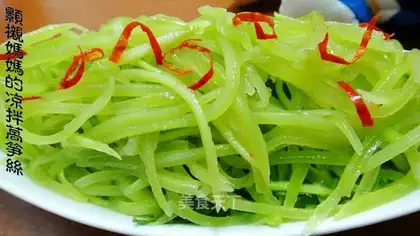 Shredded lettuce salad