Chestnuts are a common ingredient in people's daily lives. Their nutritional value is rich, containing starch, protein, vitamins, and more. The effects of chestnuts are very powerful and have magical benefits for the human body. So, do you know the effects and benefits of chestnuts? What is the nutritional value of chestnuts? The editor will now introduce the benefits of chestnuts to everyone.
Roasted Chestnuts with Sugar
What are the amazing benefits of chestnuts?
Chestnuts are a very nutritious type of nut, incomparable to other nuts. Eating more chestnuts has magical benefits for the human body. Let's take a look together.
1. Nourishing the Hair
Chestnuts are rich in vitamins B1 and B2. The content of vitamin B2 is at least four times that of rice, and every 100 grams also contains 24 milligrams of vitamin C, which cannot be compared to general grains.
And you will hardly believe that the vitamin C in fresh chestnuts is even more than the tomato, which is known for its rich vitamin C content, and more than ten times that of an apple!
The minerals contained in chestnuts are also very comprehensive, including potassium, magnesium, iron, zinc, manganese, etc. Although not as high as hazelnuts or melon seeds, they are still much higher than common fruits like apples and pears. Especially for its high potassium content, it is four times higher than apples, which are said to be rich in potassium. These vitamins, trace elements, and minerals are the main nutrients needed for hair. Persisting in eating six or seven pieces daily will have a great nourishing effect on your hair!
2. Tonifying the Kidneys
The high starch content in chestnuts can provide high calories, and potassium helps maintain a normal heartbeat, while fiber can strengthen the intestines and keep the excretory system functioning properly. It has the functions of strengthening the spleen and stomach, replenishing qi, tonifying the kidneys, strengthening the waist, strengthening the muscles, stopping bleeding, reducing swelling, and strengthening the heart. It is suitable for treating soreness and weakness of the waist and knees, difficulty in moving the waist and legs, and increased urination caused by kidney deficiency, as well as for strengthening the body.
3. Treating Cardiovascular Diseases
The rich unsaturated fatty acids and vitamins in chestnuts can prevent and treat diseases such as hypertension, coronary heart disease, arteriosclerosis, and osteoporosis. Moreover, the dietary fiber in chestnuts is very soft, and its glycemic index is even lower than that of rice. As long as no white sugar is added during processing and cooking, diabetics can also eat it in moderation.
4. More Suitable for Pregnant Women
Regular consumption of chestnuts by pregnant women not only strengthens the body and bones but also helps the development and maturation of the pelvis, and has the effect of relieving fatigue, which is conducive to the healthy development of the baby.
How to Distinguish Between Good and Bad Roasted Chestnuts
The whole chestnut is a treasure. Autumn is the time when fresh chestnuts are on the market. They can be processed into dried chestnuts, chestnut flour, chestnut paste, chestnut soup, and other foods, but the most common we see are the roasted chestnuts on the street.
Some unscrupulous merchants may add industrial paraffin oil or use saccharin instead of white sugar to roast the chestnuts. Both are harmful to the body. By picking them using the 4 practical methods below, you can greatly reduce the chance of buying inferior roasted chestnuts!
1. Taste It
Before buying chestnuts, you can ask the vendor for one to taste. Chestnuts roasted with saccharin are very sweet at first but have no aftertaste, and you can even taste a bitterness upon careful tasting. Chestnuts roasted with sugar, on the other hand, basically have no bitterness.
2. Wipe with a Paper Towel
When buying chestnuts, bring a few paper towels and wipe the shells first. If you find oil stains on them, it means these chestnuts may have been added with paraffin oil (some people also add vegetable oil when roasting chestnuts, but the amount is relatively small). It's best not to buy them.
3. Look at the Color of the Nutmeat
When selecting chestnuts, don't just pursue a pure white or golden color for the nutmeat. A nutmeat that is too golden in color may have been chemically treated.
On the contrary, if you find that the nutmeat in the middle is a bit brown after roasting or cooking, there is no need to worry. This is due to the "browning reaction" caused by the enzymes in the chestnuts. As long as the taste hasn't changed, it is harmless to the human body.
4. Pay Attention to the Raw Chestnuts Nearby
Pay attention to the raw chestnuts that haven't been put in the pot yet. If the raw chestnuts are dark in color, have little hair, and have a shiny exterior, it means they are a bit old, and it is not recommended to buy them. If the color is light, they have a lot of fluff, and the exterior is not very shiny, it means they are fresh chestnuts. Also, there is a small trick: chestnuts that are round on one side and flat on the other are often sweater than those that are flat on both sides.
Note: Although chestnuts are known as the "fruit of the kidneys" and have amazing effects for nourishing hair and protecting the kidneys, they can also cause bloating and should not be eaten in excess. Eating only 7-8 pieces a day and persisting for a period of time will have a great nourishing effect on your body and hair!
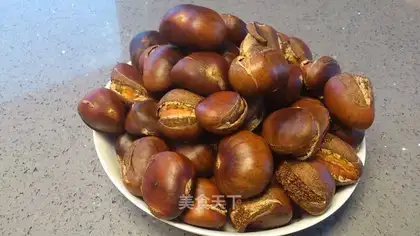 Chestnut