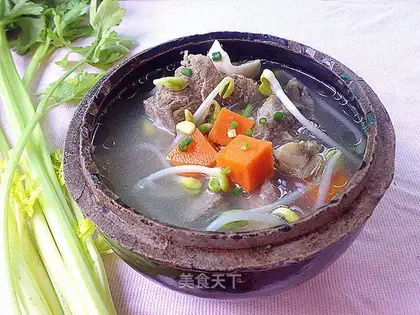
There are many foods that nourish the liver, and ingredients rich in protein are the top choice. Today, I'm going to teach you a dish that is both refreshing and rich: Soybean Pork Bone Soup.
Soybean Pork Bone Soup
Soybean Pork Bone Soup
Ingredients:
Pork bones, soybean sprouts, carrots, ginger slices, dried whole scallops, chopped green onions, salt, and pepper to taste.
Instructions:
1. Wash the pork bones; remove the roots from the soybean sprouts and wash them; cut the carrots into pieces, remove the black parts from the scallops, and soak them to remove any sand.
2. Parboil the pork bones in boiling water to remove any impurities.
3. Place a suitable amount of water in a soup pot, bring to a boil, then add the pork bones, ginger slices, and scallops to simmer first. When the soup becomes thick and white, add the carrot pieces and simmer for about 30 minutes. Then add the soybean sprouts. Simmer all the ingredients for another 10-15 minutes, then season with salt.
Cook's Tips:
1. Besides containing protein, fat, and vitamins, pork bones also have a large amount of calcium phosphate, collagen, and bone mucin. Children who regularly drink bone soup can promptly supplement the body with essential substances like collagen, enhance bone marrow hematopoietic function, and help with bone growth and development. For adults, it can help delay aging. Pork bone soup can strengthen the waist and knees, boost energy, nourish the weak, and strengthen muscles and bones. However, for those with a weak spleen and stomach or poor digestion, it can easily cause bloating or diarrhea, so ginger or pepper should be added to the soup.
2. Soybean sprouts are sweet in taste and cool in nature, entering the spleen and large intestine meridians. They have the effects of clearing heat and promoting diuresis, reducing swelling and alleviating numbness, removing dark moles, treating warts, and moisturizing the skin. They are beneficial for dietary therapy for conditions like damp-heat in the spleen and stomach, constipation, common warts, and high blood lipids.
3. Spring is a season with a high incidence of vitamin B2 deficiency. Eating more soybean sprouts in spring can effectively prevent and treat vitamin B2 deficiency. The vitamin E in bean sprouts can protect the skin and capillaries, prevent arteriosclerosis, and help prevent hypertension in the elderly. Additionally, because soybean sprouts contain vitamin C, they are considered a beauty food. Regular consumption of soybean sprouts can nourish the hair, keeping it black and shiny, and has a good effect on lightening facial freckles. Eating soybean sprouts is greatly beneficial for the growth and development of teenagers and preventing anemia. Regular consumption of soybean sprouts can also improve brain function, combat fatigue, and has anti-cancer properties. During the sprouting process, the substances in soybeans that cause bloating are broken down, and some nutrients become more easily absorbed by the body.
 Soybean sprouts