Pasta refers to food mainly made from flour, with different types found all over the world. In China, the main types include: noodles, steamed buns, hand-pulled noodles, Mashi (a type of wheat noodle), Shaobing (a baked, flatterbread), dumplings, and Baozi (steamed buns). In the West, there is bread and various types of baked flatbreads, making for a wide variety!
Hand-pulled noodles
Pasta making techniques
Pasta is a general term for food products made from flour.
Based on cooking methods, pasta can be divided into several major categories: steamed, boiled, griddled, pan-fried, baked, deep-fried, and braised. Different preparation methods result in varying losses of nutrients. The technique for making pasta generally involves three steps.
First, mixing and kneading.
Several special terms and actions for mixing include:
1. Creaming: This is the process of beating solid fat with other ingredients until foam is produced. Mixing should be stopped when the mixture begins to soften or its volume decreases. The ability of fat to trap air during mixing is called its foaming value, which affects the volume and quality of the cake.
2. Beating: Mixing various ingredients, often with a mixer, to incorporate air into the dough and develop the gluten.
3. Folding: A mixing action where the bottom is folded over the top, often done with a spatula, to ensure even mixing and gluten development.
4. Kneading: Mixing ingredients by hand or with a dough hook. The duration of kneading depends on the degree of gluten development. The purpose of kneading dough is to accelerate water absorption by the flour to form gluten. The back-and-forth action breaks the tough membrane on the flour's surface, allowing water to evenly penetrate the flour particles. Besides feeling and observing, there is no other good way to determine the kneading time. The kneading process is generally divided into six stages: (1) The initial stage, (2) The pickup stage, (3) The gluten development stage, (4) The final stage, (5) The breakdown stage, (6) The gluten over-mixing stage.
Second, fermentation and shaping.
After kneading, yeast ferments, producing carbon dioxide. This released gas is trapped by the gluten network, forming air pockets and causing the dough to expand. After the initial fermentation, the dough is divided into portions and rounded. Dividing the dough causes some carbon dioxide to escape, reducing its softness, so it should be shaped immediately. Rounding the dough forms a skin on its surface to prevent gas from escaping and gives it a smooth appearance. After rounding, an intermediate fermentation occurs before shaping. Shaping involves pressing the gas out of the dough to create a uniform internal structure. After shaping, most gas is lost, and the gluten loses its softness, so a final proofing step is necessary to regenerate gas and increase gluten softness.
Third, cooking/baking.
This is the final step, where the pasta is cooked, steamed, fried, baked, or braised. The heat causes the dough or batter to become soft and easy to digest. At the same time, starch and proteins undergo chemical changes, and the action of microorganisms and enzymes is destroyed and stops. Additionally, new compounds are formed on the surface, giving baked goods their special color and aroma.
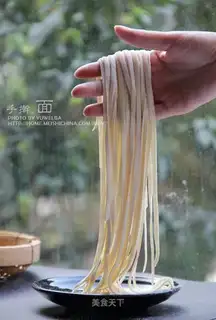 handmade noodles