In spring, going out for tea with a few friends is undoubtedly a pleasure. Making a personalized health tea at home according to your own taste preferences adds a more health-conscious meaning to the act of drinking tea. Spring tea drinking has its own set of rules. Traditional Chinese medicine believes that "in spring, grass sprouts and a hundred illnesses arise." Making and drinking some health-promoting herbal teas can not only alleviate spring fatigue, enhance the body's disease resistance, and ward off illness, but also provide benefits such as health preservation, longevity, skincare, and beauty.
Beauty-Enhancing Rose Tea
Rose Tea Soothes the Liver and Relieves Depression
Rose is a precious medicinal herb that beautifies the complexion, promotes menstruation, invigorates blood circulation, softens blood vessels, harmonizes the liver and spleen, and regulates qi and stomach. This has been documented in the "Compendium of Materia Medica".
Rose is an excellent food-medicine homology. Women often drink it as an infusion for many benefits. Especially during menstruation, symptoms like mood swings, a dull complexion, and even menstrual cramps can be alleviated to some extent. Traditional Chinese medicine considers rose to be sweet with a slight bitterness and warm in nature. Its most prominent effects are regulating qi to relieve depression invigorating blood to dispel stasis, and regulating menstrination to relieve pain. Furthermore, the medicinal properties of rose are very gentle. It can nourish the heart and liver's blood vessels, expel stagnant qi from the body, and have a calming, soothing, and anti-depressant effect. Women often experience irritability before or during their period, and drinking rose tea can help regulate this. In today's world of increasing work and life stress, even when not on your period, you can drink more rose tea to soothe and stabilize your emotions.
For women, drinking more rose tea can also make their complexion as rosy as the petals. This is because rose has a strong effect on promoting qi and blood circulation, dispelling stasis, and harmonizing the internal organs. The so-called poor complexion, facial spots, menstrual irregularities, and dysmenorrhea are all related to abnormal qi and blood circulation, with stasis accumulating in the uterus or face. Once qi and blood circulation returns to normal, the complexion will naturally become ruddy and the body healthy.
When brewing rose tea, you can adjust it according to your personal taste by adding rock sugar or honey to reduce the astringency of the rose and enhance its effects. It should be noted that rose tea should not be brewed with tea leaves. Because tea leaves contain a large amount of tannic acid, which will affect the effect of rose in soothing the liver and relieving depression. In addition, because rose's effect of invigorating blood to dispel stasis is relatively strong, people with heavy menstrual flow should avoid drinking it during their period.
Jasmine Honey Tea
Jasmine Tea Refreshes the Mind and Benefits Thoughts
Jasmine tea, also known as scented tea, is a reprocessed tea made by scenting green tea tea bases with fresh jasmine flowers. As the saying goes, "drink flower tea in spring." Flower tea is a treasured type of tea that combines the beauty of tea flavor with the fragrance of flowers, and its health-preserving and disease-preventing effects are no less than other teas. In tea classification, jasmine tea still belongs to green tea. Jasmine tea is a warming tea, and among various herbal teas, it has the most mellow aroma, making it a top choice for spring drinking. Whether it's refreshing the mind and brain, slimming the body, or even health preservation and wellness, the fresh flower tea can do it all.
Spring is the beginning of the four seasons, a time of renewal, but the human body is prone to feeling drowsy and fatigued, experiencing what is known as "spring fatigue." Tea is sweet and cool yet also has an aromatic and dispersing nature. It can not only refresh the mind, eliminate sleepiness, and naturally dispel spring fatigue, but also help expel the cold evil accumulated in the body during winter, leaving one feeling refreshed and clear-headed.
In addition to the health benefits of green tea, jasmine tea also has several special effects from jasmine flowers. Jasmine tea has the effect of dispelling cold evil and assisting in relieving depression, as well as clearing heat, suppressing irritability, strengthening the spleen to calm the spirit, transforming dampness, and alleviating gastrointestinal discomfort. It also helps with women's physiological functions and can moisturize the skin and beautify the complexion.
Goji Berry and Chrysanthemum Tea
Jujube, Goji Berry, and Chrysanthemum Tea Strengthens the Spleen and Detoxifies
Goji berries and chrysanthemums are commonly used in traditional Chinese medicine. When used together, they have the effects of clearing heat and detoxifying, nourishing the liver and brightening the eyes, and benefiting the kidneys to replenish essence, thereby nourishing the foundation of innate constitution. Combined with jujubes, it supplements the middle jiao and benefits qi, while also nourishing blood to calm the spirit, thereby cultivating the foundation of acquired constitution. The three used together as a tea have the effects of clearing heat and detoxifying, strengthening the spleen and benefiting qi, nourishing the liver and benefiting the kidneys.
When brewing the tea, it's best to break open the jujubes, otherwise they are difficult to steep. Dry-frying or toasting the jujubes enhances their sweet and warm nature, and also makes the jujube aroma more intense when brewed, making it easier for nutrients to be extracted. Dry-frying here means continuously heating and stirring in a pan without any oil over low heat until the jujubes are slightly darkened. Of course, baking in an oven is also an option; just bake until the jujube skin is slightly puffed and darkened.
When selecting chrysanthemums, first avoid those that are too brightly colored or too beautiful. Choose those with calyces and a slightly green color, as these are the freshest. Those with a dull color should not be chosen, as they are old chrysanthemums that may have grown mold. Select those that feel soft and smooth, with petals that are not messy or falling off; these chrysanthemums should have been picked just after opening. Common varieties like Gongju and Hangbaiju are both acceptable. Now, wild chrysanthemums are also sold on the market. Wild chrysanthemums are pungent and bitter, more so than regular chrysanthemums, and can be used for detoxification. When paired with jujubes, their cold nature can also be moderated. Goji berries should be red, plump, and the larger the better.
It is difficult for all the active ingredients in goji berries to be fully extracted when brewed directly in tea, which can be wasteful. It is recommended to chew and eat all the goji berries after drinking the tea.
Blood-Nourishing and Body-Fluid-Generating Ejiao Honey Tea
Ejiao primarily nourishes blood, with its main effect being to nourish yin and moisten dryness. Honey primarily supplements qi, with its main effect being to moisten the intestines and promote bowel movements. One for blood, one for qi; one for nourishing, one for lubricating. The two work in close partnership, doubling their nourishing effects.
Legend has it that Shennong tasted hundreds of herbs and invented Chinese medicine. Medicines were divided into three grades: superior, medium, and inferior. Since the "Shennong's Classic of Materia Medica" in the Han Dynasty, subsequent materia medica have all listed Ejiao as a superior-grade medicine, a sacred medicine, and a tribute. Its taste is sweet and its nature is平和 (平和 means neutral, balanced), and it is non-toxic. Long-term use can cultivate one's nature and extend life, making the body strong.
The mystery of honey was explained by Tao Hongjing as early as in the "Shennong's Classic of Herbs": "Pills made at home often use honey; those cultivating immortality eat honey alone, believing it can lead to longevity." Ancient Taoists generally believed that on the path to becoming an immortal, in addition to their own cultivation, they also needed the assistance of medicine. Therefore, the first step was to refine elixirs. And refining elixirs could not do without a worldly product: honey.
The Ejiao and honey drink made from the combination of Ejiao and honey is particularly beneficial for those with a weak constitution. A strong body has abundant qi and blood, while a weak body has insufficient qi and blood. Persisting in drinking Ejiao and honey soup for a long time nourishes blood and generates body fluids. The climatic characteristics of spring can easily lead to liver fire hyperactivity, which we often call "liver fire blazing." Liver fire blazing can lead to many symptoms of "heatiness," such as a bitter taste in the mouth, constipation, irritability, and it can even promote high blood pressure, and in moments of emotional excitement, it may cause a stroke.
The principle of health preservation in spring should prioritize nourishing the liver. In terms of diet, one should reduce sour foods and increase sweet foods. Sweet foods help to replenish the spleen and stomach qi, helping the body resist the invasion of liver qi. Both Ejiao and honey are sweet in taste and neutral in nature. Regularly drinking Ejiao and honey tea in spring is precisely the right symptomatic guidance and conditioning.
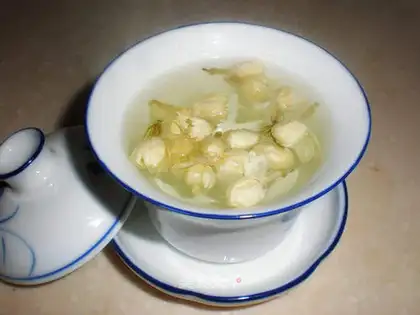 Jasmine honey tea
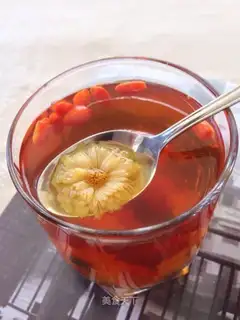 Pyramid tea
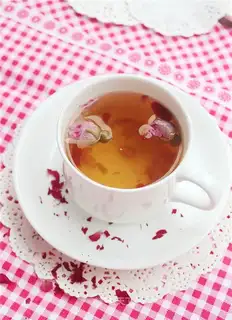 A rose-colored tea