Cantonese cuisine, also known as Yue cuisine, is one of the Eight Great Cuisines of China. Subsets of Cantonese cuisine include Guangfu cuisine, Teochew cuisine, Hakka cuisine, Hainan cuisine, and Gui cuisine, among which "Guangfu cuisine" is the most representative. The most prominent characteristic of Cantonese cuisine is its light and fresh flavor.
Cantonese cuisine has long been renowned throughout the country for its wide selection of ingredients and innovative, exotic dishes, hence the saying "Eat in Guangzhou," which has made its fame known far and wide. The main features of Cantonese cuisine are its cooking methods, such as stir-frying, braising, pan-frying, grilling, and baking. It emphasizes freshness, tenderness, crispness, and smoothness in texture, with flavors that are primarily raw, crisp, fresh, and light. There was once a saying of "five tastes" and "six flavors."
Nothing in Cantonese cuisine is more famous than the soups simmered with various medicinal herbs. The climate in Guangdong is hot, so soups with the effects of clearing heat, detoxifying, and nourishing are most common. The soups in Cantonese cuisine are rich in flavor yet not greasy, are highly nutritious, easy to digest, and are very suitable for the elderly to drink.
Boiled Shrimp
1. Guangfu Flavor
Represented by Guangzhou cuisine, it integrates the characteristics of local flavors from Nanhai, Panyu, Dongguan, Shunde, and Zhongshan. It is mainly popular in the central and western parts of Guangdong, Hong Kong, Macau, and eastern Guangxi.
Guangzhou cuisine focuses on texture and flavor, with a relatively light taste, striving for freshness in clarity and beauty in subtlety. Moreover, it changes with the seasons and times of the year, leaning towards lighter flavors in summer and autumn, and richer flavors in winter and spring. The taste emphasizes clarity, freshness, tenderness, crispness, smoothness, and aroma; the seasonings cover sour, sweet, bitter, spicy, and salty; this is the so-called "five tastes and six flavors." It enjoys the reputation of "Eat in Guangzhou."
Guangzhou cuisine uses a wide range of ingredients, with a dazzling variety of dishes. Almost anything that flies in the sky, crawls on the ground, or swims in the water can be served. Needless to say, game birds and wild meats such as partridge, rice sparrows, leopard cats, civet cats, pangolins, and sea dog fish are on the menu; cats, dogs, snakes, rats, monkeys, turtles, and even "rice worms," mistaken by some for leeches, are also cooked. And once in the hands of a chef, they are instantly transformed into exotic treasures and delicious delicacies that amaze Chinese and foreign visitors alike.
Another prominent feature of Guangzhou cuisine is its precise and fine use of ingredients, clever and numerous pairings, and beautiful and vibrant garnishes. It is also good at innovating through imitation, resulting in a wide variety of dishes.
Representative dishes include: Guangzhou Wenchang Chicken, Dragon and Tiger Fight (snake and cat), Boiled Shrimp, Roast Suckling Pig, Steamed Pork Belly with Taro, Huangpu Scrambled Eggs, Stewed Rice Worms, Dog Meat Hot Pot, Stir-fried Snake Fillets with Five Colors, Chicken with Snake, Taiye Chicken, Salt-baked Chicken, White Cut Chicken, and Roast Goose.
2. Dongjiang Cuisine (Hakka Flavor)
Dongjiang cuisine, represented by Huizhou cuisine, belongs to the Hakka school of cuisine. It is famous for dishes like Dongjiang Salt-baked Chicken, Dongjiang Stuffed Tofu, and Steamed Pork Belly with Meicai. Dongjiang cuisine has become an indispensable part of the Dongjiang cultural characteristics. Because the Hakka people migrated frequently and lived in the hilly and mountainous areas of Central and Southern China, they needed to replenish salt to maintain their energy through hard labor. Therefore, their cuisine is heavy in oil and salt with a strong, salty flavor. They like to use various types of processed mustard greens in their dishes, such as (pickled vegetables, dried plum cabbage). Famous examples include Pickled Pork Belly Soup, Steamed Pork Belly with Meicai, Stuffed Tofu, Hakka Salted Chicken, Clear-dried Chicken, Pan-fried Stuffed Egg Rolls, Stuffed Bitter Melon, Chicken Stir-fried with Wine, and Yellow Wine Chicken. Among these, the most distinctive is the "Yellow Wine Chicken."
Salt-baked Chicken Wings
Traditional Dongjiang cuisine emphasizes "rich, salty, well-cooked, and aromatic" flavors. It uses a lot of oil, has a salty taste, and employs relatively simple seasonings, usually using raw scallions, cooked garlic, and coriander for flavoring, with little to no heavy or strong condiments. However, Dongjiang cuisine highlights the main ingredients, favors poultry, and rarely uses vegetables or freshwater/seafood products.
Representative dishes include: Dongjiang Salt-baked Chicken, Dongjiang Stuffed Tofu, Beef Balls, Stuffed Tofu, Stuffed Three Treasures, Hakka Salted Chicken, Clear-dried Chicken, Pan-fried Stuffed Egg Rolls, Stuffed Bitter Melon, Chicken Stir-fried with Wine, and Yellow Wine Chicken.
3. Chaoshan Flavor
Represented by Chaozhou cuisine, it is mainly popular in the Chaoshan area and is closely related to the Minnan flavor of the Fujian cuisine system.
Colorful Crystal Dumplings
Chaozhou cuisine, abbreviated as Chao cuisine, is known as "Dalong" in Hong Kong. It is an important part of the traditional Han dietary culture. Chaozhou cuisine can be traced back to the Han Dynasty. After the prosperous Tang Dynasty, it developed rapidly under the influence of Central Plains culinary skills. To this day, Chaozhou cuisine has become one of China's famous cuisines with unique Chaoshan cultural characteristics, renowned at home and abroad.
Chaozhou cuisine is known for being expensive, with its meticulous selection of ingredients, fine knife work, and diverse cooking methods. It strives for a perfect combination of color, aroma, and flavor, earning it the reputation of being China's most high-end cuisine. Chaozhou cuisine excels in cooking seafood and likes to use seasonings like fish sauce, satay sauce, plum sauce, and ginger wine. It has many sweet dishes with over a hundred varieties, all made from simple ingredients with meticulous preparation, sweet and delicious. The main cooking methods include: braising, stewing, pan-frying, deep-frying, steaming, stir-frying, baking, quick-frying, blanching, pan-roasting, braising with sauce, marinating, smoking, pouring, and roasting, among dozens of others.
Another feature of Chaozhou cuisine is the preference for serving twelve dishes, with sweet dishes at the beginning and end of the meal, and savory dim sum served in the latter half. Before the Qin Dynasty, Chaozhou belonged to the Min region, and its language and customs were closer to those of Southern Fujian than to Guangzhou. Due to different origins, the characteristics of its cuisine are also distinct.
Representative dishes include: Chaozhou Braised Goose, Chaozhou Beef Balls, Crystal Dumplings, Radish Cake, Glutinous Rice Stuffed in Pig Intestines, Soy Sauce Chicken, Huguo Dish (Buddha Jumps Over the Wall), Assorted Sea Cucumber with Black Stone, Scrambled Crab with Ginger and Scallions, and Deep-fried Shrimp Balls. These are all famous Chaozhou specialty dishes, spread throughout the Lingnan region and overseas.
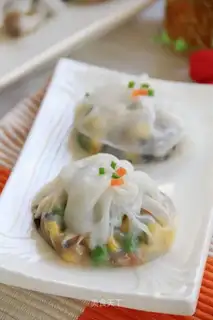 Five-colour crystal pack
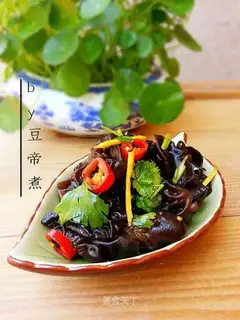 Blackwood
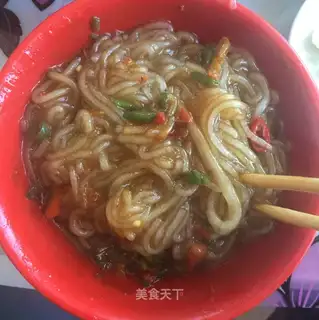 Northeast handmade potato water powder