Are there any benefits to eating congee? A thousand years of history will tell you the benefits of eating congee. Do you all usually eat congee? I am a person who loves to eat congee. The history of eating congee in China has already spanned a thousand years, and today I am going to use this thousand years of history to tell everyone the benefits of eating congee. Let's learn about it together!
Do you all usually eat congee? I am a person who loves to eat congee. The history of eating congee in China has already spanned a thousand years, and today I am going to use this thousand years of history to tell everyone the benefits of eating congee. Let's learn about it together!
Rock Sugar Tremella and Lotus Seed Congee
Congee therapy has been recorded for a thousand years
"The history of Chinese people eating congee is at least 2,000 years old," said Yang Li, a professor at the Graduate School of the China Academy of Chinese Medical Sciences. This is reflected in ancient books. The "Book of Zhou" mentioned that since the time of the Yellow Emperor, people began to "cook grain into congee." Literati of all dynasties had a special affection for congee. The Tang Dynasty poet Bai Juyi wrote a poem praising congee: "Congee is delicious with new rice." Su Dongpo, after eating congee, wrote a famous line: "Body and mind are turned upside down without my knowledge, I know even more that there is true flavor in the world." The modern writer Sun Li drank corn congee all year round, saying, "Holding a hot congee bowl on a hot kang in winter is a great enjoyment in life."
Compared to other foods, congee has obvious advantages: it is simple to make, can be nourishing, is easy to digest, and is good for the stomach and intestines. Moreover, because grains, meat, and vegetables can all be added to congee, it has a complete flavor and is rich in nutrients.
Luo Ren, a professor in the Department of Traditional Chinese Medicine at Nanfang Hospital of Southern Medical University, said that there are many historical examples of congee helping people live longer. In the Southern Song Dynasty, Lu You, in his seventies, not only had strong and complete teeth but also sharp hearing and clear eyesight. He eventually lived to be 85, which was related to his love for congee. Lu You regarded congee as a wonderful health food throughout his life. In his poem "Eating Congee," he wrote: "Everyone in the world seeks to live long, but they don't realize that longevity is right in front of them. I have obtained the simple method of Wanchu, and only by eating congee can I achieve the state of an immortal."
The preference for congee in Traditional Chinese Medicine is reflected in many formulas for preventing and treating diseases. In "Treatise on Cold Damage and Miscellaneous Diseases" by the sage of medicine Zhang Zhongjing, japonica rice is a commonly used "medicine." Zhang Zhongjing would have patients take medicine and then drink hot congee to induce sweating and promote the effect of the medicine. He emphasized using "congee for conditioning," which has a positive effect on the prognosis of diseases and the recovery of weak patients. There are also many records of medicinal congee in Sun Simiao's "Essential Formulas Worth a Thousand Gold for Emergencies." In its "Chapter on Diet Therapy," it states that japonica rice can "nourish the stomach qi and strengthen the muscles."
Different ingredients, each with its own strengths
Congee, with two "bows" enclosing a "rice," means that congee should be based on five grains. Zhou Yingchun, director of the Department of Traditional Chinese Medicine at Nanfang Hospital of Southern Medical University, pointed out that choosing different ingredients for cooking congee can achieve different therapeutic effects.
Rice congee. Yang Li said that rice congee has a more balanced effect on the nourishment of the five organs and is suitable for most people. Glutinous rice, as a type of rice, contains more mucilage and has a better effect of tonifying qi.
Millet congee. Millet nourishes the heart and stomach, has a certain protective effect on the stomach, and helps with sleep. For the elderly, the sick, and postpartum women, millet congee is an ideal tonic.
Corn congee. Research has confirmed that in addition to carbohydrates, protein, fat, and carotene, corn also contains riboflavin, calcium, magnesium, selenium, and various vitamins, which helps prevent heart disease, high blood pressure, and hyperlipidemia.
Sweet potato congee. Sweet potatoes can nourish the stomach and spleen and prevent constipation. People with poor spleen and stomach are suitable for adding sweet potatoes to cook congee.
Oatmeal congee. Persisting in drinking oatmeal congee helps lower the level of "bad" cholesterol and prevent hyperlipidemia. A Harvard University study has proven that drinking a small bowl of coarse grain congee daily, such as oatmeal congee, can prolong life.
Yang Li emphasized that although congee is mainly made of five grains, it should not be limited to that. It should also be paired with beans, vegetables, meat, etc., to increase nutrition and enhance the health benefits by reasonably matching ingredients. Zhou Yingchun recommends adding red beans, red dates, lotus seeds, and longan to the five grains to enhance the effect of nourishing the heart and enriching the blood; adding soybeans, yam, hawthorn, and white beans is beneficial for strengthening the spleen and stomach; mung beans and wolfberry can increase the effect of nourishing and protecting the liver.
Cooking congee is not difficult, but good congee is not easy
Cooking congee is not as simple as just adding water to rice and then cooking it over a fire. Zhou Yingchun believes that cooking "good congee" requires a lot of attention.
Pumpkin Millet Congee
Choose good ingredients. The quality of the ingredients for cooking congee plays a decisive role in the quality of the congee. The "Congee Spectrum" believes that if japonica rice is used to make congee, "fragrant rice is the best, late-season rice with soft texture can also be used; early-season rice is second, and old stored rice is lacking in smoothness." New rice is rich in gum and has a sticky texture. The congee cooked from it is white, smooth, and tender with a gelatinous texture, and is fragrant and delicious. Old rice, lacking in gum, does not cook to a "soft" consistency, and the taste is not pure enough.
Use good water. It is best to use running water, i.e., long-flowing water, for cooking congee, so tap water is fine. In areas with well water or spring water, using these living waters to cook congee will have a better effect.
Wash the rice gently. The nutritional content in the outer layer of grains is higher than in the inner layer, and the outer layer of beans contains a large amount of B vitamins and minerals. Therefore, when washing, do not scrub too hard, soak for a long time, or wash with hot water. Also, do not add alkali, as it will destroy the vitamins.
Control the heat well. The "Congee Spectrum" says: "Cook congee until it becomes a porridge; if the heat is not enough, the flavor will be insufficient; if the heat is too much, the flavor will be reduced." It should be noted that congee should be cooked in one go without interruption or adding cold water in the middle, otherwise the congee will not be rich and fragrant.
Luo Ren and Kuang Liuyan from Southern Medical University recommend that after entering winter, you can drink longan and wolfberry congee. Use 10 grams of longan meat, 20 grams of wolfberries, 15 lotus seeds, and 100 grams of japonica rice. Cook them together with water and add an appropriate amount of rock sugar when the congee is done. It has the effect of nourishing blood and kidneys. For people with poor digestion, you can try tangerine peel congee. When 100 grams of japonica rice is almost cooked, add 20 grams of finely chopped tangerine peel and cook for another 10 minutes. Yam congee can strengthen the body and is suitable for all people. Use 30 grams of yam and 180 grams of japonica rice, cook them together in a pot until done.
Finally, experts remind that it is generally better to drink hot congee, especially when helping to induce sweating and promote recovery. Although congee is good, it is recommended to have only one serving per day, not too much. Diabetic patients should try to drink less to prevent blood sugar from rising too quickly.
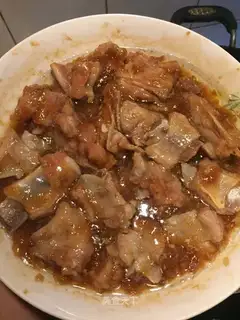 Steam ribs
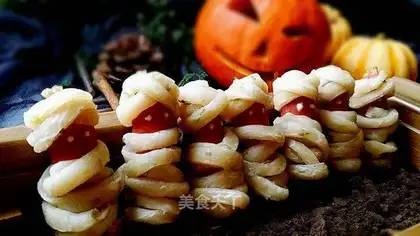 Hot dog mummies