Introduction: Chinese cabbage can be considered the "staple vegetable" on people's winter dining table. It is light, delicious, and savory, whetting the appetite. Especially when consuming rich and savory dishes, eating it appropriately can greatly enhance one's appetite.
People never tire of eating Chinese cabbage, not only because it is suitable for stir-frying, boiling, cold-dressing, or making fillings, but also because of its unique nutritional and therapeutic value. Chinese cabbage, a member of the Brassicaceae family, is rich in vitamins, dietary fiber, and antioxidants, which can boost immunity and aid in detoxification. The fiber in Chinese cabbage promotes intestinal peristalsis, aids digestion, and prevents constipation. Traditional Chinese medicine believes that Chinese cabbage is sweet and neutral in nature, with the effects of clearing heat, relieving vexation, quenching thirst, and promoting urination. It is very helpful for reducing body swelling and maintaining a fresh appearance. Notably, the vitamin C content in Chinese cabbage is higher than that of apples and pears, on par with citrus fruits, and its calorie count is much lower.
Chinese Cabbage with Vermicelli
In order to preserve the vitamin C in Chinese cabbage to the greatest extent, the first step is to eat it as fresh as possible. Oxygen in the air is pervasive; the longer the storage time, the more vitamin C is oxidized. Secondly, when processing, wash it before cutting. Try not to cut it; if you must, it's best to cut it into large pieces or tear it by hand to reduce the cut surface exposed to the air. After cutting, do not wash it again, otherwise the water-soluble vitamin C will be lost in large quantities through the cut surfaces. During cooking, it is advisable to stir-fry over high heat quickly, to quickly pass through the 60°C-90°C temperature range where vitamin C is most easily destroyed. Adding vinegar during cooking can also help protect it.
Stir-fried Chinese Cabbage with Tofu
Chinese cabbage and tofu are the best partners. Tofu is rich in protein, which complements the cabbage, creating a perfect synergy. Furthermore, pairing Chinese cabbage with meat is a reasonable combination of meat and vegetables. It not only enhances the flavor of the meat but also helps the waste products from meat digestion to be expelled from the body with the help of the high fiber in Chinese cabbage.
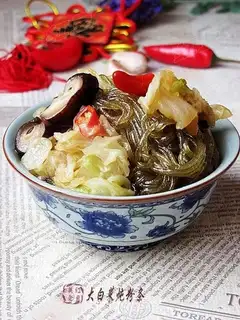 Stewed rice strips with Chinese cabbage