There is a proverb that says: Garlic has a hundred benefits, but one harm—it damages the eyes. Long-term excessive consumption of garlic can lead to blurred vision, a significant decline in eyesight, tinnitus, a dry mouth and throat, a feeling of heaviness in the head and lightness in the feet, and a marked decrease in memory. Therefore, all things should be done in moderation. Scientists believe that eating one clove of raw garlic per day is appropriate, while two or three cloves of cooked garlic is sufficient. Although garlic is small, eating too much of it is not beneficial. Since the allicin, which gives garlic its antibacterial properties, is quickly deactivated by heat and salt, it is best to eat it raw without salt. Therefore, to achieve the best health benefits, garlic should be crushed into a paste and left in the air for 10-15 minutes before consumption.
Patients with liver disease should not eat garlic. Certain components of garlic can irritate the stomach and intestines, inhibit the secretion of digestive fluids, and affect food digestion, thereby worsening symptoms such as nausea in hepatitis patients. Furthermore, the volatile components in garlic can lower red blood cells and hemoglobin in the blood and may cause anemia, which is detrimental to the treatment of hepatitis.
It is not advisable to eat garlic for non-bacterial diarrhea: When suffering from non-bacterial enteritis or diarrhea, eating raw garlic is not recommended. Because the local intestinal mucosa is inflamed, the pungent allicin can further irritate the intestine, aggravating congestion and edema of the intestinal mucosa, promoting exudation, and worsening the condition.
Patients with eye diseases should not eat garlic: Traditional Chinese medicine holds that long-term, large consumption of garlic can "damage the liver and harm the eyes." Additionally, eating a large amount of garlic in summer and autumn has the greatest impact on the eyes.
5 Foods That Can Easily Damage the Liver
1. High-fat foods
Consuming large amounts of high-fat foods not only increases the burden on the liver but also leads to elevated blood lipids (cholesterol and triglycerides), thereby inducing fatty liver. Therefore, everyone should try to eat less high-fat food, such as fatty meat, animal organs (liver, brain, intestines, etc.), and sunflower seeds.
High-sugar foods should also be avoided, as excessive sugar intake is easily converted to fat and stored in the liver, inducing fatty liver and other conditions.
2. Alcohol
The intermediate metabolite of alcohol, acetaldehyde, can directly damage the liver, thereby inducing alcoholic liver, fatty liver, alcoholic hepatitis, cirrhosis, and even liver cancer.
3. Spicy and irritating foods
Spicy and irritating foods can stimulate the gastric mucosa, increase gastric acid secretion, and thus加重 the burden on the liver. For hepatitis patients, consuming these foods can加重 the liver burden and induce gastrointestinal bleeding.
4. Processed foods
Because processed foods contain preservatives and food additives, consuming large amounts will加重 the liver's detoxification and metabolic capabilities, thereby加重 the liver burden and inducing liver damage. Therefore, common processed foods like instant noodles and canned goods should be avoided as much as possible.
5. Smoked and baked foods
Research has found that smoked and baked foods contain carcinogenic substances—benzopyrene. After this toxic substance enters the body, the liver must work overtime to detoxify it. Therefore, everyone should eat less smoked and baked food.
To nourish the liver, you can eat more of these foods
Spinach and Egg Soup
The liver loves green foods
Research has found that green, white, and light blue colors can help reduce psychological stress and fear of the disease in patients with liver disease. Outdoor green tree shade, lawns, calm lake water, and elegant green environments can all promote the recovery of liver disease patients. Placing a potted green plant on a desk, choosing elegant wall colors during decoration, or even wearing light green clothes more often can help nourish the liver. Traditional Chinese medicine says: "Green enters the liver meridian." Green foods can benefit liver qi circulation and metabolism, eliminate fatigue, and soothe liver depression. Eating more dark or green foods can play a role in nourishing and protecting the liver, such as broccoli, spinach, and green apples.
Based on these nutrients, Professor Shen Yanying, Vice President of Beijing Chaoyang Hospital, Capital Medical University, combines years of health experience to recommend five liver-protecting foods to everyone. Whole grains like millet are the top choice for liver protection, as they are rich in protein, vitamin E, and B vitamins, which protect the liver while also protecting the gastric mucosa. Green apples have the effect of nourishing the liver and detoxifying, and are rich in vitamins, so they can be eaten more. The calcium content in kelp is 10 times that of milk, and it contains various essential trace elements for the human body, so eating more is beneficial for the liver. The liver is the body's main detoxification organ, and foods with strong detoxification functions, such as mushrooms, can provide good protection for the liver. Milk contains high-quality protein, easily absorbed lactose and milk fat, and various vitamins, making it a natural delicacy for liver nourishment.
In addition, experts point out that besides nutrition, the liver also needs good sleep: The liver and gallbladder begin their metabolism at 11 PM, and entering a deep sleep at this time allows the liver to repair itself and minimize adverse effects. Drinking enough water (1000-1500 ml) daily can also help the liver detoxify, greatly reducing the damage of metabolic products and toxins to the liver. To keep the liver strong, one must also learn to control emotions and strive to be calm, optimistic, and carefree, so that liver qi can be generated and regulated normally. Sitting quietly for 10-30 minutes after a meal before exercising can ensure normal liver metabolism.
The liver loves sugar
Most people don't know that sugar is an important substance for protecting the liver. Each gram of glucose can provide about 70% of the energy the body needs. If a person is in a state of energy deficiency for a long time, it will affect liver function. Sugar can also synthesize a substance called glycogen, which is stored in the liver and can prevent damage to liver cells from toxins ingested into the body. Except for diabetic patients, ordinary people can calculate how much sugar they should eat daily based on their body weight. The recommended intake is 1 gram of sugar per kilogram of body weight. For an adult weighing 60 kg, the daily sugar intake should not exceed 60 grams. According to this standard, not only will it not reduce lifespan, but it will also be beneficial to health. Generally, the main sources of sugar are rice, flour, white sugar, honey, juice, and fruits. A large spoonful of jam contains about 15 grams of sugar, one can of cola contains about 37 grams of sugar, three small pieces of chocolate contain about 9 grams of sugar, and one egg roll ice cream contains about 10 grams of sugar.
Protein can repair the liver
"High-protein, low-calorie" foods such as eggs, tofu, milk, fish, chicken, sesame seeds, and pine nuts are the liver's favorites. The rich protein in these foods acts like "repair workers" for the liver, playing a role in repairing liver cells and promoting their regeneration. Liu Shijing said that a normal person should consume more than 90 grams of high-quality protein per day. For people with impaired or weakened liver function, eating more high-protein food is more beneficial for liver recovery and preventing further damage. Patients with acute hepatitis should consume no less than 80 grams of protein per day; patients with cirrhosis should consume no less than 100 grams.
Vitamin A can prevent liver cancer
The liver is the body's "warehouse" for storing vitamins. When the liver is damaged, its ability to store vitamins also decreases. Research has shown that vitamin A can protect the liver and prevent and inhibit the proliferation of cancer cells in the liver. It can help normal tissues regain function and help chemotherapy patients reduce the cancer recurrence rate. Wang Xingguo said that the daily intake of vitamin A required by the human body is: 800 micrograms for men and 750 micrograms for women. It should not exceed 3000 micrograms to avoid damaging the liver. The daily requirement can be met by eating one carrot, 65 grams of chicken liver, 200 grams of canned tuna, or a glass of milk. Tomatoes, carrots, spinach, animal liver, cod liver oil, and dairy products also contain large amounts of vitamin A.
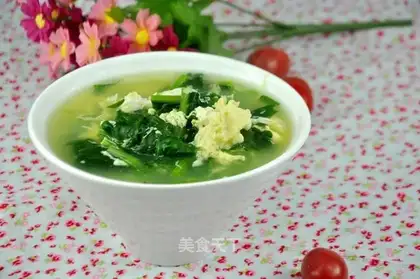 Spinach egg soup