Many families make stews, such as chicken soup, mutton soup, and fish soup. Many people believe that soup is more nutritious than the meat itself, but this is a misconception. In fact, the vast majority of the nutrients in the soup remain in the meat. Therefore, eating both the meat and the soup is the best choice.
White Radish and Mutton Soup
People believe that through long hours of simmering, the nutrients from the meat and other ingredients enter the soup, making the soup more nutritious than the meat. However, this is incorrect. Besides water, all the nutrients in the soup come from the ingredients. These ingredients contain both water-soluble and non-water-soluble nutrients. For example, water-soluble nutrients like vitamin C and minerals partially enter the soup, whereas 90%-93% of the non-water-soluble protein remains in the meat, accounting for less than 10% of the total in the soup.
Stews should not be simmered for too long, as this can easily lead to protein denaturation. It is best to choose organic meat and vegetables for the stew. Additionally, one should not consume excessive amounts of meat soup. Because meat contains a lot of fat, which dissolves into the hot soup during the cooking process, drinking too much soup can easily increase blood lipids, which is detrimental to cardiovascular health. For individuals with high blood lipids who need to supplement their protein intake, they can replace meat soup with tofu and vegetable soup. Furthermore, meat soup is high in purines, so patients with gout (due to abnormal purine metabolism) and those with elevated blood uric acid levels should consume it with caution.
Principles for selecting ingredients for meat soup: White meat is better than red meat, and smaller cuts are better than larger ones. The order is: shrimp (white meat) > fish (white meat) > chicken (white meat) > lamb (red meat) > pork (red meat) > beef (red meat).
Common ingredients in meat soup and their benefits
1. From the perspective of Chinese wellness and health, pork nourishes the kidneys and blood, and moistens yin to dryness. Drinking pork soup can provide quick relief from irritability, dry cough, constipation, and difficult labor caused by insufficient body fluids.
2. Beef has the effects of tonifying the spleen and stomach, replenishing qi and blood, strengthening muscles and bones, and reducing edema. When stewed with red dates, beef can help promote muscle growth and wound healing.
3. Mutton is warming to the spleen and stomach, used to treat conditions like nausea, emaciation, and aversion to cold caused by spleen and stomach deficiency cold. It also warms and tonifies the liver and kidneys, used to treat lower back and knee soreness and cold pain, as well as impotence caused by kidney yang deficiency. It also nourishes the blood and warms the meridians, used to treat postpartum lower abdominal pain caused by blood deficiency and cold in the uterus.
4. Chicken can warm the middle jiao and replenish qi, and also nourish the essence and marrow. It is used to treat conditions such as deficiency and emaciation, dizziness and palpitations, irregular menstruation, insufficient lactation after childbirth, thirst, edema, frequent urination, spermatorrhea, and tinnitus.
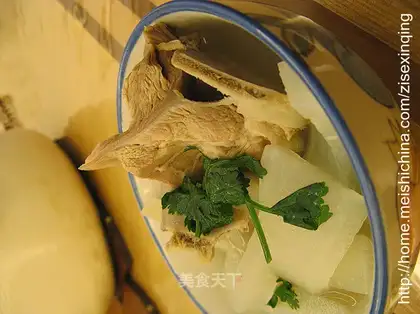 White radish mutton soup