In winter, the human body's metabolic rate slows down, making it a good season for health preservation. Diet therapy is a relatively important aspect of winter health preservation. Many people like to eat pig's blood in winter. Pig's blood is also known as liquid meat, blood tofu, or blood flower. Traditional Chinese medicine believes that pig's blood is sweet and bitter in taste, and warm in nature, with the effects of nourishing blood and beauty, and detoxification. In addition, pig's blood is rich in vitamins, protein, iron, calcium, etc. Let's introduce the benefits of eating pig's blood in winter in detail below.
Daylily Cooked with Pig's Blood
Promotes Detoxification
Pig's blood can effectively remove the damage caused by dust and harmful metal particles in the human body. Recent research has found that the protein in pig's blood, after being broken down by gastric acid, can produce a substance that disinfects and lubricates the intestines. This substance can have a biochemical reaction with dust and harmful metal particles that enter the body, and then excrete these harmful substances out of the body. It can be called the "cleaner" of human waste. Therefore, eating pig's blood often can expel harmful substances from the body.
Prevents and Treats Iron Deficiency Anemia
Because pig's blood has a high iron content, and it exists in the form of heme iron, which is very easily absorbed and utilized by the human body. Children in the growth and development stage, as well as pregnant or lactating women, should eat more dishes containing animal blood to prevent and treat iron deficiency anemia, and effectively prevent middle-aged and elderly people from suffering from coronary heart disease, arteriosclerosis and other diseases.
Hemostatic Effect
Because pig's blood contains vitamin K, it can promote blood clotting, so it has a hemostatic effect.
Provides Multiple Trace Elements
Pig's blood can provide the human body with multiple trace elements, which is beneficial for the recovery from kidney diseases, malnutrition, and cardiovascular diseases. It can be used to treat vomiting blood, nosebleeds, dizziness and blurred vision, collapse and fainting from blood loss, injury bleeding, and convulsions and epilepsy.
Anti-aging Effect
Pig's blood is rich in phospholipids, and phospholipids can increase the amount of acetylcholine, making the connection between nerve cells faster, thereby improving human memory. Therefore, patients with early senile dementia should eat more pig's blood.
Anti-cancer Effect
Medical practice has proved that the trace element cobalt in pig's blood can prevent the growth of malignant tumors. Scientists have isolated a substance from pig's blood called "trauma hormone", which can remove necrotic and damaged cells, and can act on injured tissues, making them gradually heal and return to normal function. This is difficult to obtain in other foods.
The above are the 6 major benefits of eating pig's blood in winter. Do you often eat pig's blood in winter? Teachers often absorb a lot of chalk dust while standing in the classroom, so at this time, you can eat more pig's blood to avoid affecting your health!
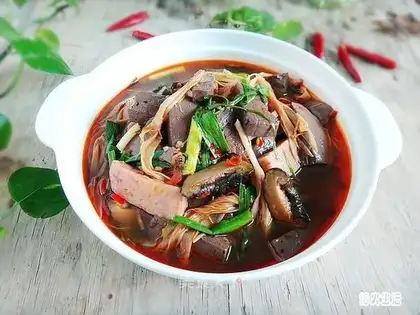 Pork's blood is cooked in yellow broccoli