Longan, also known as dragon's eye, is a fruit that can be eaten fresh or processed into dried products. Its flesh, seed, peel, and root can all be used for medicinal purposes, making it a fruit that is both medicinal and edible. Eating longan in winter helps to promote blood circulation.
In autumn and winter, many women are prone to symptoms such as cold hands and feet and a pale complexion due to poor blood circulation in their limbs. At this time, eating longan appropriately can effectively replenish qi and blood, promote blood circulation, and improve the condition of cold hands and feet.
Red Date, Longan, and Tremella Soup
According to Traditional Chinese Medicine, longan can nourish the heart and spleen, benefit qi and blood, strengthen the spleen and stomach, and nourish the muscles. It can be used as an auxiliary treatment for conditions such as spleen injury due to overthinking, dizziness, insomnia, palpitations, post-illness or postpartum weakness, and bleeding disorders caused by spleen deficiency. Li Shizhen said: "Longan is a great tonic," and "longan is the best for nourishment." Fresh longan fruit has the effects of stimulating appetite, strengthening the spleen, and replenishing to calm the spirit. Its processed products are ideal supplements for treating post-illness weakness, anemia and sallow complexion, neurasthenia, and blood deficiency after childbirth. In folk medicine, dried longan is often decocted with Codonopsis pilosula to treat qi and blood deficiency. Postpartum women can take this decoction to replenish qi and blood and recover their vitality. The elderly, weak, and sick can take this soup in winter to replenish qi and blood and resist cold and wind. Longan pulp is also often decocted with red-skinned peanuts to treat anemia and physical weakness. It is very suitable for people with neurasthenia, forgetfulness, and poor memory, and it also has an auxiliary therapeutic effect for patients with anemia caused by insufficient qi and blood in old age, postpartum weakness and fatigue, and malnutrition.
Nutritionists have found that longan is rich in glucose, sucrose, protein, and has a relatively high iron content. It can increase heat energy, supplement nutrition, and promote the regeneration of hemoglobin, thereby achieving a blood-nourishing effect. Research has found that in addition to its overall tonic effect, longan pulp is particularly effective for brain cells, enhancing memory and eliminating fatigue.
However, longan is considered a "damp-heat" food. Eating too much can easily lead to qi stagnation, and it should not be consumed when there are symptoms of "heatiness" and inflammation. It is contraindicated for those with internal phlegm-fire, yin-deficiency with blazing fire, or dampness retention. It should also be avoided when there is a thick, greasy tongue coating, qi stagnation and abdominal fullness, loose stools, wind-cold cold, or indigestion. Dried longan has a high natural sugar content, so it is contraindicated for diabetics. It is also contraindicated for those with acne, surgical carbuncles and sores, pelvic inflammatory disease, urethritis, or menorrhagia.
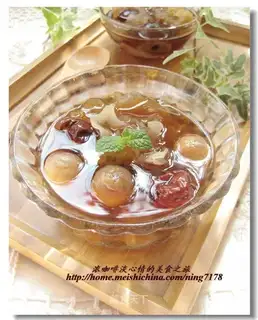 Red dates, longan and white fungus soup