It's time to eat chestnuts again, with the sweet aroma of sugar-roasted chestnuts filling the streets and alleys. Many people also like to buy raw chestnuts to roast at home, but they struggle with how to select them. Dong Yi, a nutritionist from the Medical Rehabilitation Center of the People's Liberation Army, explains that one criterion for selecting raw chestnuts is to look at their shape—whether they are flat or round. Generally, the rounder they are, the sweeter they are, and those that are flat on both sides are the least sweet.
Unripe chestnuts are wrapped in a large spiny ball. When there is only one chestnut inside the ball, it is perfectly round. When there are two, they are semi-circular. When there are three, the middle one gets flattened because it receives less sunlight and is naturally less sweet. Therefore, the rounder the chestnut, the sweeter it is, followed by those that are round on one side and flat on the other, and lastly, those that are flat on both sides. Also, avoid choosing chestnuts that are exceptionally large, as they tend to have more moisture and a relatively milder sweetness.
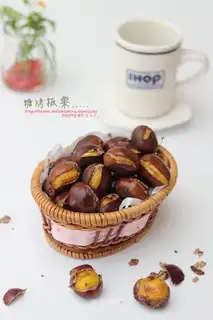
Sugar-Roasted Chestnuts
Be cautious when buying chestnuts that are pitch-black and shiny.
The normal color of sugar-roasted chestnuts is reddish-brown, not extremely black and shiny. If the chestnuts' outer skin is overly yellow and bright or pitch-black and shiny, feels smooth and not sticky, and retains this color for a while after purchase, they may have been roasted with paraffin. Paraffin itself is not particularly harmful to health, but if the vendor uses industrial paraffin, the situation is very different. Industrial paraffin has a complex composition and contains carcinogenic "polycyclic aromatic hydrocarbons," which can damage the brain's nerves and liver. Therefore, never buy these abnormally black and shiny sugar-roasted chestnuts.
To improve the texture of chestnuts, sugar is added during the roasting process. However, we must guard against unscrupulous vendors adding "sodium saccharin" (excessive consumption of sodium saccharin can affect the absorption function of the human digestive tract, and it can also produce some carcinogens when roasted at high temperatures). If sugar-roasted chestnuts are made with white sugar, they will have a sweet taste characteristic of white sugar. However, if they taste extremely sweet at first but leave a slightly bitter aftertaste in the mouth after a while, it likely indicates that sodium saccharin was added, so be careful.
Eating chestnuts for health benefits—no more than ten a day.
Chestnuts are nutritious, with a protein content twice that of sweet potatoes and a high vitamin C content of 22 mg/100 grams, several times higher than in fruits like apples and pears. Although botanically classified as nuts, in terms of nutritional value, dried chestnuts contain 50% to 60% starch, which is similar to that of coarse grains.
Many people love sugar-roasted chestnuts and can't stop eating them. However, although chestnuts are good for you, they should not be consumed in large quantities. Raw chestnuts are difficult to digest, and cooked ones can easily cause bloating. Furthermore, their high protein and starch content creates a strong sense of fullness, which can lead to abdominal distension and even indigestion, affecting the intake of regular meals and other foods like vegetables and fruits. Moreover, eating too many will also lead to excessive calorie intake, which is not conducive to weight control.
 Chestnut