Everyone knows that mushrooms are nutritious and delicious, but what are the specific benefits of each type, and what's the best way to eat them? Oyster mushrooms relieve pain, and straw mushrooms are detoxifying.
"Natural Cancer Fighter": Shiitake Mushroom
Shiitake mushrooms, known as the "king of mushrooms," have the best anti-cancer properties and a significantly higher vitamin D content than other varieties. For children, eating more can accelerate calcium absorption and promote bone development. Shiitake mushrooms have a strong flavor, making them suitable for braising, stewing in oil, or in soups. Since the nutrients in dried shiitakes are easily extracted, they should be washed and then rehydrated in a small amount of water. When cooking, the water used to rehydrate the mushrooms can also be added to the pot.
"Pain Reliever": Oyster Mushroom
Oyster mushrooms contain oyster mushroom polysaccharides, and their taurine is a component of bile acid, which can dissolve cholesterol and help digest and absorb fats. Therefore, they can relax muscles and activate collaterals, making them most suitable for the elderly with soreness and pain in the waist and back. Stir-fried with meat, stewed with pork ribs, or scrambled with eggs, oyster mushrooms are suitable for all ages, helping to replenish qi and increase resistance.
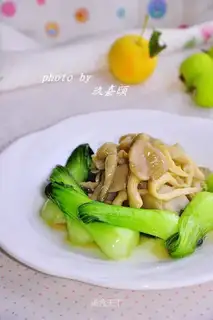
Oyster Mushrooms Stir-fried with Bok Choy
"Brain Gold": Enoki Mushroom
Enoki mushrooms can promote brain development, so children should eat more of them. They are an excellent choice for cold salads and hot pot, but they should be boiled for at least six to seven minutes to avoid poisoning. If you buy enoki mushrooms that are unnaturally white, they may have been bleached with sulfur; it's best to blanch them in salted boiling water. People with a weak spleen and stomach should not eat too many.
"Detoxifier": Straw Mushroom
Straw mushrooms have a detoxifying effect. They can bind with lead, arsenic, and benzene that enter the human body and excrete them through urine. Most straw mushrooms on the market are canned, so the cooking time should be longer to remove any off-flavors.
"Gastrointestinal Protector": Lion's Mane Mushroom
Lion's mane mushrooms have excellent nourishing and digestive-promoting properties. They contain various amino acids and rich polysaccharides, which can aid digestion, promote sleep, relieve asthma, and repair smooth muscle. They are suitable for people with poor gastrointestinal health and asthma. Lion's mane mushrooms should first be steamed and then cooked. It's best to cook them until they are as soft as tofu to fully release their nutrients. When simmered with chicken, the soup is not only delicious but also has anti-aging and life-extending effects.
In addition, porcini mushrooms are generally used in chicken and meat stews; porcini and chicken slice soup has the effect of tonifying deficiency, refreshing the mind, and preventing colds. Tea tree mushrooms are suitable for stir-frying. King oyster mushrooms are best julienned and served cold, with a texture similar to abalone. White mushrooms are relatively light and have a great taste in soups. Matsutake and bamboo fungus have preservative effects; if you're worried about not finishing a meat stew, adding some bamboo fungus can extend its shelf life.
 Pink mushrooms