It is understood that fake tofu is made by mixing, stirring, and precipitating isolated soy protein, modified starch, and a whitening agent. Isolated soy protein is a protein supplement produced from low-temperature desolventized soybean meal. Modified starch is an edible, modified starch, and the "whitening agent" is a non-toxic, odorless white powder often used to whiten food. This type of tofu is similar to frozen tofu, is rich in pores, has no nutritional value, and contains added pigments, so eating it is certainly not beneficial.
Traditional tofu, on the other hand, is made by grinding soybeans into soy milk and then adding gypsum using the curdling method. It contains high-quality protein and has the effects of lowering blood pressure, blood lipids, and cholesterol. It can be eaten cooked or raw and is suitable for both the old and the young.
Scallion and Century Egg Tofu Salad
So, how can you tell the difference between real and fake tofu? Experts teach you three tips for identification.
One: Look. Take a piece of tofu and observe it directly in scattered light. Traditional tofu has a uniform milky white or light yellow color with a slight sheen. Artificially synthesized tofu, because it contains a whitening agent, is much whiter than traditional tofu and has no sheen.
Two: Touch. Traditional tofu feels elastic to the touch and is moderately soft and firm. The cut surface of artificially synthesized tofu is relatively rough, the texture is not delicate, the elasticity is poor, and no white tofu liquid is expelled.
Three: Smell. Sniff its aroma directly at room temperature. Traditional tofu is made from soybeans and has the aroma of soybeans. Artificially synthesized tofu is made from isolated soy protein, so its smell is very faint and may even have a chemical odor.
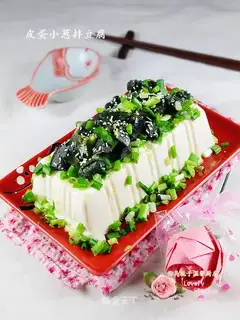 ♪ Little onion egg tofu ♪