As winter, especially after the Winter Solstice, is predominantly cold, nourishment should focus on warm and heating foods to tonify Yang energy and defend against cold pathogens. As the saying goes, "Nourishment from medicine is not as good as nourishment from food." Many common winter foods have excellent properties for tonifying Yang and preventing cold.
According to traditional Chinese medicine theory, winter health preservation and nourishment can be approached from four aspects: tonifying Qi, nourishing Blood, nourishing Yin, and tonifying Yang.
Nourishment from four aspects
Qi-tonifying foods refer to those that benefit Qi and strengthen the spleen, providing relief for Qi deficiency. Examples include rice, glutinous rice, peanuts, Chinese yam, carrots, soy milk, and chicken.
Blood-nourishing foods are those that benefit Blood deficiency, such as animal liver, longan pulp, black fungus, spinach, carrots, pork, sea cucumber, and various fish, all of which have blood-nourishing effects.
Yin-nourishing foods are those that nourish Yin fluids, generate body fluids, and moisten dryness, providing relief for Yin deficiency. Examples include tremella, black fungus, pears, milk, eggs, grapes, and Chinese cabbage.
Yang-tonifying foods are those that benefit Yang deficiency, such as dog meat, mutton, and shellfish. Walnuts, chives, goji berries, and eel also have Yang-tonifying properties.
"Additionally, some nuts like walnuts and chestnuts are rich in minerals, fiber, and other nutrients, making them excellent choices for winter consumption." However, Director Li reminds everyone that while winter nourishment is beneficial, it should not be done indiscriminately. It is best for individuals to consult a doctor first to determine the type of deficiency they have and whether nourishment is necessary. Furthermore, one should also understand the contraindications associated with nourishment. For instance, chicken soup, though highly nutritious, is not suitable for everyone.
Specific introduction to 6 traditional foods for tonifying Yang and preventing cold
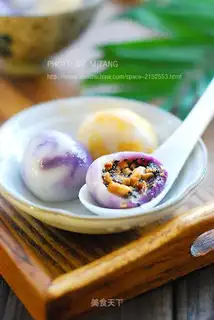
Colorful Cloud Tangyuan (Sweet Rice Balls)
Tangyuan (Sweet Rice Balls)
Eating tangyuan on the Winter Solstice is a popular custom in the Jiangnan region. Common ingredients for tangyuan, such as glutinous rice, sesame, and red beans, are also considered warm in nature and have a good effect on strengthening the spleen. A healthy spleen and stomach are essential for the body to absorb and utilize nutrients, thereby enhancing the body's ability to resist cold and prevent disease, making them most suitable for winter consumption.
Dumplings
The saying "Eating dumplings on the Winter Solstice prevents one's ears from freezing" originates from the sage of medicine, Zhang Zhongjing. He saw people's ears getting frostbitten in the severe cold and used bread to wrap medicinal herbs that dispelled cold, creating "Jiao'er Soup" to cure them. Today, eating dumplings on the Winter Solstice is no longer for treating frostbite, but the rational combination of dough, vegetables, and meat makes dumplings a nutritious and easily digestible food. For dumplings, fillings can be made with mutton, cabbage, green onions, chives, or radish, all of which are warm in nature and can provide a certain warming effect on the body.
Eight Treasure Porridge
Steaming hot Eight Treasure Porridge is well-suited for the winter diet's preference for warm and soft foods. Traditional Chinese medicine believes that eating congee can strengthen the spleen and warm the stomach, and it also has a certain Yin-nourishing effect, which counteracts the dryness of winter. To enhance its warming effect, we can choose ingredients that are warm in nature or mild and beneficial to the spleen and stomach when cooking the porridge, such as Job's tears, red dates, walnuts, peanuts, chicken, mutton, glutinous rice, longan, Chinese yam, and tremella. We can be creative and combine these ingredients into delicious porridges, such as mutton porridge, chicken porridge, glutinous rice and red date porridge, millet and Chinese yam porridge, and tremella, red date, and rice porridge.
Radish
There is a folk saying: "Radish in winter, ginger in summer; eating them in season keeps illness away." Another saying goes: "Winter radish is better than ginseng." Therefore, eating radish on the Winter Solstice is most nourishing. On the night of the Winter Solstice, it is the perfect time to stew a hot pot of radish and pork rib soup to supplement nutrition, nourish the body, and enhance cold resistance.
Wontons
Old Beijing has the saying, "Wontons for the Winter Solstice, noodles for the Summer Solstice." The "Yanjing Sui Ji" (Record of Annual Festivities in Yanjing) states: "The shape of wontons is like an egg, somewhat resembling the primordial chaos of heaven and earth, so they are eaten on the Winter Solstice." Besides the similar shape, the word "wonton" (hundun) is a homophone for "chaos" (hundun). Eating wontons in winter helps the body store heat energy during the cold season.
Mutton
In many northern regions, there is a custom of eating dog meat and mutton on the Winter Solstice. Traditional Chinese medicine believes that both mutton and dog meat have the effect of strengthening Yang and tonifying the body. In fact, in the Jiangnan region, people in Suzhou also begin to nourish themselves from the Winter Solstice, and the food they eat is the famous Wuzhong Cangshu mutton.
 The clouds are full