Mung beans can reduce swelling, promote circulation, clear heat, and detoxify. Li Shizhen said: The flesh of the mung bean is neutral in nature, while the skin is cooling. It can counteract all kinds of poisons, including those from metals, arsenic, and plants. It is suitable to be ground raw with the skin on, mixed with water, and consumed. Therefore, in Traditional Chinese Medicine, mung beans are not only an important ingredient for reducing internal heat but are also commonly used to rescue patients from poisoning.
When mung beans sprout into mung bean sprouts, their detoxifying and heat-clearing effects remain unchanged. During the sprouting process, the vitamin C content increases significantly, and some of the protein breaks down into various amino acids needed by the human body, reaching up to seven times the original amount in the bean. Therefore, mung bean sprouts have greater nutritional value than mung beans. Eating sprouted vegetables is a new trend in recent years. Among sprouts, mung bean sprouts are the most affordable and nutritious, making them a nutritious and trendy vegetable for the common people. Mung bean sprouts are also one of the foods advocated by natural foodists.
Chilled Mung Bean Sprouts
High Medicinal Value of Mung Bean Sprouts
In addition to being rich in nutrients, mung bean sprouts also have high medicinal value. Traditional Chinese Medicine believes that mung bean sprouts are cooling and sweet in flavor. They can not only clear summer heat, unblock the meridians, and counteract various toxins, but also tonify the kidneys, promote urination, reduce swelling, and nourish yin to support yang. They also regulate the five organs, improve the skin, and dampen dampness-heat. They are suitable for patients with damp-heat stagnation, poor appetite and fatigue, vexation and thirst from febrile diseases, constipation, difficult urination, red and swollen eyes, and sores in the mouth and nose. They can also lower blood lipids and soften blood vessels.
Therefore, in winter, you might choose mung bean sprouts as a substitute for mung beans. This can not only achieve the effect of clearing heat and detoxifying, but also supplement vitamin C and boost immunity. However, mung bean sprouts have relatively coarse fiber and are difficult to digest. Also, their nature is on the cool side, so people with a weak or cold spleen and stomach should not eat them for long periods.
Cooking Tips for Mung Bean Sprouts
When cooking mung bean sprouts, you must pay attention to several key points: First, when stir-frying them, try to use a light stir-fry method and do not add a large amount of oil or meat, as this will lose the light and refreshing characteristic of the sprouts themselves, making them difficult to eat. Additionally, because mung bean sprouts are rich in vitamin C, they should not be stir-fried for too long, nor should they be added to the wok when the oil temperature is very high, otherwise the vitamin C will be lost in large quantities, affecting the nutritional value of the sprouts. While stir-frying, you can add a small amount of vinegar or a few drops of lemon juice. This not only makes the taste crisp and refreshing but also prevents a large loss of vitamin C.
Mung Bean Sprout Recipe 1: Chilled Mung Bean Sprouts
Wash the mung bean sprouts, shred the carrot, and blanch both in boiling water. Remove and soak in cold water, then drain and place in a bowl. Finely chop the garlic and slice the chili. Add the chopped garlic, chili, chopped green onions, salt, a little MSG, vinegar, sugar, a little light soy sauce, and sesame oil to the vegetables. Heat a pan with cooking oil until it's very hot (about 80% hot), then pour it into the bowl and mix with the vegetables until well combined.
Mung Bean Sprout Recipe 2: Stir-fried Mung Bean Sprouts
Wash the mung bean sprouts. Remove the seeds from the chili and shred it, then chop the green onions and mince the garlic. Add a little oil to a wok. When it's 80% hot, add the green onions to fragrance the oil, then immediately add the shredded chili. Stir-fry briefly, then add the washed mung bean sprouts and continue to stir-fry. Add Sichuan peppercorn powder, a little soy sauce for seasoning, and salt. Stir-fry until well mixed, then add rice vinegar and stir for a couple more times. Finally, add the minced garlic and chicken powder and stir-fry until everything is evenly cooked.
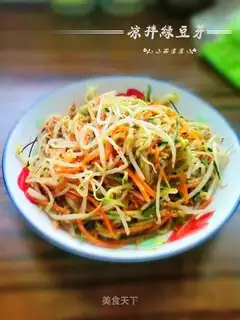 The green bean sprouts