A recent study by Dr. Luo Qiong and others from the School of Public Health at Wuhan University has found that the extract from kelp, known as fucoidan, has anti-radiation effects by inhibiting the apoptosis of immune cells.
Professor Luo Qiong and his team divided experimental rats into a normal group and a group treated with fucoidan. After exposure to high doses of gamma rays, they found that the immune function of the normal group was significantly impaired, while the group treated with fucoidan showed a significant enhancement in anti-radiation function. The proliferation of T and B lymphocytes was observed, and the splenic lymphocytes in the experimental group exhibited a proliferative response. Humoral, cellular, and non-specific immune functions were all restored.
Cold-dressed Shredded Kelp
Expert Comment: Electromagnetic radiation, isotope radiation, and other sources pose various harms to the human body. Dr. Luo's research indicates that the extract from kelp can mitigate the damage caused by gamma ray radiation on the body's immune function. In daily life, many other vegetables also have anti-radiation properties, although their effectiveness may be slightly less than that of kelp. These include black fungus, rapeseed, green vegetables, mustard, cabbage, radish, and others, which all possess functions to protect against radiation damage.
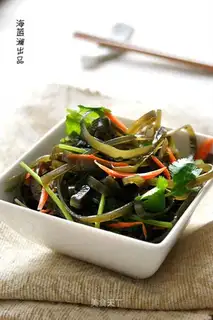 Shredded seaweed salad