It is widely acknowledged that women are very vulnerable during their menstrual period. It is especially important to take meticulous care of one's body during this time, with the most crucial aspect being attention to diet. So, what should women eat during their menstrual period?
Braised Beef
Dietary Conditioning During Menstruation
Diet during menstruation is different from usual. At this time, certain foods should be avoided, as consuming the wrong things can likely worsen discomfort symptoms. The following dietary principles should be observed:
One of the principles of diet for women's beauty and health is "cyclical diet," which aligns with the changes in the menstrual cycle. This is also the main difference in diet for beauty and health between men and women.
Many women experience some uncomfortable symptoms in the days before their period (premenstrual phase), such as depression, anxiety, emotional tension, insomnia, irritability, restlessness, and fatigue. It is generally believed that this is related to an imbalance in the ratio of estrogen and progesterone in the body. At this time, women should choose foods and medicines that are beneficial for skin and beauty, while also replenishing qi, soothing the liver, and regulating negative emotions. Examples include cabbage, grapefruit, lean pork, celery, japonica rice, duck eggs, stir-fried Atractylodes macrocephala, Chinese yam, Job's tears, lily, golden loofah, winter melon, kelp, sea cucumber, carrot, white radish, walnut kernel, black fungus, and mushrooms.
During the menstrual period, if symptoms such as poor appetite, lower back pain, and fatigue occur, foods that are beneficial for "the flow of menstrual blood" should be consumed. Recommended foods include: lamb, chicken, red dates, tofu skin, apples, Job's tears, beef, milk, eggs, etc.
The ancient scholar Zhao Zhibi said: "During the flow of menstrual blood, heat is commonly used, not cold, as cold will stop and retain the blood, preventing the impurities from being fully expelled, which can lead to issues like leucorrhea, urinary retention, and abdominal fullness." Therefore, during menstruation, many foods that are normally beneficial for skin and beauty should also be avoided, such as pears, bananas, water chestnuts, rock ear, jellyfish, water caltrop, winter melon, kale, black fungus, rabbit meat, and cannabis seeds.
As mentioned above, some blood is lost during menstruation. The main components of blood include plasma proteins, potassium, iron, calcium, magnesium, and other inorganic salts. This means that a certain amount of protein and inorganic salts are lost each time. Therefore, in principle, within 1-5 days after the period ends (post-menstrual phase), one should supplement with nutrients such as protein and minerals, and use some blood-tonifying medicines. During this time, foods and medicines that can both benefit the skin and have blood-nourishing and blood-activating effects can be selected, such as milk, eggs, quail eggs, beef, lamb, pig's pancreas, Gordon Euryale, spinach, cherries, longan pulp, lychee pulp, carrot, apple, Angelica sinensis, safflower, peach blossom, prepared rehmannia root, and polygonatum.
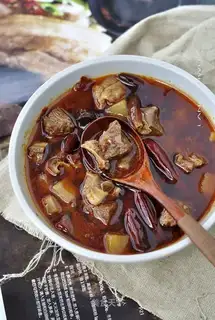 Red beef