Although chives are available year-round now, the most tender and delicious ones are still the spring chives. The "Compendium of Materia Medica" once recorded: "Chives eaten in spring are fragrant, but those eaten in summer are foul." So, it's a good idea to eat more chives in season, as there is quite a bit to learn about them.
Health Benefits: Stomach Health and Vascular Protection
From the perspective of Traditional Chinese Medicine, chives are warm in nature and best for nourishing yang energy. They have the effects of warming the middle jiao to promote qi circulation, dispelling blood stasis and detoxifying, warming the body, and strengthening the stomach. From the perspective of modern nutrition, chives are rich in dietary fiber and various vitamins and minerals. The dietary fiber promotes intestinal peristalsis, prevents constipation, and reduces the risk of colorectal cancer. The potassium can help alleviate symptoms of hypertension and heart disease. Another nutritional highlight of chives is their rich content of phytochemicals, such as sulfur compounds and volatile essential oils. These not only give chives their unique pungent aroma but also help with disinfection and sterilization, increase appetite, dilate blood vessels, prevent arteriosclerosis, and reduce the risk of cardiovascular diseases like coronary heart disease. Chives also contain substances like saponins and flavonoids, which can help boost immunity and lower blood lipids.
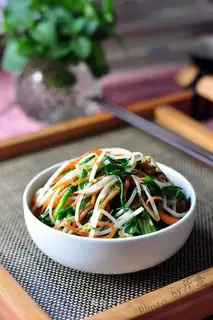
Stir-fried Chives with Tofu Skins
Variety Differences: Broad-leaf chives have a better texture, while narrow-leaf chives have a stronger flavor
On the market, chives are available in broad-leaf and narrow-leaf varieties. Broad-leaf chives have lighter green leaves, a lower dietary fiber content, a relatively better texture, but a milder flavor. Narrow-leaf chives have long, slender, dark green leaves, a higher dietary fiber content, a texture not as good as broad-leaf ones, but a more intense flavor. Therefore, for those who truly love chives, narrow-leaf chives should be the first choice. It should be noted that there is no significant nutritional difference between these two types.
Selection Tips: Chives with flat cut ends are fresh
When selecting chives, freshness is a crucial indicator. You need to look at the cut end of the roots. Generally, the flatter the cut, the fresher the chives. If you pinch the root end and the leaves can stand upright, it indicates good quality. If a section has grown from the root end, or if the leaves are limp, the chives may have been stored for a long time, and their aroma will be weakened. Additionally, fresh chive roots are white, contain more water, and look translucent; older chive roots are green. You can also pinch the root end—if it's easy to pinch, the chives are relatively fresh.
Preparation: Trim the roots by half an inch
Generally, the root end of chives is where the most pesticide residue is found. The pest that poses a fatal threat to chives, the "chive maggot," lives underground and specifically feeds on the roots, causing them to rot and break, preventing growth. Sprayed pesticides are usually ineffective against this pest; pesticides must be applied underground and poured into the root area to effectively eliminate the "chive maggot." Therefore, when eating chives, you must cut off at least half an inch of the root end. After picking them clean, rinse them under running water, soak for 10-15 minutes, and then rinse with clean water one or two more times.
Oyster Sauce Chive with Bean Sprouts
Cooking Tips: Use high heat and stir-fry quickly, do not add vinegar
Chives can be cooked in various ways, such as quick stir-frying, making fillings, soups, or cold-dressed salads. They can also be eaten directly by pickling with salt and spices. Since the sulfur compounds in chives are easily lost when heated, it's best to add the chives after other ingredients are cooked, then stir-fry quickly over high heat and remove from the heat immediately. It should be noted that vinegar should not be added during cooking, as it will cause the chlorophyll in the chives to discolor, making the dish unattractive.
Storage Reminder: Don't store "bare" in the refrigerator
If you can't eat the chives right away, pay attention to proper storage. If you plan to refrigerate them, it's best to seal them in a plastic bag first to prevent their pungent smell from spreading to other foods. You can also tie the chives with a string and place them root-end down in a basin of water. Alternatively, you can wrap them in large cabbage leaves and store them in a cool, ventilated place.
Dietary Restrictions: Three types of people should eat them in moderation
Although chives are nutritious, they are not suitable for everyone. Firstly, people with a "heaty" constitution, who often experience symptoms like constipation, dry mouth and tongue, or canker sores, should be cautious. Chives are warm in nature and have a warming effect; consuming large amounts can worsen these "heaty" symptoms. Secondly, chives are rich in dietary fiber, which promotes intestinal peristalsis but is not easily digested. Patients with stomach ulcers, those with gastrointestinal discomfort, or people with loose stools should eat chives in moderation, as a large amount of coarse fiber can irritate the intestinal wall and cause diarrhea. Finally, people who are recovering from a serious illness should also avoid eating chives, as their constitution is weak and their digestive function is poor.
 Pelican sprouts
 Spaghetti pizza