There's an art to making soup, and the techniques are crucial for creating a delicious and healthy broth. Here are the 10 simplest tips for making soup.
White Radish and Lamb Soup
Meat for soup should be soaked in cold water and then blanched.
After purchasing the meat, cut it into appropriate pieces and place it in a basin. Rinse it under running water in the sink. This not only removes blood but also eliminates any gaminess, impurities, and helps to tenderize the meat. After rinsing, soak it for about an hour. Then, blanch it in boiling water to further remove any remaining blood and odors, and to reduce some of the fat, preventing the soup from being too greasy.
Chinese medicinal herbs for soup should be rinsed.
Chinese medicinal herbs are often processed through drying, sun exposure, and storage, which can leave them covered in dust and impurities. Before use, it's best to give them a quick rinse with cold water. However, be careful not to rinse for too long, as this can wash away their water-soluble ingredients. Additionally, don't buy too many Chinese herbs at once to avoid spoilage or loss of flavor if they are stored for too long. The amount of water added is also an art.
This is the key to making soup. Research has found that different ratios of ingredients to water, such as 1:1, 1:1.5, and 1:2, result in significant differences in the soup's color, aroma, and flavor. The best result is achieved with a 1:1.5 ratio. Nutritional analysis of the soup shows that at this ratio, the content of ammoniacal nitrogen (a component that represents amino acids) is also the highest, even higher than when less water is used. This is because too little water means the ingredients are not fully submerged, affecting the concentration of nutrients. As more water is added, the concentration of ammoniacal nitrogen in the soup is diluted and decreases. However, the calcium and iron content in the soup is highest when the ratio of ingredients to water is 1:1.
Simmer slowly over low heat, but not for too long.
Although soup requires long, slow cooking, longer is not always better. Most soups are best simmered for 1 to 2 hours, while meat-based soups achieve the freshest flavor after 2 to 3 hours. If the soup is mainly leafy vegetables, it should not be cooked for too long.
Controlling the heat is crucial.
Typically, start by bringing the soup to a boil over high heat. This is especially important for meats with bone marrow, as high heat helps to draw out the blood and scum, preventing the broth from becoming cloudy. Once it boils, reduce the heat to low, close to the center of the stove, and let it simmer slowly. Remember to avoid fluctuating the heat, as this can cause the ingredients to stick to the pot and ruin the soup's flavor.
Season to enhance the flavor.
If you prefer a light, original flavor, you can skip seasoning. If you do want to season, it's recommended to add salt just before turning off the heat. Adding salt too early will cause the meat to release its moisture and speed up the coagulation of proteins, affecting the soup's umami. If you prefer a stronger flavor, you can also add chicken powder or mushroom powder. If cooking fish, you can add a moderate amount of ginger slices or rice wine to remove any fishy smell.
Pairings should be appropriate.
Many foods have established pairing methods that create a complementary nutritional effect, known as the "golden pairings" on the dining table. For example, in a soup of stewed meat with kelp, the acidic meat and the alkaline kelp combine for a synergistic effect, which is a popular longevity food in Japan's longevity regions. To ensure a pure and authentic flavor, it is generally not recommended to mix different types of animal proteins in the same soup.
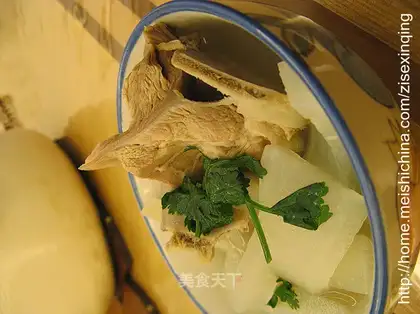 White radish mutton soup