Many children dislike eating vegetables, and parents often rack their brains to cook vegetables in various ways in the hope of supplementing their children's nutrition. However, some of these methods contain some misconceptions.
Misconception 1: Using blenders and food processors to make vegetable and fruit juices.
Children who don't like to eat vegetables and fruits usually can't resist fruit and vegetable juices. Mothers often hope to supplement their children's nutrition with juices. However, if you use a blender or food processor to chop fruits and vegetables, it is easy to cause a loss of vitamin C. This is because during the blending process, vitamin C in the fruits and vegetables comes into extensive contact with the air and is thus oxidized, leading to a loss. Therefore, if you are making raw fruit and vegetable juice, it is best to use a manual juicer to reduce the possibility of oxidation.
Misconception 2: Juicing carrots with other vegetables.
When making vegetable juice, people usually consider mixing as many types of vegetables as possible to achieve a variety of nutrient intakes. However, it is not good to juice carrots with other vegetables. Carrots contain vitamin C oxidase, which can destroy the vitamin C in other vegetables. Therefore, carrots should not be used when juicing.
Carrot and Orange Juice
Misconception 3: Discarding the water used to cook vegetables.
Generally, after vegetables are cooked, their volume decreases, meaning people can consume more vegetables compared to eating them raw. However, vitamin C is not heat-resistant and is easily lost once heated. Therefore, after cooking vegetables, the broth should not be discarded. To avoid losing vitamin C, the broth, which contains vitamin C, should be used reasonably or consumed.
Misconception 4: Soaking vegetables in cold water for a long time.
When vegetables are used for salads, they are often briefly soaked in cold water after being cut to maintain their crisp flavor. However, long-term soaking can lead to a loss of nutrients, as water-soluble vitamins will slowly leach into the soaking water. Therefore, soaking vegetables in water for a long time is a very wrong practice.
A warm reminder from the 99 Nutritionist: Vegetables are rich in vitamins and minerals, but these nutrients are also easily lost. Therefore, pay attention to the methods of consuming vegetables to better preserve their nutritional value.
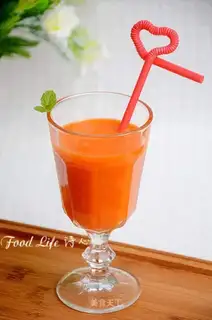 Carrot orange juice