Stir-fried pork is a dish we often eat. However, if cooked improperly, its nutrients can be destroyed. So, how can you make stir-fried pork more nutritious? Learn these three tricks to double the nutrition of your stir-fried pork.
Three tricks to double the nutrition of stir-fried pork
Marinate and batter, and use starch thickener effectively
Marinating and battering the pork belly slices with starch and egg can prevent the loss of moisture and nutrients from the ingredients. At the same time, the formed starch gel layer can isolate high temperatures, preventing the decomposition of vitamins and the denaturation of proteins. Additionally, using a starch thickener during cooking can thicken the juices that seep out from the ingredients and coat the dish's surface, making the dish smooth, tender, and delicious. It also allows you to consume the nutrients leached from the ingredients along with the dish, reducing nutrient loss.
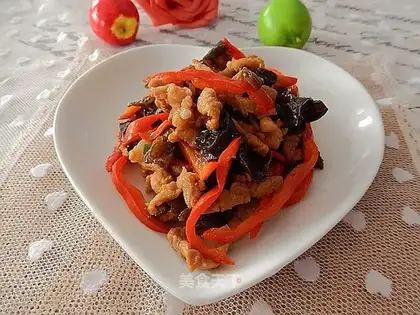
Stir-fried pork with red peppers and wood ear mushrooms
Wash before cutting, and stir-fry over high heat quickly
Washing peppers before cutting can reduce the loss of water-soluble vitamins. You should also cut them just before cooking to minimize oxidative damage to nutrients. Stir-frying over high heat quickly keeps the stir-fried pork fresh and fragrant, and it shortens the cooking time, reducing the destruction of nutrients, especially heat-sensitive ones like vitamins C and B1.
Use more vinegar, less alkali
Vitamins have the characteristic of "liking acid and fearing alkali." They are stable in acidic conditions but easily decompose in alkaline conditions. Therefore, adding some vinegar during cooking can reduce vitamin loss. At the same time, when cooking pork belly, vinegar can promote the dissolution of minerals like calcium, increasing the absorption rate of nutrients such as calcium. Alkali not only destroys vitamins but also proteins, so it should be used sparingly.
 Paprika