According to Traditional Chinese Medicine, the climate in spring is inconsistent, with alternating cold and warm temperatures. The elderly should first prevent colds, as exposure to wind and cold can cause relapses of old illnesses or trigger new ones. At this time, regular consumption of "Three Congees" by the elderly can have a health-preserving effect.
The ancient medical book "Qian Jin Fang" records: "In spring, it is advisable to eat congee, with three recipes: First, Rehmannia Congee, to nourish deficiency. Take Rehmannia, pound it to extract the juice, and add it when the congee is half-cooked. Then, wrap 50 grains of Sichuan pepper and a slice of ginger in a cloth and cook with it. When the congee is cooked, remove the cloth, then add one cooked lamb kidney, cut into thin strips the size of chive leaves, and a small amount of salt before eating. Second, Saposhnikovia Congee, to expel wind from the limbs. Take a large portion of Saposhnikovia, decoct it in water to make a congee. Third, Perilla Congee. Take Perilla seeds, stir-fry until slightly yellow and fragrant, then decoct them to make a congee." The common feature of these three congees is their ability to resist wind and cold, dampness, and clear heat from the blood. Taking Rehmannia Congee as an example, it clears heat and cools the blood, and treats constipation in the elderly caused by the depletion of body fluids. The pepper and ginger in the congee have the effect of warming the middle jiao to dispel cold and restore yang to unblock the meridians. Adding lamb kidney can tonify the kidneys and benefit the lungs. Furthermore, Saposhnikovia Congee can induce sweating, expel wind, resist dampness, and treat the elderly's body-wide joint pain, headaches, and dizziness. Perilla Congee can disperse wind and cold, and has effects such as regulating qi to relax the chest, relieving depression, and resolving phlegm.
Eight Treasure Congee
For the elderly with a weak constitution, tonifying medicines that replenish vital energy should be used.
The foremost medicine for replenishing vital energy in spring is Ginseng. Ginseng has a sweet and neutral nature, with the effects of strengthening the spleen and benefiting the lungs, and also calming the mind. Traditional medicine holds that if one feels fatigued and weak, with slight aversion to cold, it is a sign of insufficient yang qi. Red Ginseng (such as Piwei Ginseng or Ginseng rootlets) can be taken. A relatively simple method is to first soften the Red Ginseng over a flame, then slice it. Each time, take 3-5 grams, place it in a small porcelain bowl, add about half a bowl of water, steam it in a water bath, and then drink it. Take it once or twice a day. In addition to Red Ginseng, 15-30 grams of Dangshen or Taizishen, along with 10-15 red dates, can be decocted and consumed. Although its effects are not as potent as Ginseng, it also has a certain effect of replenishing qi.
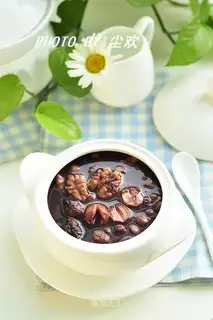 Porridge