When buying fruits, it's not an easy task to pick them correctly depending on the type. Come and take a quick look at the methods we're about to introduce to you below.
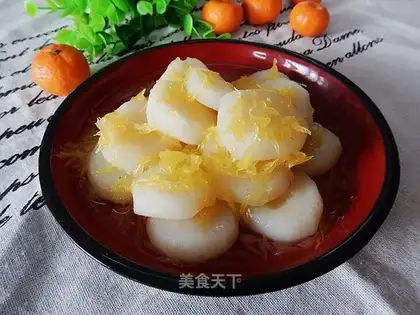
Orange and Water Chestnut
What fruits are good to eat in spring?
Water Chestnut--Moistening Dryness and Promoting Diuresis
Water chestnut, known as "underground snow pear" and "Jiangnan ginseng," is an excellent fruit for moistening dryness. In spring, when the weather is still relatively dry, you might as well eat some water chestnuts.
With its thin skin, crisp, tender, and juicy flesh, and fresh, refreshing taste, water chestnut is a great food for clearing lung dryness. The "Compendium of Materia Medica" records that water chestnut has the effects of reducing fire, tonifying the lungs and cooling the liver, aiding digestion, and resolving phlegm.
Strawberry--Moistening the Lungs and Promoting Body Fluids
Strawberries are rich in nutrients and have a high content of anthocyanins, which have antioxidant effects. Moreover, strawberries are also not low in vitamin C, with 47 milligrams per 100 grams, even higher than oranges. In addition, strawberries are also rich in organic acids, pectin, etc., so they can truly be called the "all-around champion" among fruits.
Pineapple--Clearing the Stomach and Quenching Thirst
Pineapple, originally named Fengli, is native to Brazil and was introduced to China in the 16th century. It has more than 70 varieties and is one of the "Four Famous Fruits of Lingnan." Pineapple contains a large amount of fructose, glucose, vitamins A, B, C, phosphorus, citric acid, and protease, etc. Pineapple is mild in nature and sweet in taste, and has the effects of strengthening the stomach and aiding digestion, tonifying the spleen and stopping diarrhea, clearing the stomach and quenching thirst, and nourishing the skin.
Cherry--Strengthening the Spleen and Stimulating the Appetite
Cherry is honored as "the first branch of spring fruits" and is a fruit especially suitable for eating in spring. Cherry fruits are thick-fleshed, delicious, juicy, brightly colored, and nutritious, rich in iron. Moreover, cherry is warm in nature and sweet and slightly sour in taste, with the effects of tonifying the middle and replenishing qi, regulating the middle and improving complexion, strengthening the spleen and stimulating the appetite. Eating cherries in spring can induce sweating, replenish qi, expel wind, and promote the eruption of rashes. Special attention should be paid to: those with yin deficiency and excessive internal heat should avoid or eat less.
Selecting Fruits Requires "Looking, Smelling, Asking, and Touching"
Look: Size, shape, and color. Good fruits are generally of medium size. Too small ones may be underdeveloped and tend to be sour; too large ones may be overgrown, possibly with some parts overdeveloped. It is always right to choose fruits that are closest to the description of their botanical morphology. Good fruits must have uniform color. Fruits with two colors that are too different (such as deep red and deep green) will either be sour, astringent, or overly sweet when eaten. If there are black or brown spots on the fruit, it's best to give up.
Smell: Aroma. Ripe fruits will emit a unique aroma. You can smell the bottom of the fruit; the stronger the aroma, the sweeter the fruit.
Ask: Growth period. Collect information on the few fruits you often eat, understand their growth period and growing conditions, environment, etc., which can improve your ability to distinguish when selecting fruits.
Touch/Press/Water test: This is mainly for some fruits that need to be peeled, such as citrus fruits and watermelons, which should be touched carefully by hand. A too rough surface represents a thick skin, because roughness is caused by the proliferation of peel tissue, but too smooth a surface may indicate that the fruit is not yet ripe. When selecting, you can gently press the fruit to judge the thickness of the skin and the degree of ripeness.
Secrets to Selecting Various Fruits
1. Apple. A fresh apple has a complete stem at the top, and the apple skin around the stem has no spots. This kind of apple is generally picked not long ago and is the freshest.
2. Pear. When selecting pears, it is best to choose those that are moderately soft and hard, with firm flesh but not too hard. It is best not to choose pears with shriveled skin and spots on the skin, as these are generally not fresh.
3. Orange. Oranges are not necessarily the better the smoother the surface, nor are they the better the more vibrant the color. Of course, it is not advisable to choose dull-colored ones either, as dull oranges are generally not fresh or may be "sick oranges."
4. Banana. When choosing bananas, you can choose between yellow and green according to your own needs.
5. Starfruit. When selecting starfruit, just like bananas, choose according to when you plan to eat it. If you plan to eat it immediately, choose a starfruit that is yellowish-green. If you plan to eat it in a few days, choose a harder, green starfruit.
 Orange