When seniors reach their later years, they often forget what they are about to do or where they just placed something. As a young child, do you sometimes feel helpless? But in reality, these are all common stages that many elderly people go through. So, what methods can help seniors overcome forgetfulness? Let's take a look together!
How can seniors improve forgetfulness?
1. Rubbing the forehead: Rub the area above the eyebrows with the palms of your hands over ten times.
2. Tapping the head and massaging the hair roots: First, lightly tap the entire head with the ten fingers of both hands over ten times. Then, rub the entire scalp with the ten fingers using a bit more force over ten times.
3. "Combing" the hair, massaging the temples, and rubbing the Baihui point: The temples are located two fingers to the side of the outer corners of the eyes, and the Baihui point is in the center of the top of the head. Massage each of these points over ten times. With both hands, use the ten fingers to perform a "combing" motion from the front hairline to the back hairline 12 times. Then, place the thumbs of both hands on the temples and use the remaining four fingers to support the top of the head, performing a straight-line massage from top to bottom and then bottom to top 12 times. Finally, with the thumbs on the temples, apply stronger pressure to rotate them, first clockwise and then counterclockwise, 12 times each.
4. Dry face rubbing: The final step in head massage to prevent forgetfulness and dementia is dry face rubbing. Starting from the eyebrows and eyes, use the roots of your palms to rub down to the chin with moderate force over ten times.
Improving forgetfulness starts with diet
The diet should generally include whole grains, legumes, fish, eggs, dairy, seafood, vegetables, and fruits. Attention should be paid to the daily variety of foods and updating of recipes to prevent elderly people from being picky due to monotonous food. When combining varieties, it is important to maintain a balance of various nutrients and appropriate proportions between them, while also considering the digestive function of the elderly to ensure it is easy to digest and absorb, forming a scientific and reasonable dietary structure suitable for them.
In China's dietary tradition, there is a habit of eating filled foods. According to nutrition experts, elderly people who often eat filled foods, such as buns, dumplings, and wontons, can not only increase nutrition but also benefit their health. Filled foods are composed of a variety of ingredients (including meat, fish, shrimp, legumes, eggs, vegetables, and seasonings), which prevents food monotony and provides a variety of nutrients. Filled foods are finely processed, which is beneficial for digestion and absorption, whets the appetite, and is suitable for elderly people with weak chewing functions. The vegetables in filled foods mostly contain a large amount of fiber, which helps increase gastrointestinal motility, beneficial for bowel regularity, lowering blood lipids and blood sugar, preventing arteriosclerosis, and preventing cancer.
What can you eat if you are always forgetful?
1. Peanuts
Among the most common foods we eat daily, peanuts are quite unremarkable. Yet, eating peanuts regularly can greatly help relieve and prevent forgetfulness, especially for office workers. Peanuts are rich in lecithin and cephalin, which are vital substances for the nervous system. They can delay brain function decline, inhibit platelet aggregation, and prevent cerebral thrombosis. Experiments have confirmed that regular consumption of peanuts can improve blood circulation, enhance memory, and delay aging, making them a truly "longevity fruit."
2. Milk
Who doesn't know that milk is a food with very high nutritional value? Drinking it regularly is very beneficial for physical and mental health and is one of the best choices for office workers to improve fatigue and forgetfulness. Milk is rich in protein, calcium, and amino acids essential for the brain. The calcium in milk is most easily absorbed by the body and is an indispensable substance for brain metabolism. In addition, it contains elements like vitamin B1, which is very beneficial for nerve cells. If you overuse your brain and suffer from insomnia, a glass of warm milk before bed can help you fall asleep.
Braised Walnut
3. Pumpkin
Pumpkin is a common vegetable in our lives and is also very nutritious. Pumpkin contains large amounts of beta-carotene, vitamin A, vitamin C, zinc, potassium, and small amounts of amino acids. The beta-carotene in pumpkin can help the body's nervous system speed up its reaction time and the speed of information transmission between brain cells. Substances like vitamin A and vitamin C can help nourish brain cells and repair damaged ones. Therefore, eating more pumpkin regularly can effectively prevent brain diseases. It can also treat symptoms of yin deficiency with fire effulgence, such as restlessness and thirst.
4. Walnuts
Walnuts are recognized as a traditional Chinese brain-boosting and intelligence-enhancing food because they are rich in unsaturated fatty acids. It is advisable to eat 2-3 walnuts daily, and only by persisting can you achieve the effects of nourishing the brain, enhancing memory, and eliminating mental fatigue. However, do not overeat, as excessive consumption can lead to dry stools or nosebleeds. Walnuts have the effects of warming the lungs to relieve asthma and preventing cell aging. They can also effectively improve memory, delay aging, and moisturize the skin. China has a saying that "like cures like," and the kernel of a walnut resembles the brain, so it can help the elderly supplement the nutrients they need, improve memory, and relieve symptoms of forgetfulness.
5. Bananas
Bananas are nutritious and low in calories. Bananas are also rich in unique nutritional elements such as tryptophan and vitamin B6. Tryptophan and vitamin B6 are essential nutrients for the growth and reproduction of brain cells. The human body cannot produce them and can only synthesize them from other nutrients, while bananas can directly supplement these two nutrients, making it more beneficial for the body's absorption and utilization. Secondly, bananas also contain many minerals such as potassium and phosphorus, which can help maintain brain health. Therefore, regular consumption of bananas can have a good brain-boosting effect.
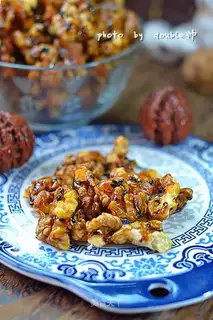 Amber walnuts