Many white-collar workers, especially women, enjoy drinking rose tea. Dried roses do have many health and beauty benefits. However, it is not suitable for everyone. These groups of people should absolutely not drink it.
Rose Tea
In traditional Chinese medicine, rose is the dried flower bud of the rose plant. It is favored for its effect of promoting qi and blood circulation, as well as for its beauty-enhancing properties. But just like its parent plant, the rose, it has "thorns"—meaning it has both suitable and unsuitable applications. Let's take a look!
People Unsuitable for Drinking Rose Tea
Traditional Chinese medicine holds that due to its medicinal properties, there are certain groups of people who should avoid consuming rose.
1. Those prone to constipation
Rose is warm in nature, slightly "hot," and has an astringent effect, which can worsen the symptoms of constipation.
2. Those with a yin-deficient constitution
Traditional Chinese medicine considers rose to be "hot" in nature. Frequent consumption can deplete body fluids, exacerbate symptoms caused by yin deficiency, and be detrimental to health.
3. Those with allergies
Individuals with allergies are very likely to have allergic reactions, such as rashes, after drinking rose tea, so it should be used with caution.
4. Pregnant women
Rose is contraindicated for pregnant women. Its strong blood-activating properties may be detrimental to fetal development. Additionally, those with anemia or a generally weak constitution should also drink it less frequently.
The most beneficial way to drink rose tea is to choose based on your individual constitution. Now, let's look at its benefits.
Benefits of Rose
1. Regulating menstruation
Traditional Chinese medicine believes that rose is excellent for regulating qi and blood circulation. Drinking it before menstruation can effectively treat irregular periods. However, it should be avoided during menstruation or if the flow is heavy, to prevent excessive blood loss that could lead to anemia.
2. Regulating mood
Traditional Chinese medicine holds that rose can soothe the liver, regulate qi, invigorate blood, and alleviate depression. It has calming and sedative effects. In today's high-pressure society, a cup of rose tea is perfect for soothing emotions and eliminating fatigue.
3. Detoxification and beauty enhancement
Roses are rich in various vitamins and minerals that can regulate endocrine function and promote metabolism. This can help replenish qi and blood, nourish the skin, reduce blemishes, and give the skin a healthy, rosy glow. It is suitable for both men and women.
Beauty-Enhancing Rose Tea
The Correct Way to Drink Rose Tea
1. Method 1
: Take 3-6 grams of rose, brew with 85°C water, drink twice a day. This is a ten-day course of treatment; pause after one course.
2. Method 2
① 3g rose + 2 red dates = to nourish qi and blood
② 3g rose + 1g honeysuckle + 2g hawthorn = to alleviate dry and dull skin
③ 3g rose + 3g goji berries = to regulate endocrine function
Editor's reminder: The best time to drink rose tea is in the afternoon or evening. Also, note that rose and chrysanthemum are one "warm" and one "cold" in nature, so they should not be consumed together.
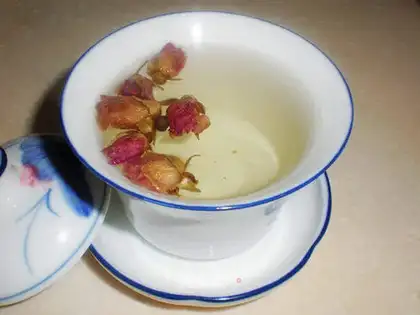 rose tea
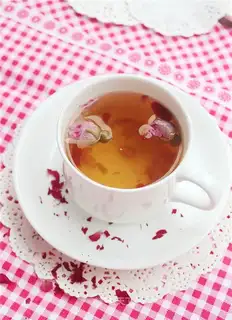 A rose-colored tea