As spring warms and flowers bloom, it's the perfect time for flower appreciation. Besides being a feast for the eyes, many flowers also have medicinal value. The flowers listed below, or their roots, stems, bark, and other parts, can be used to make tea and contribute to health and wellness.
1. Plumeria Flower
Plumeria is a common folk medicine in Lingnan for clearing heat and removing dampness. Also known as frangipani or egg yolk flower, its flowers are initially white and then turn yellow, while the dried medicinal product is black. It has a sweet, slightly bitter, and cool nature. It is often used for colds, damp-heat abdominal pain, diarrhea, and dysentery. In addition to clearing damp-heat, it can also expel external pathogens and prevent heatstroke.
Jasmine Green Tea
2. Jasmine Flower
Jasmine is an excellent remedy for soothing and nourishing the liver. It can relieve depression, and both fresh and dried flowers can be used. It has a pungent, sweet, and slightly warm nature. It is suitable for those with a deficient constitution affected by external wind-cold, but should be used with caution by those with intense internal heat, dryness, and constipation.
3. Hyacinth Bean Flower
Hyacinth bean flower is the flower of the hyacinth bean. It is aromatic, awakens the spleen, and can relieve summer heat and dampness. Choose fresh flowers that are aromatic, large, and white; do not use those that are black and spoiled. It has a sweet and neutral taste. It is effective when used at the beginning of a child's cold or when they are affected by summer heat and dampness. The typical dosage is 7.5 to 15 grams per use.
4. Kudzu Flower
The flower of the kudzu root, it has the effects of expelling external pathogens and clearing heat. It can disperse damp-heat, relieve neck and shoulder stiffness and pain, and also helps to alleviate alcohol-induced heat and vomiting.
5. Rose
Rose tea is gentle in nature, suitable for both men and women. Its fragrance can help alleviate menstrual cramps, breast tenderness, and other discomforts for women, and also helps to soothe emotions and balance hormones. There are many ways to eat roses, such as Yunnan rose cakes, rose tea, rose water, and rose paste.
Rose Jam
6. Peony
Peony flowers have graceful shapes and brilliant colors.
Medicinal part: Mainly the root of the peony. The root of a white-flowered peony is Bai Shao (White Peony Root), and the root of a red-flowered peony is Chi Shao (Red Peony Root). Although Bai Shao and Chi Shao differ by only one word, their effects have different focuses. Bai Shao emphasizes nourishment—nourishing the liver and blood, relieving pain in the middle, and nourishing yin to stop sweating. Chi Shao emphasizes clearing—clearing heat and cooling the blood, activating blood circulation to remove stasis. Therefore, their clinical applications differ. In dietary therapy, they are sometimes used separately and sometimes in combination.
7. Tree Peony
Honored as the "national flower," the magnificent tree peony has been compared since ancient times to a "beauty" of peerless elegance and charm.
Medicinal part: The dried root bark of the tree peony, known as Dan Pi (Moutan Cortex). It has the effects of clearing heat and cooling the blood, activating blood circulation to dispel stasis. Different flower colors lead to a slight emphasis in the effects of the root bark. As recorded in the *Compendium of Materia Medica*: "Red-flowered varieties are for promoting, while white-flowered varieties are for nourishing."
8. Lily
There are many varieties of lilies, which are elegant in form and have a pleasant fragrance.
Medicinal part: The bulb of the lily, which is often used in its dried form in medicine; fresh bulbs require a larger dosage. It has the effects of moistening the lungs to stop coughing and clearing the heart to calm the spirit. It is used to treat dry-heat injuring the lungs or yin-deficiency coughing with hemoptysis. It is also suitable for those with vexation and insomnia due to deficiency.
Lily Flower and Red Bean Jelly
9. Dendrobium
It's hard to connect the Chinese medicinal herb Dendrobium with the beautiful Dendrobium orchid, but they are indeed related.
Medicinal part: The stem of Dendrobium plants such as Dendrobium nobile, Dendrobium loddigesii, Dendrobium officinale, Dendrobium chrysotoxum, and Dendrobium fimbriatum, with Dendrobium officinale being the best quality. It has the effects of benefiting the stomach to promote fluid production, nourishing yin, and clearing heat.
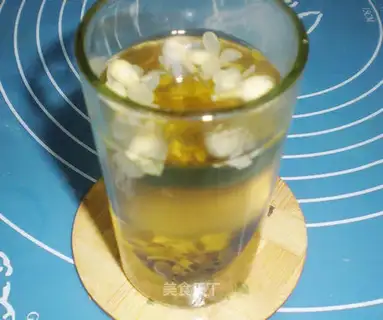 jasmine green tea
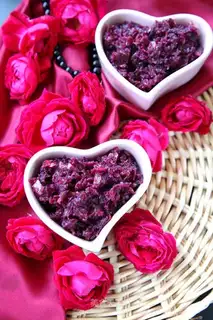 Rose sauce