Garlic chives are one of the best vegetables in spring. Some people call it "the first delicacy of spring," but they don't know it's also the number one food for nourishing the liver in spring! Let's take a look with the editor!
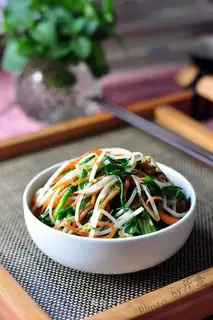
Oyster Sauce Garlic Chives with Bean Sprouts
1. Garlic chives have a long history and a high status
Garlic chives hold a senior position among vegetables. As early as the Western Zhou Dynasty, garlic chives were widely cultivated, and that was thousands of years ago. Historical records state that "in the first month, there were chives in the enclosed garden," meaning that during that era's first month, chives were planted in a small, enclosed plot and were growing quite well.
Not only do garlic chives have a long history, but their status was also high. The *Book of Songs* mentions that garlic chives were a very important sacrificial item in grand sacrificial ceremonies. The original line is "On the fourth day of the month, offer a lamb and chives," placing chives on par with mutton, which shows the importance of garlic chives.
2. It's the right time to nourish the liver in spring
When it comes to garlic chives being "beneficial for the liver and strengthening the stomach," we have to talk about the topic of "nourishing the liver in spring." In spring, all things grow and flourish, corresponding to the "Wood" element in the Five Elements. The liver is also attributed to the "Wood" element. Since both are "Wood," it's very wise to nourish the liver in spring.
It's the right time to nourish the liver in spring, and it's also the right time to eat garlic chives in spring.
3. It's the right time to eat garlic chives in spring
Speaking purely from a dietary perspective, garlic chives can be eaten all year round. But when it comes to nutrition, the chives of no other season can compare to those in spring. "Garlic chives eaten in spring are fragrant, but those eaten in summer are pungent." If you want to eat garlic chives, you must do so in spring.
Nourish the liver in spring, eat garlic chives in spring, and garlic chives are very "beneficial for the liver and strengthening the stomach." No wonder nutritionists call garlic chives "the number one liver-nourishing vegetable."
Garlic chives are fragrant in spring, pungent in summer, bitter in autumn, and sweet in winter. The spring garlic chives are the freshest and most delicious. In spring, the leaves of garlic chives are like jadeite, and the roots are like white jade. They are crispy, tender, delicious, and have a rich, aromatic fragrance. This is because they have "stored up energy and nutrients" through a harsh winter, storing a large amount of nutrients in their roots and stems.
Garlic chives are rich in dietary fiber, carotene, vitamin C, as well as fat, protein, and spicy volatile substances like allyl sulfide. They have the effects of warming the kidneys and yang, and benefiting the spleen and stomach. Eating more garlic chives can nourish the liver and strengthen the spleen and stomach.
Garlic chives also have a close relative—yellow chives (chive sprouts). Yellow chives contain nutrients like protein, fat, iron, carotene, and vitamin C, and have the effects of strengthening the stomach, refreshing the mind, and providing warmth. Although yellow chives have an excellent appearance and texture, and their price is much higher than that of garlic chives, their nutritional value is inferior to that of garlic chives.
The content of minerals and vitamins in garlic chives is higher than in yellow chives. The content of calcium, iron, phosphorus, vitamin A, and carotene is even 3 to 4 times that of yellow chives.
 Pelican sprouts