A while ago, a news story about fava beans causing cancer by cutting the tongue made some people a bit wary of them. Now that the Start of Summer has arrived, it's the perfect time to eat fava beans. Today, I'm here to talk about the tradition of eating fava beans during the Start of Summer. In my memory, fava beans are usually roasted, seasoned, and then sold. However, in the Jiangnan region, green fava beans are in season after the Start of Summer, so many families cook them with rice in the same pot, calling it "fava bean rice." Fava beans in their pods resemble eyes.
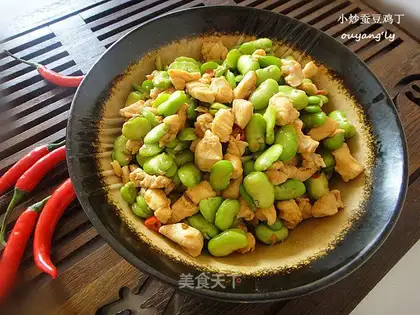
Stir-fried Fava Beans with Chicken Dices
Boiling tender fava beans in congee can soothe the stomach and promote bowel movements, which is effective for habitual constipation. The fava bean stem stops bleeding and diarrhea; the leaves have an astringent effect that stops bleeding. The flowers cool the blood and stop bleeding; the seed coat promotes urination and drains dampness; the pod shell is astringent and stops bleeding.
Nutritional Value of Fava Beans:
1. Brain Health
If you are dealing with mental stress or are a brain worker, eating fava beans in moderation may be beneficial. Fava beans contain important components for regulating the brain and nervous tissue, such as calcium, zinc, manganese, and phospholipids, and are rich in choline, which has a brain-boosting effect that enhances memory.
2. Lowering Cholesterol
The crude fiber in fava bean skin can lower cholesterol and promote intestinal peristalsis.
3. Preventing Cardiovascular Disease
Fava beans are rich in protein and contain no cholesterol, which can increase the nutritional value of food and prevent cardiovascular diseases.
4. Tonifying Qi and Strengthening the Spleen
Traditional medicine believes it can tonify Qi, strengthen the spleen, promote urination to drain dampness, and reduce swelling.
5. Delaying Arteriosclerosis
The vitamin C in fava beans can delay arteriosclerosis.
6. Promoting Bone Growth
The calcium in fava beans is beneficial for the absorption and calcification of calcium by bones, promoting the growth and development of the human skeleton.
7. Anti-Cancer
Fava beans are also one of the anti-cancer foods and have a certain effect in preventing colon cancer.
Contraindications for Eating Fava Beans: Contraindicated Groups:
People with a deficiency-cold middle burner should not eat them; those who have had an allergic reaction to fava beans must not eat them again.
People with hereditary red blood cell defects, as well as patients with hemorrhoids, indigestion, chronic colitis, uremia, etc., should be cautious and avoid eating fava beans.
Children with favism must absolutely not eat fava beans.
Preparation Methods:
There are many ways to eat fava beans: they can be boiled, stir-fried, or deep-fried. They can also be soaked, peeled, and used for stir-fries or soups.
Making them into fava bean sprouts makes their flavor even more delicious.
Fava bean flour is an ingredient for making vermicelli, bean sheets, etc., and can also be processed into bean paste to make pastries.
Fava beans can be steamed and processed into canned food, and can also be used to make soy sauce, broad bean paste, sweet sauce, chili sauce, etc. They can also be made into various snacks.
Fava beans can be eaten raw. Freshly picked tender fava beans can be eaten raw, and raw consumption is more common in the southern region of the Yangtze River.
How to shell fava beans: Place dried fava beans in a ceramic or enamel container, add an appropriate amount of alkali, pour boiling water over them, and let them steep for one minute. The skins can then be peeled off. However, the peeled fava beans must be rinsed with water to remove the alkali taste.
 Puffy chicken