As a common old friend on the dining table, tomatoes can be used to make mouth-watering dishes or serve as nutritious and beauty-enhancing fruits. Not only do they have a sweet and sour taste, but they also have a round, festive, and pleasing appearance, which has made them widely loved by the public. However, there are some different opinions online about eating tomatoes, such as "you can't eat them raw" or "their nutritional value decreases after being cooked," leaving many people unsure how they should actually eat tomatoes! What's going on? Let's find out together.
Can you eat raw tomatoes?
The answer is yes. However, if you eat tomatoes raw, you must choose ones that are fully ripe. Unripe tomatoes contain many toxic substances, mainly tomatine. If consumed in large quantities, these substances can cause poisoning, leading to fatigue, weakness, and a feeling of nausea and vomiting. In severe cases, it can even be life-threatening.
Can you eat tomatoes during breastfeeding?
Tomatoes are rich in vitamin C, whose main function is to promote the formation of collagen in human tissues. The substance between cells and cells is called intercellular substance, and there is a substance in it called collagen. The role of collagen is like an adhesive, which gives the intercellular substance viscosity. When vitamin C is deficient, the normal colloidal state of the intercellular substance cannot be maintained, the fragility of blood vessels increases, and they are prone to rupture and bleeding. It can also lead to poor healing of wounds and ulcers.
In addition, the vitamin C in tomatoes can play a certain role in treating malnutrition anemia. During childbirth, a mother's body must have enough vitamin C to reduce blood loss. In addition, vitamin C can also enhance the phagocytic ability of white blood cells against bacteria, thereby strengthening the body's resistance.
Four common wrong ways to eat tomatoes
1. Cooking tomatoes for a long time. Prolonged cooking will cause them to lose their original nutrients and flavor, which is not beneficial to the body.
2. Eating tomatoes on an empty stomach. Tomatoes contain a large amount of soluble astringents and other components that react with stomach acid, forming indissolvable lumps, which can easily cause discomfort symptoms such as bloating and pain in the stomach and intestines.
3. Eating unripe tomatoes. Green tomatoes contain solanine (glycoalkaloid), which can cause a bitter taste in the mouth in mild cases and poisoning in severe cases after consumption.
4. Eating tomatoes when taking anticoagulant drugs such as heparin and coumarin. Tomatoes contain a relatively large amount of vitamin K, which mainly catalyzes the synthesis of prothrombin and thrombokinase in the liver. When vitamin K is insufficient, it prolongs clotting time, causing subcutaneous and muscle bleeding.
"Pairing" with four dishes for extra nutrition
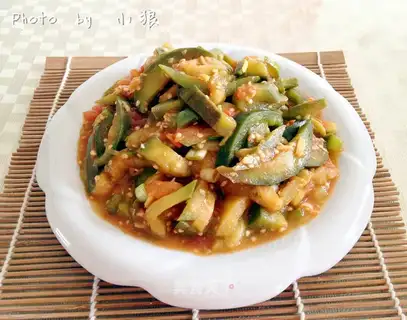
1. Tomato and Eggplant Stew
The most painful thing about cooking eggplant is that it absorbs oil easily. But it's different with tomatoes. This dish combines the sourness of tomatoes with the tenderness of eggplants, merging the nutrition of the two. It not only removes the greasiness of braised eggplant but also neutralizes the acidity of the tomato, making it delicious and fragrant.
2. Tomato and Potato Slices
This dish can help prevent and treat high blood pressure because both ingredients have a common feature: they are rich in potassium. Potassium can promote the excretion of sodium salts in the blood, has the effects of lowering blood pressure, promoting urination, and reducing swelling, and has a good auxiliary therapeutic effect on high blood pressure and kidney disease.
3. Tomato and Shrimp Stir-fry
Shrimp has a soft texture and is easy to digest. Its protein content is several to tens of times that of fish, eggs, and milk. Stir-fried with eggs and tomatoes, the shrimp is white, the eggs are tender yellow, and the tomatoes are bright red, making it visually appealing, nutritionally balanced, and delicious. It can also strengthen the spleen and whet the appetite.
4. Tomato and Cauliflower Stir-fry
This dish is very suitable for the elderly and is a great appetizer. Tomatoes have the effects of strengthening the stomach to aid digestion and nourishing yin to promote fluid production. Cauliflower is an excellent source of potassium, calcium, folic acid, and selenium, and also helps with digestion, enhances appetite, and prevents constipation.
 Tomatoes