The winter weather is dry, and people need to work on moistening their bodies. For example, eating foods that nourish yin and moisten the dryness can help hydrate the body. Do you know what foods can nourish yin and moisten dryness?
Foods that nourish yin and moisten dryness
1. Tremella (Silver Ear Mushroom)
Tremella, also known as white fungus, is sweet and bland in taste, neutral in nature, and non-toxic. It enters the lung, stomach, and kidney meridians. It has the effects of promoting fluid production to moisten the lungs, replenishing qi and activating blood, nourishing yin and strengthening the stomach, and tonifying the brain and calming the heart. It is suitable for conditions such as lung-heat cough, dry cough due to lung dryness, stomach and intestinal dryness, and constipation.
Tremella is praised as the "longevity elixir," "life-prolonging treasure," and "king of fungi." It has the characteristic of being moistening without being greasy. It is especially suitable for patients who are weak, have just recovered from a long illness, are not suitable for other tonics, or have yin deficiency with internal heat, or internal heat with a tendency to bleed.
Note: It should be avoided by those with a cold at its initial stage with a dry mouth, or those with a wind-cold cold, such as those who are afraid of cold, have a cough, and have clear, watery phlegm.
Tremella, Lily, and Pear Soup
Extended reading: A Complete Guide to Eating Tremella
2. Lily Bulb
The "Shennong Ben Cao Jing" records that lily bulb has effects such as "treating pain caused by pathogenic factors, promoting urination, and tonifying the middle and replenishing qi." Traditional Chinese medicine believes that lily bulb is sweet, slightly bitter, and slightly cold in nature, and it enters the heart and lung meridians. It has the功效 of nourishing yin to moisten the lungs, calming the mind, clearing heat, and promoting urination. Lily bulb can treat chronic cough from tuberculosis, coughing up bloody phlegm, vexation with deficiency, palpitations, mental confusion, and beriberi with edema. Common medicinal food recipes include honey-fried lily, fragrant rice congee, pig lung soup, egg soup, and stewed meat; commonly used clinical formulas include decoctions, powders, Hua Bu San, Zao Jiao Tang, Huang Dan Ni, Ye Ni, Gao, dry powder, and fresh juice.
Note: Although lily bulb is a fine nourishing food and a famous delicacy, because it is sweet, cold, and moist, it should be avoided by those with wind-cold cough, loose stools, weak spleen and stomach, long-term retention of cold-dampness, or declining kidney yang.
3. Pear
Pears have been revered since ancient times as the "king of all fruits" for their functions of moistening the lungs, stopping coughs, resolving phlegm, and reducing fire. If the climate is excessively dry, leading to symptoms such as thirst, constipation, and dry cough; or if internal heat causes symptoms such as vexation and thirst, coughing, and yellow phlegm, you can eat more pears.
Note: Before eating pears, you should consider whether your body constitution is suitable. People with a deficient and cold constitution or a cold cough should not eat raw pears. They must be steamed, cooked in soup, or stewed with medicinal herbs. People with chronic diarrhea should not eat too many pears, as pears are cold in nature, and eating too many can worsen the diarrhea.
Sweet Potato, Lily, and Tremella Soup
Extended reading: A Complete Guide to Eating Lily Bulb
You may also like:
6 Sweet Soups to Keep You from Being Dry This Winter!
For Dry Skin, Eat These Foods to Moisturize
Skin is Dry? How to Break the Cycle: 10 Fruits to Eat Regularly
Moisturize from the Inside and Out: 4 Foods to Relieve Winter Dryness
 Fry box
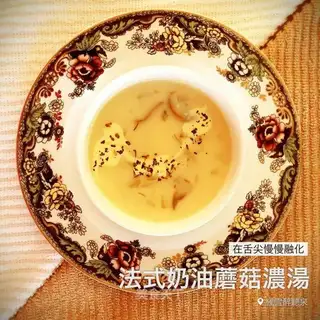 French cream mushroom soup