Introduction: In our daily lives, we eat vegetables every day because they contain vitamins, minerals, and dietary fiber that our bodies need. They are also rich in phytochemicals that help prevent chronic diseases. The "Dietary Guidelines for Chinese Residents" issued by the Chinese Nutrition Society recommends a daily intake of 300-500 grams of vegetables per person. Choosing vegetables is a science; it's important to select those with high nutritional value. However, faced with a wide variety of colorful vegetables, how should we choose? Here are some specific tips for selecting vegetables.
I. Choose a Variety of Vegetables
Vegetables are categorized into leafy greens, root and tuber vegetables, gourds and eggplants, potatoes, flower vegetables, fresh legumes, alliums, aquatic vegetables, fungi and algae, and wild vegetables. Each type has different nutritional values. Tender stems and leafy greens are excellent sources of carotene, vitamin C, and minerals. Cruciferous vegetables like cauliflower, cabbage, and kale contain high levels of phytochemicals. Fungi and algae contain polysaccharides that boost immune function. Relying on a single type of vegetable cannot meet the body's demand for various nutrients. Therefore, it is essential to choose a variety of vegetables and rotate them daily to ensure an adequate intake of all nutrients.
Stir-fried Okra with Shrimp
II. Choose Seasonal Vegetables
Comparisons of nutrient content show that seasonal vegetables have higher nutritional value than out-of-season ones. Take tomatoes, for example. Naturally ripened summer tomatoes have a tangy taste and contain 19mg of vitamin C per 100g. Tomatoes grown in winter cannot match the taste of their summer counterparts, and their vitamin C content is also lower. Furthermore, seasonal vegetables can avoid the effects of various ripening agents.
III. Choose Dark-Colored Vegetables
Vegetables can be divided into dark-colored and light-colored categories. Dark-colored vegetables mainly refer to those that are dark green, orange-red, red, and purple. The nutritional value of dark-colored vegetables is higher than that of light-colored ones because they are rich in beta-carotene and contain more phytochemicals such as chlorophyll, lutein, lycopene, and anthocyanins. These phytochemicals play important roles in the body's antioxidant and anti-aging processes, maintaining normal immunity, and preventing some chronic diseases. Moreover, some dark-colored vegetables can also stimulate appetite. Therefore, the Chinese Nutrition Society recommends that dark-colored vegetables should account for more than half of the total daily vegetable intake.
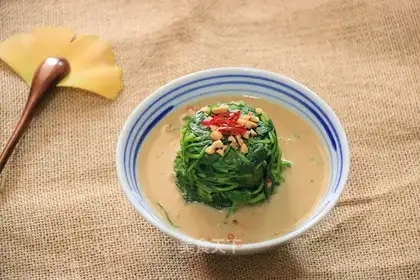
Sesame Spinach Mounds
IV. Choose Fresh Vegetables
During storage or transportation, some vitamins and minerals in vegetables are lost, and many phytochemicals also become inactive. More importantly, the nitrate content in them can increase. Therefore, when choosing vegetables, it is crucial to pay attention to their freshness. This ensures that the nutritional components of the vegetables are not lost and that they are hygienic and safe. Scientific research has found that during the freezing and thawing process, vegetables can lose 30%-60% of their vitamins. At room temperature, the vitamin C content in leafy greens continuously decreases, with longer storage times leading to greater loss, while their nitrate content increases daily.
Garden Vegetable Pancakes
 Slut spinach
 Slippery, greasy, greasy fish
 Squirty pork pan