Introduction: Nowadays, a trend of eating sprouts has swept through countries like the United States and Japan, and some new types of sprouts have become popular, such as sesame sprouts, barley sprouts, and peanut sprouts. When it comes to eating fruits and vegetables, people often emphasize eating in season, but there is one type of vegetable that is always in season: sprouts. The most common sprouts include mung bean sprouts, pea shoots, and toon sprouts. Nowadays, a trend of eating sprouts has swept through countries like the United States and Japan, and some new types of sprouts have become popular, such as sesame sprouts, barley sprouts, and peanut sprouts.
What's so good about sprouts? He Hongju, a researcher at the National Engineering Research Center for Vegetables, told reporters from the Life Times that sprouts have a short growth cycle. Generally, no fertilizers or pesticides are needed to ensure their quality and yield, so they are basically pollution-free vegetables with relatively high safety. In addition, plant seeds often store more nutrients such as proteins and carbohydrates. Since sprouts are in a vigorous stage of growth, they are also highly nutritious, especially in terms of vitamins, minerals, and health-promoting components. Different sprouts have different nutritional characteristics.
Mung Bean Sprouts
According to Fan Zhihong, an associate professor at the College of Food Science and Nutritional Engineering at China Agricultural University, although mung beans are highly nutritious, they contain substances that hinder the absorption of nutrients. However, after germination, these hindering substances are largely broken down, increasing the efficiency of nutrient utilization. In terms of taste, mung bean sprouts are more delicious and delicate, and they are less likely to cause bloating after eating, making them suitable for people with poor digestion. Making soy milk with mung bean sprouts or stir-frying them with shiitake mushrooms are both good choices. It is worth noting that mung bean sprouts are not the same as mung bean sprouts; mung bean sprouts are cultivated for a shorter time and can be eaten when they grow to less than half a centimeter.
Stir-fried Mung Bean Sprouts
Pea Shoots
In Fan Zhihong's opinion, pea shoots are highly recommended. Their carotene content can reach 2700 micrograms per 100 grams, while the carotene content of common melons and fruits is below 100 micrograms per 100 grams. Pea shoots can be used for cold salads, quick stir-fries, or with scrambled eggs.
Garlic Shoots
Many people wonder if sprouted garlic is still edible. He Hongju told reporters that as long as the garlic bulb has not changed color or become moldy, it can be eaten after sprouting. A study by Kyungpook National University in South Korea also found that sprouted garlic has higher antioxidant content than fresh garlic, and it peaks on the fifth day after sprouting, thus having better anti-cancer and anti-aging effects. In addition, people who are not used to eating garlic can eat garlic shoots. Garlic shoots are superior in terms of dietary fiber, vitamin C, vitamin A, and carotene. It should be noted that garlic shoots should not be cooked too soft; it is better to stir-fry them over high heat.
Toon Sprouts
Compared to toon sprouts, toon sprouts have higher vitamin content, especially rich in carotene, vitamin B2, and vitamin K. In addition, toon sprouts often contain high levels of nitrites, but this is not a problem with toon sprouts, making them safer. Crisp and tender toon sprouts taste great when simply mixed with a little salt and sesame oil.
Toon Sprout and Bean Roll
In addition to the sprouts mentioned above, according to a report in Taiwan's "Health" magazine, a new study in South Korea found that after soaking and germinating for 4 days, the fat content of sesame seeds significantly decreased, while the content of linolenic acid, phosphorus, calcium and other components increased, and the contained sesamol has a good antioxidant function. The study also found that buckwheat has the effect of lowering blood pressure and inhibiting fatty liver after germination. A study from the University of Alberta in Canada also pointed out that the nutritional value of barley is improved after germination for 2 to 5 days, not only is the dietary fiber increased, but it is also easier to digest. In addition, radish sprouts, alfalfa sprouts, sunflower seed sprouts, and peanut sprouts are also good choices.
Fan Zhihong reminds that most sprouts are suitable for "steamed dishes". The specific method is: after washing the sprouts, cover them with a thin layer of flour and steam over high heat for two to three minutes. The surface will then be like wearing a thin coat. Add a little minced garlic and sesame oil, and the taste is delicious. This method uses less oil and the cooking temperature is not high, which can retain most of the nutrients of the sprouts and is very healthy.
Finally, experts remind that some vegetables must not be eaten after sprouting. The most typical one is the potato. Potatoes that have sprouted and turned green can no longer be eaten, otherwise there is a risk of poisoning, which will cause acute poisoning symptoms such as vomiting, abdominal pain, and diarrhea. Sprouted potatoes should be thrown away entirely.
Radish Sprout Salad
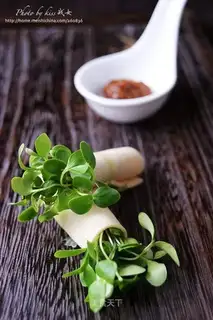 Toon seedlings and bean rolls
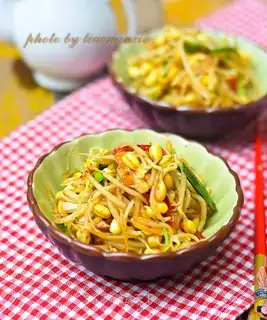 Hot sprouts
 Potato chocolate soup