Introduction: You often hear so much about how good cucumbers are, but loofah is in no way inferior! Anti-aging, allergy prevention, brain-boosting... it has many benefits you probably don't know about. Loofah seeds, roots, and stems... can all be used for medicinal purposes. The whole plant is a treasure, making it a great helper for beauty and health, and when cooked properly, it's a delicious dish!
Nutritional Benefits of Loofah
Loofah, also known as Tian Loofah, is green, fresh, tender, fragrant, crispy, and sweet. It is not only nutritious but also has certain medicinal value, making the entire plant a treasure. It contains large amounts of minerals, plant mucus, xyloglucan, and other substances that can stimulate the human body to produce interferin, achieving the goals of antiviral and anti-cancer effects. The entire loofah plant can be used for medicine and is an essential ingredient in summer for clearing heat, purging fire, cooling the blood, and detoxifying.
Loofah contains B vitamins that prevent skin aging, Vitamin C that brightens the skin, and other ingredients that can protect the skin, eliminate blemishes, and make the skin fair, smooth, and tender. It is a rare beauty product, which is why loofah juice is called "beauty water". Eating more loofah is also helpful for regulating irregular menstruation in women.
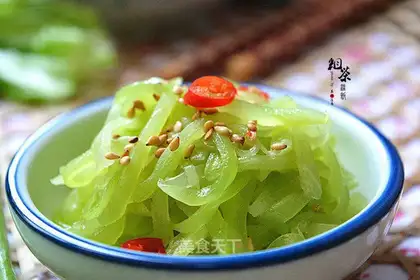
Stir-fried Loofah
What can loofah be used for?
Skin whitening and anti-aging
Loofah juice is renowned as "beauty water". It contains B vitamins that prevent skin aging and Vitamin C that brightens the skin, which can protect the skin, eliminate blemishes, and make it fair and tender. Cut a growing loofah vine to let the sap flow out. Use gauze to apply the loofah water to the face or skin for moisturizing and wrinkle prevention effects. You can also squeeze the loofah directly, mix in an appropriate amount of honey or glycerin, and apply it for better results.
Scurvy prevention
Loofah is rich in Vitamin C and can be used to prevent scurvy and various Vitamin C deficiency diseases.
Brain health and beauty
Due to its high content of B vitamins, loofah is beneficial for children's brain development and the brain health of middle-aged and elderly people. The juice from loofah vines and stems has a special function of maintaining skin elasticity and can beautify and reduce wrinkles.
Antiviral and anti-allergy
Loofah extract has a significant preventive effect against Japanese encephalitis virus. An anti-allergenic substance, bryonolic acid, has also been extracted from loofah tissue culture fluid, which has strong anti-allergy effects.
Shrimp and Loofah Cups
Teaching you the many secret weapons to use loofah well
Irregular menstruation: Use one loofah sponge, add one bowl of water, and decoct for drinking. Regular consumption can help regulate it. Dry loofah seeds, add one bowl of water and decoct. After the water boils, add a small amount of brown sugar, and take it warm with yellow wine once in the morning and once at night to effectively regulate irregular menstruation. One old loofah, burn it until dry, grind it into a fine powder, take 9 grams each time, and take it with salted boiled water. Can treat excessive menstrual bleeding.
Treating sinusitis: Dry a loofah and roast it until charred in an iron wok, then grind it into a fine powder. Take 6 grams each time on an empty stomach in the morning with warm boiled water, and continue for 8 days.
Treating pharyngitis: Wash a tender loofah, mash it, and squeeze out the juice, adding an appropriate amount of sugar. One spoonful daily, three times a day.
Treating wind-cold cough: Dry a loofah by roasting it, grind it into a fine powder, and mix with honey to make pills. Take 9 grams each time, three times a day.
Treating bacillary dysentery: Loofah roots, stems, and leaves can all be used. Wash them, mash them, and squeeze out the juice. Take 2 spoonfuls each time, three times a day.
Treating insufficient breast milk: Method 1: 60 grams of loofah, one pig's trotter, stew until cooked and eat as a dish. Method 2: One old loofah, dry it in the shade, burn it until charred, grind it into a powder, and take it with yellow wine. Take 9 grams each time.
Treating allergic asthma: Method 1: Wash a loofah vine, mash it, and squeeze out the juice. Take 1 spoonful each time, three times a day. Method 2: Take 2 raw small loofahs, cut them, and cook them in a clay pot until soft. Take 150 ml of the concentrated juice, three times a day.
Treating neuralgia: Drink warm loofah juice. The dosage depends on the symptoms, about 100 ml daily. Alternatively, mash loofah leaves and stems, squeeze out the juice, and apply it to the affected area, which is also effective.
Treating skin boils: Take one fresh loofah, mash it, and apply it to the affected area, then wrap it with gauze. Change the dressing once a day.
Treating urticaria: Take a handful of fresh loofah leaves, mash them, squeeze out the juice, add a little borneol, and apply it to the affected area.
Treating alopecia areata: Slice an old loofah and vigorously rub the bald areas until the skin feels warm, 2-3 times a day.
Treating excessive foot sweat: Burn an old loofah into charcoal, grind it into a fine powder, and sprinkle it in your shoes. Wear them barefoot for half a month.
Roundworm disease: 40-50 raw black loofah seeds, remove the shells, chew the kernels, and take them on an empty stomach with warm boiled water (or mash the kernels and put them in capsules to take). For children, take 30 seeds each time, once a day, for 2 consecutive days.
Loofah consumption taboos:
Loofah is a cold-natured food, sweet in taste and smooth in texture. For patients with chronic bronchitis who have a cough with excessive white sputum, eating it can aggravate the condition. Loofah is cold and smooth, and excessive consumption can lead to loose stools. It is not suitable for people with a weak spleen and loose stools.
Loofah with Fried Dough Sticks
 Chocolate Chips
 Cracking silk