Introduction: Many people believe that eating before bed is unhealthy for the body. Women who are conscious of their figure, in particular, feel that eating before bed is hard to digest and can affect their physique. In fact, some foods eaten before bed can actually help promote relaxation before sleep, improve sleep quality, soothe tense muscles, calm nervous emotions, and bring about a sense of peace, thereby alleviating the troubles of insomnia.
I. Foods that inhibit serotonin
If you often feel drowsy during the day but have unstable sleep at night, you can eat a piece of steamed bread or bread before bed. This is because people in this group secrete more tryptophan during the day, which is converted into serotonin. Serotonin has a hypnotic effect and can cause drowsiness. However, by evening, the body's tryptophan levels are insufficient, making it difficult to fall asleep peacefully. Therefore, eating some steamed bread or bread at night can increase the body's tryptophan levels, making it easier to fall asleep.
II. Foods that counteract caffeine
The stimulating effects of tea can affect sleep. Therefore, if drinking a lot of tea during the day affects your sleep, you can drink water infused with a few grams of sour jujube seed before bed, or cook a porridge with sour jujube seed and rice and drink a small bowl before sleeping. Sour jujube seed contains saponins A and B, betulinic acid, betulinol, and three types of sterols, which can lower the level of norepinephrine in the blood, thereby counteracting poor sleep caused by caffeine.
III. Foods rich in melatonin
The reason why foods rich in melatonin can improve sleep is that a person's sleep quality is closely related to a substance in the brain called melatonin. At night, darkness stimulates the body to synthesize and secrete melatonin, which acts on the sleep center through the bloodstream to induce a strong sense of sleepiness. When dawn breaks, melatonin production is reduced by stimulation from light, causing a person to wake from sleep.
Research has found that after middle age, the body's melatonin gradually decreases; at 40, it is a quarter of what it was in youth; at 50, it is one-sixth; and at 60, it drops to one-tenth. Therefore, middle-aged and elderly people can promote sleep by consuming foods rich in melatonin. These foods include oats, sweet corn, tomatoes, and bananas.
Oatmeal
IV. Foods that regulate the nervous system
If there is a long-term insufficient intake of zinc and copper, after a period of time, the body will be affected by the lack of these two trace elements, impacting the energy metabolism of brain cells and the regulation of the nervous system. The endocrine system often remains in an excited state, making it difficult to fall asleep. In this situation, eating more foods rich in zinc and copper for dinner, such as oysters, fish, lean meat, shrimp, and eel, can effectively improve symptoms of neurasthenia and ensure good sleep.
V. Milk
Milk contains two hypnotic substances: one is tryptophan, which promotes the secretion of the sleep-inducing neurotransmitter serotonin from brain nerve cells; the other is peptides that regulate physiological functions. Among them, "opioid peptides" can bind with the central nervous system, exerting a similar anesthetic and analgesic effect to opiates, making people feel comfortable all over, which helps relieve fatigue and fall asleep. Drinking a glass of milk before bed contains enough of these hypnotic substances to have a sedative effect.
VI. Kiwi
The occurrence of sleep disorders is related to excessive arousal of the central nervous system and excessive excitement of the sympathetic nervous system, or the effect of a large secretion of stress hormones. Kiwi, rich in calcium, magnesium, and vitamin C, helps the synthesis and transmission of neurotransmitters. In particular, calcium has the effect of stabilizing mood and inhibiting the sympathetic nervous system. Blending golden kiwi with milk, honey, ice cubes, and other ingredients into a summer ice drink not only helps the body absorb vitamin E from the fruit seeds but also has the effect of increasing skin elasticity.
Kiwi Pudding
VII. Apple
Apples can treat deficiency of the spleen with flourishing fire and replenish qi in the middle jiao. They are quite effective for insomnia caused by deficiency of both the heart and spleen, hyperactivity of yin fire, disharmony between the liver and gallbladder, or disharmony in the stomach and intestines. In the aromatic components of apples, alcohols account for 92% and carbonyl compounds for 6%. The rich aromatic fragrance has a strong sedative effect on the nerves and can induce sleep. If there are no apples at home, you can try drinking a cup of warm water with a spoonful of vinegar, which can also promote sleep. In addition, placing a peeled or cut citrus fruit on the nightstand and inhaling its aromatic fragrance can calm the central nervous system and help you fall asleep.
VIII. Wheat
It has a sweet and mild nature and acts to nourish the blood and calm the spirit. Use 60 grams of floating wheat, add 15 large jujubes and 30 grams of licorice. Cook with 4 bowls of water until it is reduced to 1 bowl, and take it in the morning and evening. It can improve appetite and prevent sub-health through nutrition.
IX. Walnut
Walnuts are a nourishing tonic that is beneficial for neurasthenia, forgetfulness, insomnia, dreams, and poor appetite. Eating some walnut kernels in the morning and evening, or taking 10 grams of a mixture of crushed walnut kernels and black sesame seeds twice a day, is beneficial for sleep. According to modern scientific analysis, walnut kernels contain 15.4% protein, 40%-63% fat, and 10% carbohydrates. They also contain calcium, phosphorus, iron, zinc, carotene, riboflavin, and vitamins A, B, C, and E. The delicious, fatty walnut kernels are not only nutritious but also have special therapeutic effects.
Walnut Sweet Pepper Marinated Pork Tripe
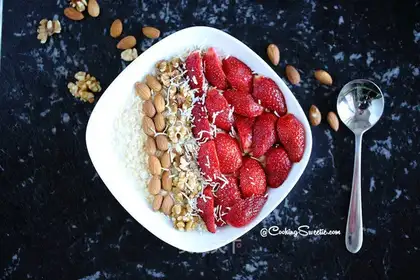 Night breakfast oatmeal
 Strange fruit pudding
 Fresh lemon cake