Introduction: After the Lesser Fullness of Grain solar term, it's not only the harvest season but also symbolizes the beginning of the hot summer. During this time, diseases are more likely to occur. Irregularities in life and diet can lead to internal heat, followed by illness. Paying attention to health preservation during the Lesser Fullness of Grain is crucial, as health is the most important thing. Below are 10 recommended health foods for this season.
1. Coix Seed
Coix seed is a grain that has existed since ancient times, originating in Vietnam. In China, it is also known as Job's tears, barley Job's tears, or coix seed. It is hailed as the "king of the world's Poaceae plants." Coix seed has the highest fiber content among all grains, is low in fat and calories, making it the best staple for weight loss. It is also rich in protein, oil, vitamins, minerals, and carbohydrates. It has the functions of whitening the skin and removing freckles, and is especially effective for people with edema in the lower body. The Compendium of Materia Medica describes coix seed as "strengthening the spleen and benefiting the stomach, tonifying the lungs and clearing heat, expelling wind and dampness, nourishing the complexion, and keeping the body light and extending life." It has effects such as promoting urination to drain dampness, strengthening the spleen to stop diarrhea, and is applicable to conditions such as short and reddish urine, edema, beriberi, rheumatic pain, diarrhea due to spleen deficiency, and flat warts. In addition, coix seed is rich in protein and oil, containing vitamins B1, B2, minerals such as calcium, phosphorus, and iron, and is rich in water-soluble fiber.
Red Bean and Coix Seed Porridge
2. Lentils
In Traditional Chinese Medicine, lentils are considered sweet in flavor and neutral in nature, affecting the spleen and stomach meridians. They have a delicate fragrance, a mild nature, and a slightly yellow color, making them perfectly suited to the spleen's characteristics. They have the effects of strengthening the spleen, harmonizing the middle jiao, replenishing qi, transforming dampness, and eliminating summer heat. They are primarily indicated for spleen deficiency with dampness, poor appetite with loose stools, dampness pouring downward, excessive vaginal discharge, summer heat injuring the middle jiao, vomiting and diarrhea with muscle cramps, etc. The nutritional content of lentils is quite rich, including protein, fat, carbohydrates, calcium, phosphorus, iron, potassium, dietary fiber, vitamin A precursor, vitamins B1, B2, C, and also amygdalin, tyrosinase, etc. The B vitamin content in the lentil skin is particularly high. Additionally, they contain phospholipids, sucrose, and glucose.
Furthermore, lentils also contain hemagglutinin, a protein-like substance that can increase the synthesis of DNA and RNA, inhibit immune responses and the movement of white blood cells and lymphocytes. Therefore, it can activate lymphocytes in cancer patients to produce lymphotoxin, causing non-specific damage to body cells, hence having a significant effect on reducing tumors. Cancer patients are advised to eat lentils regularly for a certain adjuvant therapeutic effect. Lentils have a delicate fragrance without being pungent, a mild nature and a slightly yellow color, making them perfectly suited to the spleen's characteristics.
Soy Sauce-flavored Shredded Lentils
3. Corn
Corn is a healthful food among coarse grains and is quite beneficial to human health. Components in corn such as vitamin B6 and niacin have the characteristic of stimulating gastrointestinal motility and accelerating fecal excretion, which can prevent and treat constipation, stomach diseases, enteritis, and colon cancer. Moreover, corn also has the effects of regulating the middle jiao to stimulate appetite, reducing turbidity and promoting urination, and is applicable to conditions such as urinary tract stones, edema from chronic nephritis, high blood pressure, and poor appetite.
Modern research has confirmed that corn is rich in unsaturated fatty acids, especially with a linoleic acid content of over 60%. It works in synergy with vitamin E in the corn germ to lower blood cholesterol concentration and prevent its deposition on the vessel walls. Therefore, corn has a certain preventive and therapeutic effect on coronary heart disease, atherosclerosis, hyperlipidemia, and hypertension.
Corn Sandwich
4. Sorghum
Sorghum has high nutritional value, rich in starch, protein, iron, vitamin A, fat, and other nutrients. While supplementing the body's needed nutrients, it can also prevent some diseases. In every 100 grams of sorghum, there are 8.4 grams of protein, 3 grams of fat, 74 grams of carbohydrates, 8 mg of calcium, 179 mg of phosphorus, 3.9 mg of iron, 0.30 mg of vitamin B1, 0.1 mg of vitamin B2, and 1507 calories.
In addition to its high nutritional value, sorghum can also be used as medicine due to its many health benefits. In Traditional Chinese Medicine, sorghum is considered sweet, astringent, and warm in nature, with effects of harmonizing the stomach, strengthening the spleen, and stopping diarrhea. It can be used to treat conditions such as indigestion, poor digestion, damp-heat, dysentery, and difficult urination. People often use sugarcane juice to cook sorghum porridge, which has the effects of promoting body fluids and replenishing qi, and has a significant therapeutic effect on the elderly's symptoms of excessive phlegm that cannot be coughed up, and a dry mouth and tongue.
Sorghum Butter Crisp Biscuits
5. Watercress
The so-called "watercress" is the southern "small celery" commonly found in markets. The stems of this celery are often whitish, relatively thin, and short. This celery itself has a strong celery aroma and can be used to remove the fishy smell from other foods. Therefore, it often serves to enhance the flavor in cooking. In Traditional Chinese Medicine, watercress is considered sweet and pungent in flavor, cool in nature, and affects the lung and stomach meridians. It has the effects of clearing heat and detoxifying, nourishing essence and qi, purifying the blood, lowering blood pressure, ventilating the lungs and promoting diuresis. It can also treat conditions such as painful urination, bloody stools, jaundice, and toothache and mumps caused by wind-fire. An alkaline component isolated from celery seeds has a sedative effect on animals and a calming effect on humans, which is beneficial for stabilizing emotions and eliminating irritability. Moreover, watercress also has the effect of clearing heat and promoting urination, and is applicable to conditions such as painful urination, bloody urination, and leukorrhea.
Bacon Stir-fried Watercress
 Spam black bean sprouts
 Cranberry cookies
 Lemon chili cake
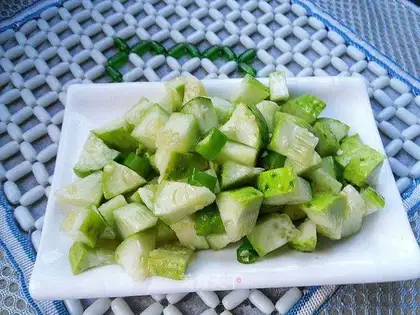 cucumber
 Snack and rice