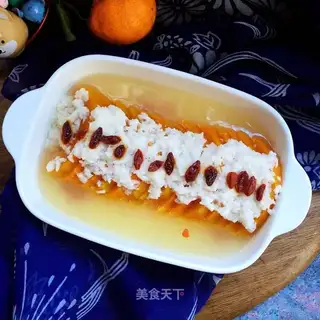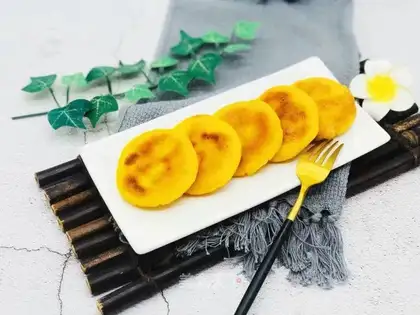
Pumpkin, which originated in South America and has a nine-year history of cultivation, was brought back to Europe by Columbus and later introduced by Portugal to places such as Japan, Indonesia and the Philippines. In this draft, Lee said, “Pumpkin has grown into the South, and now it's all in Yanking. In February, Ishawar, in April, it's thick, a chicken can last ten times longer... His son is like a winter melon whose flesh is thick and yellow, and he cannot eat, except for the skin, and the smell of it is like a mountain medicine, and it is better to cook with pork, and it can be made of honey.” “Pumpkin” was also mentioned in the Episode of Dietary Information, where he said: “Pumpkin, odour, sexual temperature, venom and venom. It's the same meat as lambs, and it's gruesome. They eat the same food as pork livers, red beans, barley noodles.” At this time, however, Columbus has not found the American continent and China has not found any other wild species of pumpkins, so the “pumpkin” in the book is not what we call pumpkins today, but other melons. But today's pumpkins are not fit to eat with lamb, so they're blackmailed, even with the erroneous saying that “Pumpkin has long been brought into China” and that “Asia is also its place of origin”. The advantages of pumpkins, which are high-yielding, liveable and nutritious, can be used for food in the last few years and are also referred to as “melons”. In the North House Book, it says: “The older the pumpkin, the better it is, the better it is to cook the yellow state pork, the less water the fire, the more ripe the steam, the more greasy and the better it smells.” The so-called "Yoju Pork Act" is the way to make an east slope in Sudong Poe, which is seen as a treasure。