Chinese yam is a food that frequently appears on our dining tables. Chinese yam is an herb included in the "Chinese Materia Medica," with its medicinal source being the dried rhizome of the Dioscorea polystachya plant. It has the effects of nourishing and strengthening, aiding digestion, stopping spontaneous sweating, and relieving diarrhea. Winter is the season for nourishment and supplementation. Drinking a bowl of nourishing soup made with Chinese yam in winter is an excellent choice.
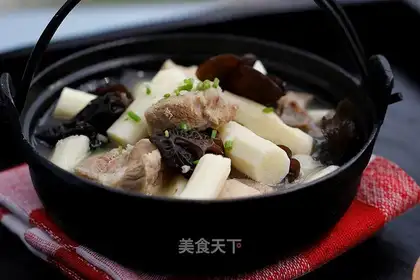
Chinese Yam and Wood Ear Mushroom Pork Rib Soup
Chinese Yam and Wood Ear Mushroom Pork Rib Soup
Ingredients: 400g Chinese yam, 500g pork spare ribs, 100g dried wood ear mushrooms, 1 piece of ginger, 5g goji berries, appropriate amount of salt, cooking wine, and water
Method:
1. Wash the pork spare ribs and cut them into pieces. Place water in a pot, add a small spoonful of cooking wine, and bring to a boil over high heat. Add the pork spare ribs and cook until they are about 70% done, then turn off the heat and remove the ribs.
2. Soak the wood ear mushrooms until they rehydrate, remove the stems, and tear them into small pieces. Peel and wash the Chinese yam, then cut it into irregular chunks. Slice the ginger. Rinse the goji berries and set aside.
3. Place the pork spare ribs, wood ear mushrooms, and Chinese yam into a pressure cooker. Add the ginger slices and pour in water, ensuring the water covers all the ingredients. Bring to a boil over high heat, then cook for 15 minutes. Once the pressure is up, reduce the heat and cook for another 10 minutes before turning off the heat. Sprinkle in the goji berries and let it steep for a while. Add a small amount of salt to season and it is ready to eat.
1. Chinese yam is both a medicinal and food herb, beneficial for the spleen and kidneys
Chinese yam is an herb included in the "Chinese Materia Medica," with its medicinal source being the dried rhizome of the Dioscorea polystachya plant. It is a medicinal herb that can be used both as medicine and food. Also known as Chinese yam, Chinese potato, Huai山药, or Huai mountain yam, Traditional Chinese Medicine (TCM) considers it sweet in flavor and neutral in nature, affecting the spleen, lung, and kidney meridians. It can tonify the spleen and nourish the stomach, promote the production of body fluids and benefit the lungs, and tonify the kidneys and secure essence. It is used for conditions such as poor appetite due to spleen deficiency, chronic diarrhea, cough and dyspnea due to lung deficiency, spermatorrhea due to kidney deficiency, and excessive leukorrhea. Chinese yam contains substances like amylase and polyphenol oxidase, which are beneficial for the digestive and absorption functions of the spleen and stomach. It is a mild tonic for the spleen and stomach, suitable for consumption whether there is a deficiency of spleen yang or stomach yin. Clinically, it is often used with formulas for the stomach and intestines to treat conditions like weak spleen and stomach, poor appetite and fatigue, and diarrhea.
From a nutritional perspective, Chinese yam contains a large amount of mucin protein, vitamins, and trace elements, which can effectively prevent the deposition of lipids on blood vessel walls and prevent cardiovascular diseases, thereby achieving the benefits of improving mental clarity and promoting longevity. Chinese yam is considered particularly suitable for consumption in winter. TCM posits that the color black corresponds to the kidney, and black foods have the effect of tonifying the kidneys. While the white Chinese yam strengthens the spleen and lungs, it can also tonify the kidneys, making it a unique and precious food.
2. Chinese yam is a high-quality food for diabetics
Many diabetics believe that Chinese yam is rich in carbohydrates and therefore are hesitant to eat it. In reality, Chinese yam is very suitable for diabetics. Chinese yam contains mucin protein, which has the effect of lowering blood sugar and can be used to treat diabetes, making it an excellent dietary choice for diabetics. For diabetics with qi and yin deficiency, characterized by thirst, frequent drinking, excessive urination, and fatigue, formulas containing Chinese yam can also be used for conditioning.
Method 1: Take 12g of Chinese yam, 6g of Cornus officinalis, 6g of Rehmannia root, 6g of Poria cocos, 6g of Alisma plantago-aquatica, 6g of Achyranthes root, 6g of plantain seed, 6g of ginseng, and 6g of fried Atractylodes macrocephala. Wash, dry, and grind them into a coarse powder. Soak in clean water for 12 hours. Decoct 3 times, each for 3-4 hours, and filter the liquid each time. Combine the three batches of liquid and simmer over low heat to concentrate. Add rock sugar to adjust the sweetness and form a paste. Take 8g each time, three times a day, dissolved in warm water. Alternatively, decoct 15g of Chinese yam and 6g of coptis in water for oral administration; or use equal amounts of Chinese yam and trichosanthes root, decoct in water and take in divided doses.
 Mock and bone soup