Red beans are a common food in our daily lives. Traditional Chinese medicine considers red beans to be neutral in nature with a sweet and sour taste, and non-toxic. They have the functions of strengthening the spleen and nourishing the stomach, promoting urination to remove dampness, regulating qi and expelling pus, and promoting lactation. Generally, red beans can be used for cooking rice, congee, or red bean soup. Because the temperature is relatively low in winter, our physiological functions or appetite can be greatly affected by the weather. To help the body quickly adapt to winter, we can consume more red beans that have health-preserving effects.
Red Bean and Coix Seed Congee
The magical effects of red beans:
One: Strengthening the Spleen and Stomach
In the cold winter, the digestive function of the spleen and stomach is relatively strong, and absorption is better. Therefore, people who are relatively weak should intensify their nourishment in winter to prepare nutritional reserves for the coming year. This way, they will have more energy and strength in the new year and will not get sick easily. Red beans, known as "Chi Xiaodou" in traditional Chinese medicine, also have a significant effect on strengthening the spleen and stomach.
Two: Nourishing the Heart and Tonifying the Blood
The ancient herbalist Li Shizhen called red beans "the grain of the heart," emphasizing its heart-nourishing effect. Red beans can clear heart fire and also nourish heart blood. They are rich in crude fiber, which clinically helps lower blood lipids, blood pressure, and improve heart function; at the same time, they are rich in iron, which can promote qi and blood circulation, making them very suitable for nourishing the heart. They can also prevent your hands and feet from feeling cold in winter.
Three: Reducing Edema
In addition to being rich in potassium, the saponins in the outer skin of red beans also have a strong diuretic effect, which can effectively improve facial and foot swelling caused by beriberi and kidney function decline. Therefore, red beans are a must for treating edema.
Four: Removing Dampness and Clearing Heat
In the view of traditional Chinese medicine, edema means there is dampness in the body. Body fluids cannot flow with qi and blood, stagnating between human cells and causing the body to swell rapidly. Red beans are rich in B vitamins and iron, and also contain protein, fat, carbohydrates, calcium, phosphorus, niacin, and other components. They have the effects of clearing heat and promoting urination, removing dampness, and expelling toxins.
After understanding the health value of red beans, we might as well make more red bean dishes in our daily lives. For example: Red Bean and Winter Melon Tea. The broth after boiling red beans with winter melon is a great product for weight loss, so give it a try!
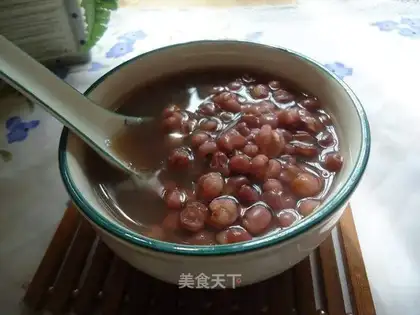 red bean glutinous rice porridge