In ancient times, red beans grew in the south of the country, and it was very difficult for people from all regions to eat them, especially to eat them every day. But today, it is very simple. Red beans are warm in nature, making them very suitable for winter health preservation. They can resist the cold, nourish the blood, and regulate the spleen and stomach. The 4 major health benefits of red beans!
4 Benefits of Eating Red Beans in Winter
1. Strengthens the Spleen and Stomach
The digestive function of the spleen and stomach is relatively strong in winter, with better absorption. Therefore, people with weaker bodies should replenish themselves more diligently in winter to build up nutritional reserves for the coming year, so that they will have more energy, be stronger, and not get sick. Red beans, known as "Chi Xiaodou" in traditional Chinese medicine, also have a significant effect on strengthening the spleen and stomach.
2. Lowers Blood Sugar
Red beans are rich in dietary fiber. Dietary fiber stays in the stomach for a long time and is converted into glucose slowly. The rise in blood sugar after eating red beans is not significant. Therefore, eating red beans has a significant effect on lowering blood sugar.
3. Removes Dampness and Clears Heat
When the body is damp, fluids cannot flow with qi and blood, stagnating between cells and causing rapid bloating. Red beans can promote the circulation of qi and blood, and have the effects of clearing heat, promoting urination, removing dampness, and detoxifying.
4. Nourishes the Heart and Blood
Red beans can clear heart fire and nourish heart blood. Rich in iron, red beans can promote qi and blood circulation, making them very suitable for nourishing the heart and blood. They keep your hands and feet from feeling cold in winter.
Recommended 3 Red Bean Recipes
Red Bean and Coix Seed Porridge
1. Red Bean, Jujube, and Goji Berry Digestion-Promoting Porridge
Ingredients: 60g red beans, 150g brown rice, 50g millet, 8 red dates, 1 spoonful of goji berries, 1500ml water
Method: Wash and soak the red beans and brown rice for 4 hours and 2 hours respectively. First, place the red beans in a pot with water and cook over medium-low heat for 30 minutes. Then add all other ingredients to the pot, bring to a boil over high heat, then reduce to medium-low heat and cook for another 30 minutes.
2. Red Bean and Coconut Jelly
Ingredients: 25g red beans, 150g coconut milk, 250g fresh milk, 50g cornstarch, 35g sugar
Method: Soak the red beans in boiling water for half an hour, then cook them in a pot until they are tender but their skins are still intact. Remove and drain. Place the remaining ingredients in a pot and cook over low heat, stirring continuously to prevent sticking, until the mixture thickens. Add the cooked and drained red beans and gently stir until evenly distributed. Pour into any mold or container you like, let it cool, then use a knife to loosen the edges and invert it. Can be cut into pieces or eaten directly with a spoon.
3. Red Bean and Pumpkin Rice
Ingredients: 50g red beans, 160g pumpkin, 260g rice, 270ml water
Method: Soak the red beans in water overnight, then drain and set aside. Peel and deseed the pumpkin, and cut it into cubes. Wash the rice and place it in a rice cooker. Add the soaked red beans and pumpkin cubes to the rice, mix well with a spoon. Add water to the rice cooker and cook until the rice is done.
Red beans are not only delicious but also carry a beautiful meaning, representing longing between people. As gifts for lovers or friends, red bean bracelets, anklets, necklaces, etc., can also be given. Red beans can be used both as medicine and food, and can also be used as accessories. So powerful!
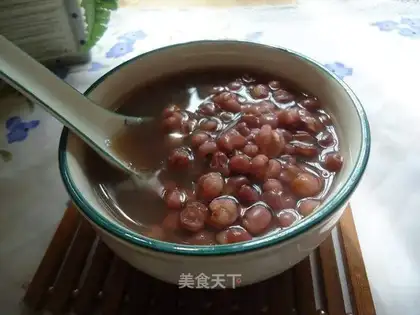 red bean glutinous rice porridge