In the cold winter, people have a habit of wanting to eat something to keep warm, and warm and nourishing foods are the best choice. For example, chestnuts, sweet potatoes, mutton, etc., not only can make the body stronger, but also can play a good role in cold protection. So, what can people who are afraid of the cold eat in winter to keep warm? Take a look at the recommendations below.
What foods to eat in winter to keep warm
1. Brown sugar water
In the cold winter, emphasis is placed on nourishing warmth, and among beverages, brown sugar water is the best. Brown sugar is known as the "chocolate of the East", and its benefits lie in "warming and nourishing, warming and unblocking, warming and dispersing". It has the effects of removing stasis and dispelling cold, warming the stomach and strengthening the spleen, and relieving pain. It is also rich in essential minerals and trace elements such as calcium and iron. Brown sugar water must be boiled. Boiling brown sugar into water to drink is easier to absorb its nutrients than brewing it directly with hot water, and it has a better effect of toning the middle jiao, strengthening the spleen and stomach, and warming the stomach.
Jujube, brown sugar, and ginger water
2. Hawthorn
Winter is the season for hawthorn to be on the market. Hawthorn is both a food and a medicine, with the effects of stimulating appetite, aiding digestion, and invigorating blood. Modern medical research has shown that hawthorn contains organic acids such as citric acid, malic acid, and ascorbic acid, which can increase the secretion of digestive enzymes.
The most prominent benefit of hawthorn is its ability to prevent and treat cardiovascular diseases, because hawthorn contains flavonoids, which have a certain effect on preventing and treating cardiovascular diseases, lowering blood pressure and cholesterol, softening blood vessels, and calming the mind. In winter, it is best to cook hawthorn soup or use hawthorn to make tea, paired with cassia seeds, to lower blood lipids.
3. Peanuts
Peanuts mature after late autumn, and it is appropriate to eat some peanut products in early autumn and winter, such as peanuts, peanut oil, peanut butter, and peanut drinks. Peanuts are sweet and neutral in nature, and can strengthen the spleen and harmonize the stomach, moisten the lungs and resolve phlegm, and replenish qi to stop bleeding. They are used for symptoms such as spleen deficiency with emaciation, poor appetite and fatigue, dry cough with little phlegm, and insufficient postpartum milk. The fat in peanuts can break down liver cholesterol into bile acids, promoting excretion and thus lowering blood cholesterol levels, which helps prevent atherosclerosis. Peanuts should not be stir-fried, as they are not easily digested and absorbed.
4. Chestnuts
Chestnuts are known as the "king of a thousand fruits" and are also a "tonic" that benefits the kidneys and qi. The main effects of chestnuts are nourishing the stomach and strengthening the spleen, and tonifying the kidneys and strengthening the sinews, suitable for all ages. Modern medical research has found that the unsaturated fatty acids and various vitamins contained in chestnuts have effects against hypertension (cardiothoracic surgery, cardiology), coronary heart disease (cardiology), and arteriosclerosis (cardiothoracic surgery, cardiology). Chestnut stewed chicken is suitable for people with spleen deficiency and cold aversion, and has the effect of replenishing qi and tonifying the kidneys.
Boiled chestnuts
5. Goji berries
The general principle of health preservation in winter should be to replenish qi and assist yang, and to nourish yin and tonify the kidneys, and goji berries are a good choice for winter supplementation. Goji berries are a superior tonic, containing various nutrients necessary for the human body, of which about 20% is protein, about 10% is fat, about 40% is sugar, and the remaining 30% is inorganic salts and various vitamins. They are mainly used for liver and kidney yin deficiency, soreness in the lower back and knees, weak vision, and diabetes (endocrinology).
6. Sweet potatoes
Eating a hot sweet potato in winter is the most pleasant thing. Sweet potatoes are rich in carbohydrates, dietary fiber, carotene, vitamins, and more than 10 trace elements such as potassium, magnesium, copper, selenium, and calcium. In addition, sweet potatoes are rich in potassium, which can effectively prevent hypertension (cardiothoracic surgery, cardiology) and prevent stroke (neurosurgery, vascular surgery, neurology).
Although people are accustomed to eating roasted sweet potatoes, steaming them is actually a healthier choice, which can not only reduce the loss of nutrients but also reduce the harmful substances generated during roasting.
Crispy peanut sweet potato bits
 Crispy potatoes and peanuts
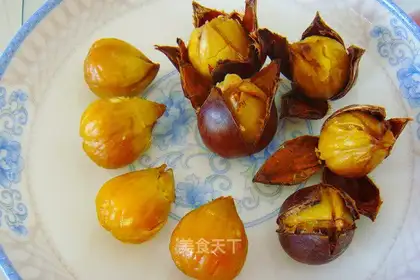 Cooking chestnuts
 # Scrambled #