The dietary and health benefits of soybeans are highly regarded from both Traditional Chinese Medicine (TCM) and Western medicine perspectives. TCM posits that soybeans are sweet in taste and neutral in nature, neither warm nor dry. They can invigorate the spleen to promote dampness elimination, nourish the blood to address deficiencies, and detoxify. They are considered highly effective for individuals with a weak spleen and stomach, those who are thin and have a poor appetite, or for those suffering from dampness impediment with muscle spasms, edema, or difficult urination.
From a Western medicine perspective, soybeans are recognized for their high-quality protein, which is rare in nature as a complete protein source. They contain all eight essential amino acids required by the human body, making them particularly beneficial for protein supplementation. Unlike animal proteins, soybeans are cholesterol-free, avoiding the simultaneous intake of cholesterol that often accompanies animal protein, which is a significant risk factor for cardiovascular disease. Furthermore, soybeans are rich in bioactive substances such as isoflavones and saponins. These compounds play an indispensable role in maintaining human health; for instance, soy isoflavones act as precursors to estrogen and are effective in alleviating the discomfort associated with menopause in women.
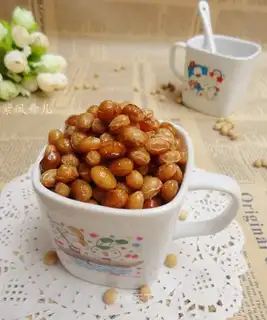
Oyster Sauce Soybeans
Although soybeans are nutritious, how they are consumed is a matter of science. Soybeans are a high-protein food, containing approximately 35% protein. However, most of this protein is trapped within the soybean cells. Those with a basic understanding of biology know that a key difference between plant and animal cells is the presence of a cell wall; a cell wall indicates a plant cell. This robust cell wall tightly encapsulates the abundant protein. Since the human body cannot digest the cell wall, the protein is difficult to absorb and utilize.
When cooking and chewing soybeans, only a portion of the cell walls are broken down, releasing some protein, while a significant amount remains trapped within the cell walls. Ultimately, the majority of this protein is excreted as waste, which can be considered a loss. Our ancestors developed numerous methods to solve this problem. Although they may not have understood the scientific principles behind it, their ingenuity is remarkable. Making tofu from soybeans is one effective way to enhance its utilization. Through grinding, the soybean cell walls are thoroughly destroyed, and the protein is naturally released. This process significantly increases the body's rate of protein digestion and absorption, from about 50% to approximately 90%, thereby greatly enhancing the nutritional value of soybeans.
The principle for making soy milk is the same, with only slight variations in the method. Additionally, fermentation can also break down cell walls and improve protein utilization. It is important to note that while the protein utilization rate of whole soybeans is low, other water-insoluble components of soybeans still offer significant health benefits. Therefore, consuming whole soybeans is also highly valuable. Similarly, the okara (soy pulp) produced after grinding also has excellent health-promoting properties and can be used for fillings or other purposes, rather than being discarded.
 Pelican beans