January 5, 2017, marked the 23rd of the 24 solar terms—Minor Cold (Xiao Han). It is not only the fifth solar term of winter but also the one with the lowest temperatures. Coinciding with Laba Festival this year, what kind of health sparks can these two double festivals create? What are the dietary considerations when Minor Cold meets Laba Festival? What can be eaten to combat the cold and warm the spleen and stomach?
Laba Porridge
When the Minor Cold solar term meets Laba Festival, the coldest "Sanjiu" days arrive
This year, the Minor Cold solar term and Laba Festival overlap. So, what is the relationship between Minor Cold and Laba Festival?
Minor Cold is the 23rd of the 24 solar terms in the lunar calendar and the fifth solar term of winter, marking the official beginning of the last month of winter. When the sun reaches the celestial longitude of 285° (Minor Cold), it signifies that the coldest days of the year have arrived for the land of China. According to Chinese meteorological data, Minor Cold is the solar term with the lowest temperature; only in a few years is the temperature of Major Cold lower than that of Minor Cold. As Minor Cold falls within the last few days of the "Erjiu" period, it enters the "Sanjiu" period a few days later. Like Major Cold, Minor Heat, Great Heat, and End of Heat, Minor Cold is a solar term that indicates changes in temperature. "Han" means cold, and "Minor Cold" indicates the degree of coldness. Minor Cold corresponds to Minor Heat, hence it is called Minor Cold.
Minor Cold is a solar term in the twelfth lunar month. The ancients called the twelfth lunar month "La Yue," where "La" originally means "to connect," carrying the meaning of the transition between the old and the new. At the same time, "La" also refers to a sacrificial activity. Laba Festival, commonly known as "Laba," is on the eighth day of the twelfth lunar month. The ancients had the tradition of sacrificing to ancestors and gods, praying for a bountiful and auspicious year.
Three Principles of Diet for the Minor Cold Solar Term
In short, one should eat warm foods, bitter foods, and a varied diet. Eating hot porridge and root vegetables in the deep winter is very effective for warding off the cold.
1. Varied: Food should be diverse, with a mix of refined and coarse grains, and both meat and vegetables. In winter, people tend to favor high-protein, high-fat, and high-sugar foods, and have a tendency to eat less or avoid coarse grains, vegetables, and melons.
2. Warm: During the winter of Minor Cold, it is a good time to eat warming foods, especially for those with a constitution偏向于阳虚 (偏向于yang deficiency). For those偏向于阴气不足 (偏向于yin deficiency), duck is a good food for nourishment. The diet should avoid sticky, hard, raw, and cold foods. Drinking hot porridge in winter is also very suitable, such as lamb porridge to warm and tonify yang; oatmeal porridge to nourish the heart and eliminate vexation; walnut porridge to nourish yin and secure essence; and sweet potato porridge to nourish the liver and kidneys.
3. Bitter: The climate during Minor Cold is cold, making it a "peak season" for "internal heat" (shang huo). The diet at this time should reduce salty foods and increase bitter ones. Bitter foods can help the heart's yang, reduce excessive kidney water, and have a kidney-nourishing effect. Traditional Chinese medicine believes that bitter foods can enter the heart meridian to reduce heart fire. Due to the cold and dryness of the Minor Cold solar term, eating more bitter foods like bitter melon, dried tangerine peel, lotus seed core, and buckwheat can help the heart's yang.
Minor Cold Meets Laba: What Foods to Eat?
Whether it's Minor Cold or Laba, the ancients had the health concept of "nourishing life in accordance with the seasons" and placed great emphasis on dietary therapy. Let's take a look at how to eat for health and wellness when Minor Cold meets Laba.
Eating Porridge in Minor Cold—Nourishing the Spleen and Stomach
Recommended Dish: Laba Porridge
Traditional Chinese medicine believes that when cold qi is abundant, it damages the body's yang. Consuming a health porridge that has the effects of nourishing the liver and kidneys, nourishing blood, and calming the spirit can help nourish the heart and aid sleep. Cao Yanshan, a nutritionist of the Qing Dynasty, wrote the "Porridge Canon," which details the fitness and nutritional functions of Laba porridge in detail. It is an excellent "food therapy" product that regulates nutrition and is easily absorbed, with effects of harmonizing the stomach, tonifying the spleen, nourishing the heart, clearing the lungs, benefiting the kidneys, strengthening the liver, relieving thirst, improving vision, promoting bowel movements, and calming the spirit.
The main ingredients of "Laba Porridge" are grains, commonly including japonica rice, glutinous rice, and Job's tears. Japonica rice contains protein, fat, carbohydrates, calcium, phosphorus, iron, and other components, and has the functions of tonifying the middle qi, nourishing the spleen and stomach, harmonizing the five organs, relieving vexation and thirst, and benefiting essence. Glutinous rice has the effect of warming the spleen and qi, making it suitable for people with weak spleen and stomach function, and has a certain auxiliary therapeutic effect for deficient cold diarrhea, vexation and thirst, and difficult urination. Traditional Chinese medicine believes that Job's tears has the functions of strengthening the spleen, tonifying the lungs, clearing heat, and promoting dampness. Regular consumption is also beneficial for chronic enteritis, indigestion, and other conditions. Job's tears, rich in dietary fiber, has the effect of preventing hyperlipidemia, hypertension, stroke, and cardiovascular diseases.
Main ingredients: Red dates, walnuts, black rice, fragrant rice, corn, raisins, red beans, millet (adjust the proportions according to your family's size).
Method: Soak the red beans and corn for 3-4 hours in advance. Mix and wash the other ingredients. Combine all ingredients in a pot, add enough water, bring to a boil, then simmer over low heat until it becomes porridge.
It's best to cook for three hours using a clay pot or other porridge cooker! Laba porridge is simple and nutritious. If you like it sweet, add some rock sugar to cook, or you can eat it with dishes.
Note: When making Laba porridge, the choice of ingredients is particularly important. Especially for ingredients with therapeutic effects, they should be added according to your physical condition.
Eating Garlic in Minor Cold—Preventing Infection and Thrombosis
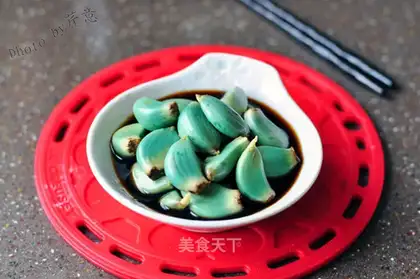
Recommended Dish: Laba Garlic
Eating garlic in winter has many benefits. First, garlic can effectively promote blood circulation, alleviating the problem of poor qi and blood circulation caused by the cold weather. In addition, garlic has antibacterial properties and has a significant effect on preventing infections of the digestive and respiratory systems. This is because garlic has the effects of resisting thrombosis, lowering blood lipids, reducing blood viscosity, and lowering blood pressure. In winter, people tend to eat a large amount of high-fat, high-calorie foods, and with less water intake and cold weather, they are prone to cardiovascular and cerebrovascular diseases.
However, raw garlic is warm-natured, and eating too much can generate heat and has a stimulating effect on local tissues. Therefore, it is contraindicated for those with yin deficiency and excessive fire, or sores in the mouth and tongue. Therefore, we can consider eating Laba garlic. Laba garlic is made by soaking garlic in vinegar for a period of time. The spiciness of Laba garlic is much lower than that of raw garlic, making its taste more acceptable for people who are afraid of spicy food. It has a slightly sour taste, which is more appetizing and aids digestion, while its antibacterial function remains, without the aforementioned contraindications.
Main ingredients: 1 bottle of aromatic vinegar, ten heads of garlic.
Method: Wash and dry a sealed glass container; pour aromatic vinegar into the glass bottle to two-thirds full, then add peeled garlic cloves, making sure they do not exceed the level of the vinegar. Gently shake to mix and seal the bottle mouth; place the container in the refrigerator, and it will be ready to eat in about 20 days. The garlic soaked for Laba is most likely to turn into a vibrant emerald green. It is also a great companion for dumplings during the Spring Festival. Hurry up and make a jar!
Eating Tofu in Minor Cold—Rich in Nutrition
Recommended Dish: Laba Tofu
Eating tofu during Minor Cold is a good choice for health. Around the twelfth lunar month, many families sun-dry tofu. This naturally sun-dried tofu is called Laba tofu by the people.
Because tofu contains relatively high amounts of protein and fat, it not only has high nutritional value but also helps with digestion and nourishes the spleen and stomach. Therefore, Laba tofu is more suitable for consumption in the cool season, allowing the digestive system to rest, thus accumulating "strength" for the digestion and absorption of food during the Spring Festival. From the perspective of traditional Chinese medicine, general tofu is relatively cool in nature, but the Laba tofu, which has been "tested" by the sun, is relatively milder. As tofu enters the spleen, stomach, and large intestine meridians, the effects of Laba tofu in tonifying the middle qi, harmonizing the spleen, and strengthening the stomach are also worthy of praise.
Main ingredients: Salt water, soybeans
Method: First, make tofu from high-quality small soybeans and cut it into round or square pieces. Then, apply salt water to the surface, dig a small hole in the center, and add a moderate amount of salt. Slowly dry it under the gentle winter sun, allowing the salt to be gradually absorbed and the moisture to evaporate slowly, which will gradually become Laba tofu.
Note: Laba tofu has a relatively high salt content and contains a certain amount of purine. Patients with kidney insufficiency, gout, and high blood uric acid concentration should consume it with caution.
 It's not worth it
 Florence