Experts point out that three nutrients are important for both men and women—antioxidant selenium, vitamin C, and vitamin E. However, do men and women have the same nutritional needs?
Wolfberry Leaf, Pork Liver, and Lean Pork Soup
Iron: No iron, no blood. Blood nourishment is an important part of women's health, and it absolutely cannot be separated from iron supplementation. Sun Mengli, a director of the Chinese Nutrition Society and chief nutritionist at the Nutrition Department of Peking University First Hospital, told reporters: "According to the recommendations of the Chinese Nutrition Society, adult women of childbearing age need 20 mg of iron per day, while during pregnancy and lactation, they need 25-35 mg, whereas men only need 15 mg per day." Liver is the richest source of iron. Lean meat, pork blood, wood ear mushrooms, pickled mustard greens, sesame seeds, beans, kelp, nori, apricots, peaches, plums, etc., also contain a significant amount of iron.
Calcium: The cornerstone of bone health. "Calcium in the human body is mainly found in bones and teeth, accounting for about 99% of the total, with the remaining 1% distributed in blood, intercellular fluid, and soft tissues," said Sun Mengli. Calcium plays a vital role in women's bone health. According to a survey, the incidence of osteoporosis in the Shanghai area is 20.1% for men and 48.1% for women. Among those over 60, the rate is 24.9% for men and 75.7% for women. "This shows that calcium supplementation should be a lifelong nutritional task for women. An ordinary woman needs 800 mg of calcium per day, which should be increased to 1000 mg during pregnancy and lactation," Sun Mengli stated. In daily foods, those rich in calcium include milk, cheese, eggs, soy products, kelp, nori, dried shrimp, sesame seeds, hawthorn, sea fish, and vegetables. When consuming these calcium-rich foods, one should avoid excessive intake of foods rich in phosphates, oxalates, and protein to avoid affecting calcium absorption.
Folic Acid: A nutrient for pregnancy. Folic acid belongs to the B-vitamin group and was first extracted from spinach leaves, hence its name. It is an indispensable substance for cell proliferation and can also promote milk secretion, making it especially important for pregnant or postpartum women. Sun Mengli pointed out that adult women need 400 micrograms of folic acid per day, 600 micrograms during pregnancy, and 500 micrograms during lactation. In addition to pregnant women, the elderly, heavy drinkers, and those taking anticonvulsant or contraceptive pills also need to supplement more folic acid than the average person. Folic acid is mainly found in dark green vegetables such as spinach, broccoli, rapeseed, and bok choy.
Vitamin B6: Preventing gynecological diseases. The metabolism of estrogen and corticosteroids in a woman's body requires vitamin B6; therefore, taking it in appropriate amounts can prevent gynecological diseases. Some women experience swelling in the hands and feet, pain in the finger joints, and vomiting during pregnancy. These conditions can be improved by taking vitamin B6 under a doctor's guidance, with a recommended intake of 1.9 mg per day. Eating more natural, minimally processed foods also helps supplement vitamin B6.
Dietary Fiber: The guardian of the intestines. Sun Mengli said that dietary fiber itself has no "nutrition," but its biggest role is to promote gastrointestinal motility, accelerate the metabolism of toxins in the body, and relieve constipation, a problem that troubles many women. It is mainly found in whole wheat bread, potatoes, chives, celery, apples, and other foods.
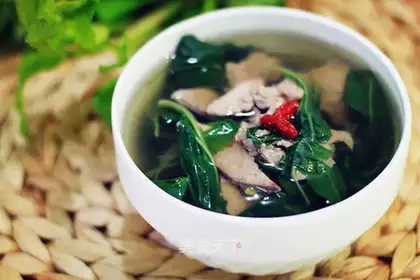 Scrawny broth