Whether you eat too much or too little pumpkin is not a good thing. If you eat too much, you'll turn into a yellow-skinned baby. Pumpkin is rich in beta-carotene, which is widely found in yellow-green vegetables and fruits, including things like pumpkin, carrots, lettuce, and citrus fruits.
When children eat too much pumpkin and consume an excessive amount of beta-carotene, the beta-carotene deposits in the stratum corneum of the epidermis. Consequently, in areas like the nose, philtrum, forehead, palms, soles, around the eyes, next to the nails, around the joints, or other places with the most skin folds, the skin will turn a lemon-yellow color, making the child look as if they have jaundice. This condition is known as carotenoderma.
Pumpkin and Vegetable Soup
Carotenoderma and jaundice caused by general liver and gallbladder diseases both appear to be yellow all over the body. If you're not careful, it might lead to a misdiagnosis by a doctor. Do you know how to tell the difference between these two? Here is a simple way to distinguish them: because carotenoderma is caused by elevated beta-carotene, this yellowing does not affect the sclera; whereas jaundice is caused by elevated bilirubin, and this yellow color does affect the sclera. If you eat too little, you'll get night blindness. Beta-carotene is a precursor to vitamin A, which is converted into vitamin A. Vitamin A, when combined with protein, forms rhodopsin, which plays a vital role in vision. A lack of carotene can lead to night blindness and even complete blindness, a consequence that is more pronounced in children.
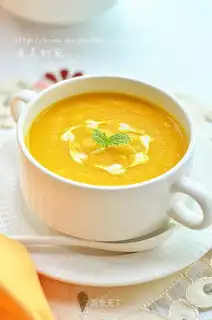 Pumpkin soup