As the New Year approaches, all kinds of parties are in full swing. The festive dinner table is never without an abundance of meat dishes. So, how do you select high-quality meat? The following guide covers the selection methods for six types of meat: chicken, beef, pork, fish, and more. Let's learn a thing or two.
Spicy Chicken
Guide to Selecting High-Quality Chicken
1. When buying raw chicken, pay attention to its appearance, color, and texture. Fresh, hygienic chicken pieces should be of similar size, pinkish-white with a lustrous sheen, and smooth to the touch. If the chicken has been injected with water, the meat will appear unusually springy, with red pinpricks on the skin surrounded by dark, bruised areas. Pressing your finger under the skin will feel distinctly slippery. Injected chicken will feel uneven to the touch, as if it has lumps, whereas non-injected chicken feels smooth.
2. When buying roasted chicken, don't just rely on its color. The color is achieved by glazing with honey or brown sugar, so there's often little difference between a healthy and a sick chicken. If the roasted chicken's eyes are half-closed, it indicates it was not a sick chicken, as sick chickens have their eyes fully closed at the time of death. If the meat under the skin is white, it's generally a healthy chicken, as sick chickens that died of disease were not bled, causing the meat to turn red. Additionally, smelling for any unusual odor is another way to determine quality.
Braised Duck with Dried Mustard Greens
Guide to Selecting High-Quality Duck
1. When selecting duck, first observe its color. A high-quality duck has a smooth, milky-white skin, and a rose-colored cross-section after being cut. If the duck's skin surface has slight seepage of oil, revealing a light red or light yellow color, and the inner cut is dark red, the quality is poor. Spoiled duck will show visible oil on its surface, with colors of dark red or dark yellow, and the muscle cross-section will be grayish-white, light green, or light red.
2. Next, smell it. Good duck has a rich aroma; average-quality duck may have a fishy or musty smell from its abdominal cavity; a strong unpleasant odor indicates the duck has spoiled.
3. Finally, examine its form. A fresh, high-quality duck is typically oval-shaped with firm leg muscles, protruding breast meat, and visible salt crystals on the inner wall of the abdominal cavity. Conversely, if the duck feels soft, the abdominal cavity is damp or has mold spots, its quality is poor. Spoiled duck meat feels soft and sticky, with extensive mold in the abdominal cavity.
Pan-Fried Pork Dumplings
How to Identify Pork Containing Ractopamine (Lean Meat Powder)
1. Check the thickness of the subcutaneous fat layer. When buying pork, avoid cuts that are too thin or too soft. Generally, "lean meat powder" pigs, due to medication, have a significantly thinner subcutaneous fat layer, often less than 1 cm. Normal pigs have a layer of fat between the skin and lean meat, which is 1-2 cm thick; if it's too thin, be cautious.
2. Check the color of the pork. Pork containing "lean meat powder" is typically very bright red. Therefore, if the lean meat is exceptionally red, it may be abnormal.
3. Additionally, you can cut the pork into two or three finger-widths. If the pork is too soft to stand on the cutting board, it may contain "lean meat powder."
4. If the lean meat and fat are significantly separated, and a yellow liquid seeps out between them, it may contain "lean meat powder."
Scallion Lamb
How to Identify Lamb Containing Ractopamine (Lean Meat Powder)
1. Meat color: Generally, lamb without additives has a bright, fresh red color. Lamb with issues will have a dark red color.
2. Meat wall thickness: Good lamb meat is typically 4-5 cm thick. Lamb with additives usually has a meat wall of only about 2 cm.
3. Meat smell: Normal lamb has a strong, characteristic mutton aroma. Lamb with additives has a very faint mutton smell and a clean, foul odor.
4. Fat content: Lamb with "lean meat powder" usually has little to no fat, and any present fat will be dark yellow.
Braised Beef
Guide to Selecting High-Quality Beef
Color Identification
Fresh Meat—Muscle is a uniform red, with a glossy sheen; fat is pure white or milky yellow. Secondary Fresh Meat—Muscle color is slightly darker, the cut surface still has a sheen, but the fat is dull. Spoiled Meat—Muscle is dark red without a sheen; fat is dark and may even turn green.
Smell Identification
Fresh Meat—Has the normal, characteristic fresh beef aroma. Secondary Fresh Meat—Has a slight ammonia or sour smell. Spoiled Meat—Has a foul, rotten smell.
Stickiness Identification
Fresh Meat—Surface is slightly dry or has a dried film, not sticky to the touch. Secondary Fresh Meat—Surface is dry or sticky, with a fresh cut that is moist. Spoiled Meat—Surface is extremely dry or sticky, and even the fresh cut is sticky.
Elasticity Identification
Fresh Meat—A depression made by pressing with a finger recovers immediately. Secondary Fresh Meat—A depression recovers slowly and does not fully rebound. Spoiled Meat—A depression does not recover and leaves a clear mark.
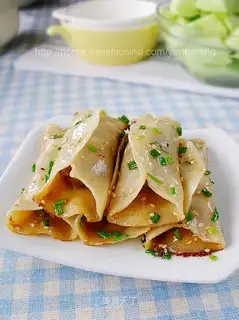 Pork pot stickers
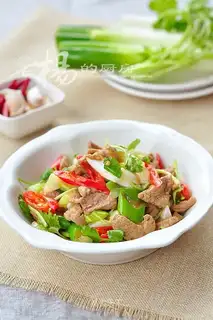 lamb with fried green onions
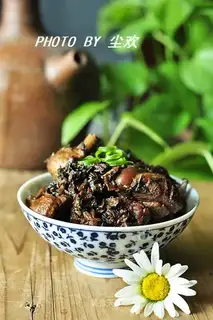 Plumbing duck
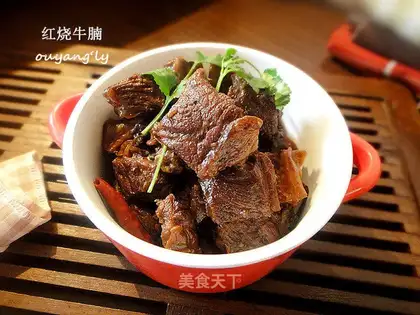 Red beef
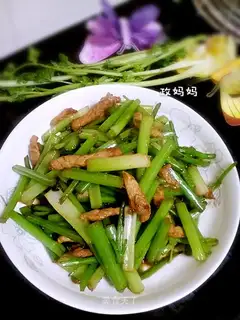 Spam celery