Spring has quietly arrived, have you changed the menu on your dining table? In early spring, you can eat more health-beneficial vegetables, such as yams. Here, we will specifically introduce what you should eat in early spring, so don't miss out.
What to eat in early spring
Yams
The yam tuber is thick, juicy, sweet, soft, and sticky. It is delicious whether eaten raw or cooked. It contains 16 of the 18 amino acids required by the human body, showing the importance of yams. Yams have the effects of nourishing and strengthening, aiding digestion, stopping spontaneous sweating, and relieving diarrhea. They are mainly used for treating spleen deficiency and diarrhea, lung deficiency and cough, diabetes and thirst, frequent urination, spermatorrhea, leucorrhea in women, and chronic enteritis caused by indigestion. "Compendium of Materia Medica" states: yams treat various deficiencies, the five labors and seven injuries, remove facial wandering wind, stop lower back pain, eliminate vexation and heat, supplement insufficient heart qi, open the heart orifices, improve memory, benefit kidney qi, strengthen the spleen and stomach, stop diarrhea and dysentery, and moisturize the skin. Applying mashed raw yam can also treat swelling and hard toxins. Modern science has proven that yams can significantly reduce the activity of enzymes that accelerate the aging of the organism.
Spring Chives
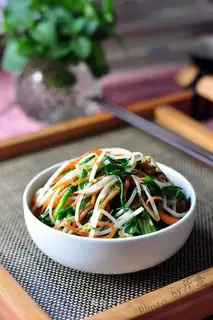
Spring chives, or chives, are most beneficial to the body's yang energy. Chives contain nutrients such as volatile oil, protein, fat, and various vitamins, and have effects like strengthening the stomach, refreshing the mind, and tonifying the kidneys. Spring chives are the finest among chives, with a particularly delicious flavor. Their roots are as white as jade, their leaves as green as jadeite, and they have a rich, fragrant aroma. Spring chives can be prepared in various ways; they can be served with meat, eggs, shrimp, cuttlefish, etc., or used as a filling for steamed buns and dumplings. Adding spring chives when stir-frying mung bean sprouts or dried tofu makes them especially fragrant and delicious.
Oyster Sauce Chive and Bean Sprouts
Red Dates
Red dates are extremely high in vitamin content and are known as the "natural vitamin pill." They have the effects of nourishing yin, supplementing yang, and nourishing blood. Red dates are temperate crops with strong adaptability. Red dates are known as the "iron-clad crop" for their drought and flood tolerance, making them an excellent choice for developing water-saving forestry and fruit industries. The ancient Chinese physician Sun Simiao said: "In spring, one should reduce sour foods and increase sweet foods to nourish the spleen qi." This means that in spring, it is advisable to eat less sour food and more sweet food. Traditional Chinese medicine believes that spring is when liver qi is flourishing. Eating too many sour foods can cause excessive liver qi and damage the spleen and stomach, so sour foods should be eaten in moderation. People engage in more outdoor activities in spring than in winter, leading to greater physical exertion and increased caloric needs. However, the spleen and stomach are relatively weak at this time, and gastrointestinal digestion is poor, making it unsuitable to eat too much greasy meat. Therefore, calories can be appropriately supplied by sweet foods. Red dates are precisely such an excellent spring food for nourishing the spleen.
Raisins
Raisins are a great food for supplementing the middle qi and have the effects of benefiting qi and nourishing blood. People with anemia or who often feel dizzy should eat them regularly. There are many reasons for dizziness in spring, mainly due to insufficient qi and blood. Raisins are rich in iron, so people with anemia should eat them appropriately. However, raisins are high in sugar, so people with high blood sugar or who are prone to diarrhea should eat less. It is recommended to eat an amount equivalent to one palm per day. Raisins have the effects of benefiting qi and nourishing blood, can nourish liver blood, and are suitable for people who are anemic or often feel dizzy. People who are prone to dizziness in spring usually have insufficient qi and blood. Moreover, raisins are rich in iron, which is needed for blood production for women. However, due to their high sugar content, those who are afraid of gaining weight, have diabetes, or are prone to diarrhea should eat less. It is recommended not to eat more than half a palm's worth per day.
[Tianjin] Eight Treasure Rice Pudding
Spring Buds
Eating spring buds is a gift from nature. The classic Chinese medicine text "Huangdi Neijing" says to "eat the grains of the year," which means eating seasonal foods. In spring, all plants sprout fresh, tender buds, many of which are edible, such as toon sprouts, bean sprouts, garlic scapes, and pea shoots.
Spinach. Spinach is another vegetable to eat in spring. Spinach is available year-round, but it is best in spring. "Spring spinach" has red roots and green leaves, is exceptionally fresh and tender, and most delicious. The spinach available in spring is quite beneficial for detoxification and preventing spring dryness. Traditional Chinese medicine also believes that spinach is sweet and cool in nature, and can nourish blood, stop bleeding, astringe yin, and moisten dryness. Because spinach contains a lot of oxalic acid, which can hinder the absorption of calcium and iron, it is best to blanch it in boiling water before cooking.
Onions and Garlic
Ginger, onions, and garlic are not just seasonings for cooking; they also have medicinal value. Eating them regularly can increase appetite, boost spring yang energy, and have antibacterial and disease-preventing effects. The onions and garlic in spring are newly grown, so they are the most nutritious of the year. Spring is a season with many infectious diseases, and eating them appropriately can help prevent respiratory illnesses.
Glutinous Rice
Glutinous rice cakes replenish physical strength. Glutinous rice has the effects of supplementing the middle qi and providing nutrition. Eating it in the cool early spring can warm and tonify the spleen and stomach, nourish blood, and calm the mind. It is suitable for people with spleen qi deficiency and frequent diarrhea, or those who are prone to stomach pain and diarrhea or have a cold stomach when the weather is cold. However, glutinous rice is not easy to digest. If you have a sensitive digestive system, you should eat about half a palm's worth per day.
Small Glutinous Rice Pumpkins
So, how should one's diet be arranged reasonably in early spring?
Reasonable Dietary Recommendations for Early Spring
"More Staples, Less Side Dishes"
This means eating more staple foods and fewer side dishes. In spring, there is more wind and less rain, the climate is dry, and the temperature changes erratically, which can easily lead to a decline in the body's immunity and defense functions, triggering some common spring illnesses. At this time, you can eat more staple foods, the main component of which is carbohydrates. This is economical and can be directly converted into heat to provide the body's basic needs. In addition, spring should focus on nourishing the spleen and stomach. Compared to the big fish and meat in dishes, rice is much easier to digest and can protect the stomach and intestines well.
"More Vegetables, Less Fruit"
This means eating more vegetables and less fruit. Spring focuses on nourishing the liver. Vegetables are rich in vitamins, fiber, and minerals and have the special function of clearing blood vessels and the intestines. The liver and heart both love them, as vegetables can help the liver quickly metabolize proteins, sugars, and fats; without them, liver metabolism will be poor. Eating less fruit does not mean not eating fruit at all, but eating it in moderation. As the temperature warms up in spring, people love to eat sweet and sour fruits to quench their thirst. However, fruits contain more fruit acids and are considered raw and cold foods. Eating too many can easily damage the spleen and stomach.
"More Dairy, Less Meat"
This means drinking more milk and eating less meat. Spring is the season when all things revive and yang energy grows. "A year's plan starts with spring." Milk is a fully nutritious food. Drinking more milk in spring can meet the body's needs for growth and health in various aspects, making it the top choice for health preservation for all groups. Meat is high in cholesterol, and eating too much can easily lead to obesity and trigger "rich man's diseases" like high blood pressure, high blood sugar, and high cholesterol.
"More Water, Less Oil"
The change of seasons brings a windy and dry climate, which exacerbates the loss of body moisture. Symptoms like headaches, constipation, and weight gain are caused by "spring dryness" and "internal heat." The simplest way to detoxify is to drink more water. Every morning, drinking some honey water will help clean the intestines and detoxify.
"More Color, Less Monotony"
This means eating more colorful foods and fewer foods with monotonous colors and flavors. In the human body, the five organs each have their preferences: the heart loves red and bitter; the liver loves green and sour; the kidney loves black and salty; the lung loves spicy and white; the spleen loves yellow and sweet. In one's diet, one should take into account the preferences of each organ.
Dietary Precautions for Early Spring
The diet should be light, avoid greasy and raw or cold foods
In spring, one should shift from winter's tonic diet to a lighter diet, reduce animal protein, increase plant protein, eat less high-fat foods like fatty meat, and avoid overburdening the spleen and stomach, which can lead to a feeling of fullness and exacerbate the body's "spring drowsiness" phenomenon. Furthermore, spring is a time for nourishing yang, so the diet should be warm and avoid raw or cold foods. For example, those with a yang-deficient constitution can often eat some ginger, or choose to eat slightly warmer fruits and vegetables like yellow chives, chives, or fennel to dispel cold and warm the stomach.
Eat more fruits and vegetables to supplement vitamins
After winter, people often experience a deficiency in various vitamins, inorganic salts, and trace elements. For example, in spring, people are more prone to conditions like stomatitis, angular cheilitis, glossitis, and certain skin diseases, which are caused by nutritional imbalances from eating too few fresh vegetables. Therefore, it is advisable to appropriately increase the proportion of fruits and vegetables in the spring diet to get enough vitamins. In the early spring season, when fresh vegetables are scarce, spring refrigerated, dried, pickled, and salted vegetables can be very useful. Such as pickled radish, ginger, onion, cabbage, mustard, pepper, and zha cai. In spring, you can eat more wild vegetables. Wild vegetables grow in the suburbs, have less pollution, and are simple to prepare—can be served cold, stir-fried, in soups, or as a filling. They are rich in nutrients and have significant health benefits, such as shepherd's purse, purslane, dandelion, plantain, elm money, and bamboo shoots. Nowadays, greenhouse-grown vegetables have gradually changed the situation of a shortage of fresh vegetables in spring. In places where life is convenient, fresh vegetables can be eaten at any time, such as spinach, celery, rapeseed, water bamboo, lettuce, toon sprouts, and green beans. Spring soups should mainly use red carrots, white radish, kelp, spring melon, tomatoes, and spring bamboo shoots, with chicken liver, pork liver, or shredded lean meat. The soup should be light and fresh.
In the early spring season, calories cannot be lacking
In the early spring season, there is a large temperature difference between day and night, and the temperature is still relatively cold, so the body still needs to store a certain amount of calories to maintain its cold-resistance function. Foods that provide calories can be high-calorie grain foods: lentils, soybeans, red beans, sesame seeds, walnuts, peanuts, bean products, etc. Appropriately supplement high-quality protein foods, such as eggs, fish, shrimp, beef, etc. Meat foods are rich in methionine, which has the function of enhancing the body's cold resistance.
 glutinous rice pumpkin
 Pelican sprouts
 Tofu
Tofu