Vegetables play a very important role in our daily diet. They are highly nutritious and we cannot do without them in our daily meals. Everyone knows that eating vegetables has many benefits, but if you don't eat them correctly, you can also get sick. Below, the editor will introduce several wrong ways to eat vegetables!
1. Often eating tomatoes before a meal
Tomatoes should be eaten after a meal. This way, the acidity can be greatly reduced when stomach acid and food mix, avoiding an increase in intra-gastric pressure that can cause gastric distension, leading to symptoms such as abdominal pain and stomach discomfort in babies.
2. Mixing carrots and radishes to make a puree
Do not grind carrots and radishes into a puree together. This is because carrots contain an enzyme that can destroy vitamin C, which will completely destroy the vitamin C in the radishes.
3. Excessive intake of carotene
Although carotene is very nutritious for babies, it should be consumed in moderation. If babies drink too much vegetable juice made from carrots or tomatoes, it can lead to carotenemia, causing the skin on the face and hands to turn orange-yellow. This can result in loss of appetite, unstable mental state, irritability, and even restless sleep, accompanied by night terrors, crying, and talking in one's sleep.
4. Washing mushrooms too cleanly or soaking them in water
Mushrooms contain ergosterol, which is converted into vitamin D when exposed to sunlight. However, if they are not over-washed or soaked in water before eating, much of their nutritional value will not be lost. Mushrooms should also not be cooked in iron or copper pots to avoid nutrient loss.
5. Eating undercooked bean sprouts
Sweet and sour bean sprouts
Bean sprouts are tender, delicious, and nutritious, but they must be thoroughly cooked. Otherwise, eating them can cause adverse reactions such as nausea, vomiting, diarrhea, and dizziness.
6. Giving babies too much spinach
Spinach contains a large amount of oxalic acid and is not suitable for babies to eat in large quantities. Oxalic acid combines with calcium and zinc in the body to form calcium oxalate and zinc oxalate, which are not easily absorbed and excreted. This affects the absorption of calcium and zinc in the intestines, easily causing calcium and zinc deficiency in babies, leading to poor development of bones and teeth, and even affecting intellectual development.
7. Giving babies bitter gourd that has not been blanched in boiling water
The oxalic acid in bitter gourd can hinder the absorption of calcium from food. Therefore, bitter gourd should be blanched in boiling water first to remove the oxalic acid before eating. Babies who need to supplement a large amount of calcium should not eat too much bitter gourd.
8. Storing cooked chives for too long
Chives and eggs
Chives are best cooked and eaten immediately; they should not be stored for long. If stored for too long, a large amount of nitrate in them will turn into nitrite, causing a toxic reaction. In addition, babies with indigestion should not eat chives.
9. Stewing green leafy vegetables for too long
Green leafy vegetables should not be stewed for too long during cooking. Otherwise, the nitrates in the green leafy vegetables will turn into nitrites, which can easily cause food poisoning in babies.
10. Cooking frozen vegetables for too long
Most frozen vegetables have already been blanched, so they do not need to be cooked for too long; otherwise, they will become mushy and lose much of their nutritional value.
Summary
The above are several wrong ways to eat vegetables. Have you made any of these mistakes? Vegetables are indispensable foods for the normal development of the body and the maintenance of life. But everyone must eat them correctly to achieve the desired effect. I hope the above information can be helpful to everyone!
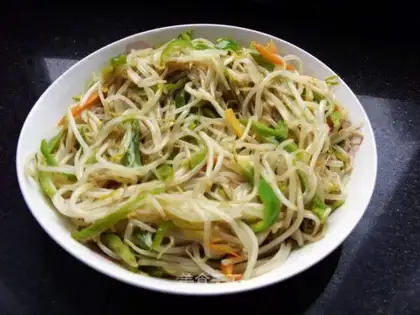 Sweet and sour bean sprouts
 chives scrambled eggs