Tasting nothing is more praised than spring bamboo shoots.
Spring bamboo shoots are crisp, tender, and delicious, with a delicate fragrance and a mellow sweetness, earning them the title "the finest among vegetarian foods." Since ancient times, they have been beloved by people, praised endlessly by scholars, gourmets, and writers, giving rise to the saying, "Tasting nothing is more praised than spring bamboo shoots." If meat-eaters are considered vulgar, then eating bamboo shoots is the complete opposite. The taste of bamboo shoots is so pure, elegant, and enduring. Su Dongpo once said: "Without bamboo, life is vulgar; without meat, one becomes lean. To be neither vulgar nor lean, one must eat bamboo shoots with meat every day."
Spring bamboo shoots are light in flavor, fresh and tender, and nutritionally rich. They contain ample water, plant protein, fat, carbohydrates, large amounts of carotene, and vitamins B, C, and E, as well as essential nutrients and trace elements like calcium, phosphorus, and iron. Among these, cellulose and amino acids are particularly abundant.
Spring bamboo shoots are not only a delicacy but also a medicinal herb. Clinical research in Traditional Chinese Medicine (TCM) has found that spring bamboo shoots are sweet in flavor and cold in nature, and they have the effects of benefiting the nine orifices, invigorating blood circulation, resolving phlegm, and relieving food stagnation and bloating.
The body of the spring bamboo shoot is plump and thick, delicious and refreshing, and nutritious. It can be cooked with or without meat. Different cooking methods yield different flavors, and stir-frying, stewing, boiling, or braising all result in exquisite dishes.
Hand-peeled bamboo shoots in soy sauce.
What are the nutritional values of spring bamboo shoots?
TCM points out that eating spring bamboo shoots is also a good choice in spring, as it possesses a "generating and sprouting" qi that can invigorate the liver and gallbladder.
Bamboo shoots are the tender buds that grow from bamboo. Before they break through the soil, they are hidden underground, short and stout, appearing simple and unadorned; these are winter shoots. Once they break through the soil and stand tall and graceful, they are called spring shoots.
Pharmacologically, spring bamboo shoots are still considered cool and cold in nature, but they possess a "generating and sprouting" qi that can invigorate the liver and gallbladder. Therefore, eating spring bamboo shoots is a good choice in spring. The tender tips of the shoots, when blanched like seafood, have a sweet and fresh flavor.
However, if someone's spleen and stomach are inherently deficient and cold, or if they have chronic stomach ailments such as erosive gastritis or stomach ulcers, they should be cautious. In the Five Elements theory, the liver belongs to wood and the spleen and stomach belong to earth. Eating too many spring bamboo shoots can, in turn, harm the spleen and stomach. If you happen to be in this situation but still crave bamboo shoots, you can cook them in soy-braised style. This involves stir-frying the shoots quickly in a wok, then adding soy sauce to braise and simmer until the liquid is reduced. This method removes some of the cold nature. If you have an oven at home, you can wrap the shoots in aluminum foil and roast them until cooked. This also tastes good and removes some of the cold nature.
Even so, although bamboo shoots are delicious, you should not eat them in large quantities like you might with shepherd's purse. Spring bamboo shoots contain insoluble oxalic acid, which can trigger allergic rhinitis, dermatitis, and urticaria. When cooking bamboo shoots with other foods, it is best to boil them in salted water for 10 minutes first. This removes both the astringent taste and the oxalic acid.
People with allergies should avoid eating spring bamboo shoots with seafood. Once an allergic reaction occurs, it can be very difficult to manage.
Be careful of allergies when eating spring bamboo shoots!
The elderly and children should not eat too much, and it is best to consume no more than half a shoot per meal. TCM believes that bamboo shoots have the effects of nourishing yin, enriching blood, resolving phlegm, aiding digestion, and promoting bowel movements. However, the large amount of cellulose in bamboo shoots is difficult to digest, and the insoluble oxalic acid can easily induce chronic diseases like asthma, allergic rhinitis, and dermatitis when consumed in excess. Spring is a season prone to allergies, and for people susceptible to food allergies, eating bamboo shoots can easily lead to urticaria. Therefore, children should eat them in small quantities but should not eat hairy shoots. The elderly must chew bamboo shoots slowly and thoroughly.
To prevent allergic reactions, one should try a small amount of bamboo shoots first. If there is any adverse reaction, stop eating immediately. If there is no reaction, a slightly larger portion can be consumed. If using sliced or diced bamboo shoots in a stir-fry, blanch them in boiling water for 5-10 minutes before stir-frying with other ingredients. This method not only breaks down most of the oxalic acid at high temperature to reduce its drawbacks but also removes the astringent taste, making the dish more delicious. At the same time, try not to eat bamboo shoots with sea fish to avoid causing skin problems.
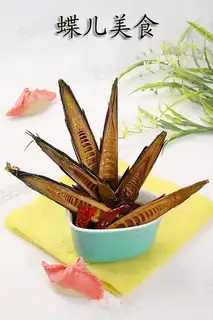 The soy-painted hand